

Requisites
Down Town ~ Guido Manusardi Trio | By Eddie Carter
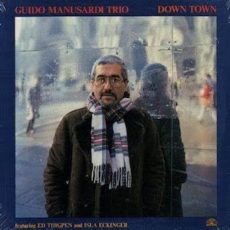
This morning’s choice from the library is Down Town (Soul Note SN 1131) by The Guido Manusardi Trio. It was released in 1986 and the album’s title comes from the restaurant in the Galleria where Manusardi plays solo piano. He’s one of the incomparable musicians whose records are consistently outstanding. Guido also played and recorded with Don Byas, Roy Eldridge, Art Farmer, Dexter Gordon, Red Mitchell, and many others over a nearly five-decade career. He’s joined here by the Swiss jazz bassist, Isla Eckinger whose catchy grooves flow smoothly whether at fast, medium, or slow tempos. The drummer is Ed Thigpen who needs no introduction to anyone owning albums by Ella Fitzgerald, Oscar Peterson, Bud Powell, Dinah Washington, and others. Thigpen could swing straight ahead with a strong, but not heavy touch on the drums and his rock-solid beat is the foundation sustaining the happy, relaxed mood of this date. I was introduced to his music on this album, and my copy used in this report is the original Italian Stereo pressing.
Downtown, the first of four tunes by the pianist starts Side One in good spirits with the trio’s mellow melody. The pace picks up on the opening chorus with the most solo space devoted to Manusardi who delivers an efficient statement. Eckinger displays his rhythmic virtuosity on the closing reading with a charming, melodic performance. Thigpen holds the song together with subtle support ahead of the finale. Guido’s very pretty ballad, Alexandra, is a stunning centerpiece for him on the song’s only solo. His presentation is elegantly graceful and tender thanks to the intimately gorgeous groundwork of his bandmates. The first side finale is the pianist’s Fairway. It’s ablaze from the pulse-quickening introduction by Thigpen into the trio’s vigorous theme. Guido dances brightly on the keys with an energetic opening statement. Isla follows with an expediently paced, uptempo reading that fuels Ed to raise the energy level higher with a brisk attack on the drums ending with a very satisfying closing chorus.
Side Two opens with the 1935 standard, My Romance by Richard Rodgers and Lorenz Hart. The ensemble introduces the melody at a medium tempo, and Manusardi permits his fingers full sway on the joyously happy lead solo. Eckinger fascinates endlessly on the next reading with incisively expressive lines, and Thigpen exchanges lively brushwork with the leader on the closer before the trio’s exit. Dino’s Mood, Manusardi’s second ballad allows the pianist another opportunity to weave a magic mist of great sensitivity as the song’s lone soloist with a soft-spoken spirit. Isla and Ed shadow Guido as he plays delicately, culminating into a tender climax. The album ends with The Meaning of The Blues by Bobby Troup and Leah Worth. It was composed in 1957 and Manusardi’s lone interpretation is delivered to perfection. He entices the listener with a performance of exquisite beauty and melancholy poetry into the ensemble’s gentle ending.
The solos throughout Down Town are enticing by the exceptional energy, interaction, and technical skill of Manusardi, Eckinger, and Thigpen. The album is also superbly recorded by engineer Giancarlo Barigozzi with an open and airy soundstage, stunning sound, and incredible definition of each instrument. If you’re unfamiliar with pianist Guido Manusardi and enjoy a solid jazz trio of piano, bass, and drums, I invite you to audition Down Town by The Guido Manusardi Trio. Your diligence in seeking the album out for your library will be rewarded with nearly thirty-seven minutes of outstanding jazz that still sounds as fresh as it did over three decades ago on a stellar album that’s highly recommended!
~ My Romance, The Meaning of The Blues – Source: JazzStandards.com © 2021 by Edward Thomas Carter

More Posts: choice,classic,collectible,collector,history,instrumental,jazz,music,piano
Daily Dose Of Jazz…
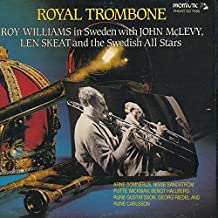
John McLevy was born on January 2, 1927 in Dundee, Scotland. He played in Europe with the Benny Goodman Orchestra in the 1970s, alongside George Masso, Hank Jones and Slam Stewart.
He performed with artists such as Max Bygraves, Roy Williams, accordionist Jack Emblow and later in a duo with veteran trumpeter Tommy McQuater.
Trumpeter John McLevy transitioned on November 27, 2002.
More Posts: flugelhorn,history,instrumental,jazz,music,trumpet
Daily Dose Of Jazz…
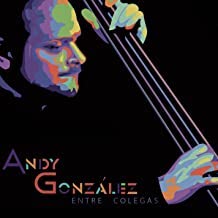
Andy González was born in The Bronx, New York on January 1, 1951. He and his brother Jerry González were founding members of Conjunto Libre and Grupo Folklórico y Experímental Nuevayorquíno, with whom he produced three albums: Concepts in Unity (1975), Lo Dice Todo (1976), and Homenaje a Arsenio (2011).
The band included Frankie Rodríguez, Milton Cardona, Gene Golden, Carlos Mestre, Nelson González, Manny Oquendo, Oscar Hernández, José Rodríguez, Néstor Torres, Gonzalo Fernández, Alfredo “Chocolate” Armenteros, Willy García, Heny Álvarez, Virgilio Martí, Marcelino Guerra, Rubén Blades, Orlando “Puntilla” Ríos, and Julito Collazo on the first two albums.
Over the course of his career, along with leading bands of his own, Andy worked with Dizzy Gillespie, Tito Puente, Eddie Palmieri, Kip Hanrahan and Astor Piazzolla.
Double bassist Andy González, who performed primarily in the Latin jazz and Afro-Cuban idioms, transitioned on April 9, 2020 from pneumonia and complications of diabetes in the Bronx.
More Posts: bass,history,instrumental,jazz,music
The Quarantined Jazz Voyager
History has proven that it took three plus years to eradicate the Spanish flu because people back in 1918 took the same stance of not wanting to abide by the wisdom of professionals to mask, social distance and quarantine. We are heading towards another tipping point as we see a rise in Delta and Omicron running rampant through the country. People are walking around unmasked like it’s 1999, and I remain vigilant in protecting myself. It’s a choice and a responsibility to self.
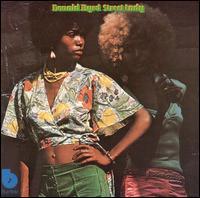
This week I’m reaching back to the Seventies for one of my favorites and pulling off the shelves the jazz~funk~fusion album Street Lady by trumpeter Donald Byrd. Recorded on June 13~15, 1973 at The Sound Factory in Hollywood, California, the album was released on the Blue Note label in July 1973. Once again Byrd steps away from his jazz purity and engages producer Larry Mizell on the heels of his successful production of its predecessor, Black Byrd.
The vocal arrangements were by Fonce Mizell, Fred Perren and Larry Mizell and George Butler executive produced this project.
Tracks | 42:12 All compositions by Larry Mizell/Byrd except as indicated
- Lansana’s Priestess ~ 7:39
- Miss Kane ~ 6:20
- Sister Love ~ 6:11
- Street Lady (Larry Mizell, Fonce Mizell) ~ 5:40
- Witch Hunt” – 9:42
- Woman of the World (Larry Gordon, Larry Mizell) ~ 6:51
- Donald Byrd – trumpet, flugelhorn, solo vocals
- Roger Glenn – flute
- Jerry Peters – piano, electric piano
- Fonce Mizell – clavinet, trumpet, vocals
- Fred Perren – synthesizer, vocals
- David T. Walker – guitar
- Chuck Rainey – electric bass
- Harvey Mason – drums
- King Errisson – congas and bongos
- Stephanie Spruill – percussion
- Larry Mizell – vocals, arranger, conductor
- Mike Salisbury ~ Art Direction, Cover
- Norman Seeff ~ Liner Photography
- Reggie Andrews ~ Electronic Consultant
- Chuck Davis ~ Technical Director
- Chuck Davis, John Arias ~ Engineer Assistant
- John Mills ~ Recording Engineer
- Chuck Davis, John Arias, John Mills ~ Remix Engineer

More Posts: adventure,album,club,genius,jazz,museum,music,preserving,restaurant,travel,trumpet
Daily Dose Of Jazz…
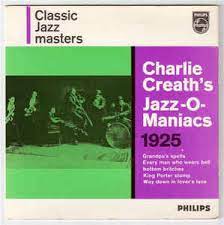
Charles Cyril Creath was born on December 30, 1890 in Ironton, Missouri and at an early age was playing in traveling circuses and in theater bands in the decade of the 1900s. He moved back to St. Louis, Missouri around 1919 and there he led bands playing on the Streckfus company’s riverboats traveling on the Mississippi River between New Orleans, Louisiana and St. Louis.
His ensembles became so popular that he had several bands under his own name at one time in the 1920s. A young Gene Sedric, later a mainstay of Fats Waller’s combo and orchestra, played with Creath on riverboats in the 1920s, and perhaps early 1930s. He co-led a group on the SS Capitol in 1927 with Fate Marable.
Late in the 1920s Charlie suffered from an extended illness, and primarily played saxophone and accordion instead of trumpet afterwards. He and Marable played together again from 1935 to 1938, and toward the end of the decade he opened a nightclub in Chicago, Illinois. He worked in an airplane manufacturing plant during World War II and retired in 1945. His last years were plagued with illness.
Aside from his brother-in-law, Zutty Singleton, members of Creath’s bands included Ed Allen, Pops Foster, Jerome Don Pasquall, Leonard Davis, and Lonnie Johnson. He recorded as a leader for Okeh Records between 1924 and 1927 billed as Chas. Creath’s Jazz-O-Maniacs, which were some of the hottest and most collectable jazz items recorded for OKeh’s race 8000 series.
Trumpeter, saxophonist, accordionist and bandleader Charlie Creath passed away on October 23, 1951, in Chicago.
More Posts: accordion,bandleader,history,instrumental,jazz,music,saxophone,trumpet