

Daily Dose Of Jazz…
William Fredrick Bean was born on December 26, 1933 into a musical family in Philadelphia, Pennsylvania. His mother played the piano, his father was an amateur singer and guitarist, and his sister sang professionally. He started on guitar at the age of twelve.
His father taught him some of the basics on guitar before he received lessons from Howard Herbert. He went on to study with Dennis Sandole for a year. During the late 1940s and 1950s, he performed at venues in the Philadelphia area, until in the mid-Fifties he moved to New York City and recorded with Charlie Ventura and Red Callender. By 1958 he was moving to the West Coast and settling in Los Angeles, California to record for Decca. In Los Angeles, he worked with Buddy Collette, Paul Horn, John Pisano, Bud Shank, Milt Bernhart, Les Elgart, Herb Geller, Lorraine Geller, Calvin Jackson, and Zoot Sims.
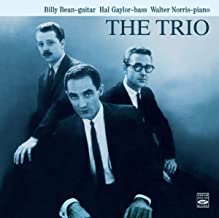
Returning to New York City in 1959 after accepting Tony Bennett’s offer to join his band, Bean remained with Bennett’s band for less than one year. Hal Gaylor, who had been Bennett’s bassist, assembled a trio with Bean and pianist Walter Norris, calling themselves The Trio. They recorded an album for Riverside Records in 1961. Finding it difficult to find work, the trio disbanded shortly after recording.
Bean performed with Stan Getz, Herbie Mann, and John Lewis, recording albums with Mann and Lewis. He co-led six recording albums and another 16 as a sideman. Returning to his hometown of Philadelphia, guitarist Billy Bean retired in 1986, and passed away on February 6, 2012.

More Posts: bandleader,guitar,history,instrumental,jazz,music
Daily Dose Of Jazz…
Edward L. Gibbs was born on December 25, 1908 in New Haven, Connecticut. A student of the great banjoist and bandleader Elmer Snowden, he went back and forth among three different stringed instruments during his career.
Gibbs began his career late in the 1920s, playing with Wilbur Sweatman, Eubie Blake, and Billy Fowler. He played with Edgar Hayes from 1937 and played with him on a tour of Europe in 1938. After a short stint with Teddy Wilson, he joined Eddie South’s ensemble in 1940, and worked later in the decade with Dave Martin, Luis Russell, and Claude Hopkins.
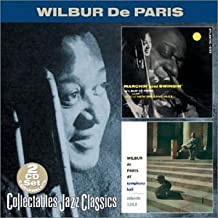
As a bassist, he led his own trio at the Village Vanguard and played in a trio with Cedric Wallace, but returned to banjo in the 1950s during the Dixieland jazz revival. He played and recorded with Wilbur de Paris among others during this time.
After studying with Ernest Hill, he returned to bass in the middle of the 1950s, but played banjo once again in the 1960s during another surge in interest in the Dixieland groups. He played at the World’s Fair in 1965 and in 1969 he played bass and occasionally banjo as a member of Buzzy Drootin’s Jazz Family, which included Herman Autrey, Benny Morton, Herb Hall, Sonny Drootin on piano and Buzzy on drums. Also, in the late ’60s he was part of a group called The Happy Family who featured him on both banjo and bass.
Banjoist, guitarist, and bassist Eddie Gibbs, who retired from active performance in the 1970s, passed away on November 12, 1994.
More Posts: bandleader,banjo,bass,guitar,history,instrumental,jazz,music
Daily Dose Of Jazz…
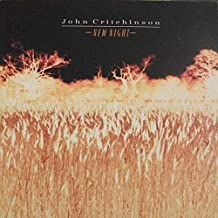
John William Frank Critchinson was born on December 24, 1934 in London, England. He worked as a part-time musician with Ronnie Scott, Tubby Hayes, and Jimmy Deuchar, among others. In 1979, at the recommendation of his mentor, Bill Le Sage, he became a member of Ronnie Scott’s Quartet until it folded in 1995. During that time, he worked with many visiting American artists, including Chet Baker, George Coleman, James Moody, Joe Henderson and Johnny Griffin.
In the early 1980s, he had an association with the British jazz fusion duo Morrissey–Mullen, appearing on two of their albums. He recorded with Dick Morrissey and was a member of Martin Drew’s Our Band, with Ron Mathewson, Jim Mullen, and Dick Morrissey.
In 1995, he formed a quartet with saxophonist Art Themen, bassist Dave Green and Dave Barry on drums. When Scott died in 1996, Critchinson formed the Ronnie Scott Legacy with Pat Crumly on saxophone and flute. Later in his life, he played and recorded with saxophonist Simon Spillett.
Pianist John Critchinson, who recorded eleven albums as a leader and was affectionately known as Critch, passed away on December 15, 2017.
More Posts: bandleader,history,instrumental,jazz,music,piano
The Quarantined Jazz Voyager
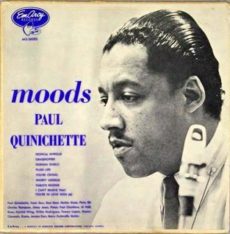
Moods, also referred to as Moods Featuring Paul Quinichette is the 1954 debut album by saxophonist Paul Quinichette. It features compositions and arrangements by Quincy Jones and was released in 1955 on the EmArcy label. The tracks were recorded on two session dates, on November 4th (tracks 5–8) and 22nd (tracks 1–4) 1954 with two different line-ups at Fine Sound Studios in New York City.
The second session featured an Afro-Cuban combo with Herbie Mann on flute and also on tenor saxophone and Latin percussion instead of a drum set. The difference between the two sessions was preserved in splitting the album with the later recorded Latin jazz session on the LP’s A-side, the more straight ahead approach on the other.
Tracks | 40:40 All compositions by Quincy Jones except as indicated
- Tropical Intrigue ~ 3:04
- Grasshopper ~ 4:02
- Dilemma Diablo ~ 4:03
- I Can’t Believe That You’re In Love With Me (Jimmy McHugh, Clarence Gaskill) ~ 6:44
- Plush Life ~ 7:48
- You’re Crying ~ 3:13
- Shorty Georgie (Harry Edison, Count Basie) ~ 6:33
- Pablo’s Roonie ~ 4:53
- Paul Quinichette – tenor saxophone
- Herbie Mann – flute, tenor saxophone
- Jimmy Jones – piano
- Al Hall – bass
- Tommy Lopez – congas
- Manny Oquendo – bongos
- Willie Rodriguez – timbales
- Paul Quinichette – tenor saxophone
- Sam Most – flute
- Sir Charles Thompson – piano
- Jerome Darr, Barry Galbraith – guitar
- Paul Chambers – bass
- Harold Wing – drums
More Posts: adventure,album,club,genius,jazz,museum,music,preserving,restaurant,saxophone,travel
Daily Dose Of Jazz…
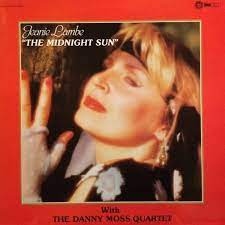
Jeanie Lambe was born on December 23, 1940 in Glasgow, Scotland. Her mother was a singer and her father played the accordion in the musical act Douglas, Nicol & Lamb. Her first public performances were with her parents and when she was seventeen, she became a member of the Clyde Valley Stompers.
She was the vocalist with the Alex Sutherland Sextet at Elgin’s Two Red Shoes Ballroom, where she kicked off the Two Red Shoes dances at age 19. Moving to London, England in 1960 Jeanie worked with a variety of jazz bands in the area, including those led by Alex Welsh, Kenny Ball and Charlie Galbraith. In 1964 she married tenor saxophonist Danny Moss and became more well known through her extensive performances at international jazz festivals.
Lambe has performed with modern and mainstream jazz musicians including Cliff Hardie and the UK All Stars Orchestra, Bobby Rosengarden, Monty Alexander, Ben Webster, Budd Johnson, Oscar Peterson, Wild Bill Davison, Kenny Davern, Joe Pass and Buddy Tate.
Suffering ill health, vocalist Jeanie Lambe, who recorded seven albums as a leader, passed away on May 29, 2020 in Perth, Australia at the age of 79.
More Posts: bandleader,history,instrumental,jazz,music,vocal