

Daily Dose Of Jazz…
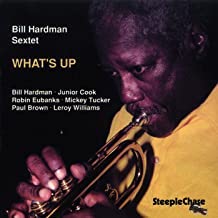
William Franklin Hardman, Jr. was born on April 6, 1933 in Cleveland, Ohio and growing up there worked with local players including Bobby Few and Bob Cunningham. While in high school he played with Tadd Dameron, and after graduation he joined Tiny Bradshaw’s band.
Hardman’s first recording was with Jackie McLean in 1956 and following this he played with Charles Mingus, Art Blakey and the Jazz Messengers, Horace Silver, and Lou Donaldson. He led a group with Junior Cook and as a leader recorded Saying Something on the Savoy label, receiving critical acclaim in jazz circles, but was little known to the general public.
He had three periods in as many decades with Art Blakey’s Jazz Messengers, however, his misfortune was not to be with him during their popular Blue Note recording years. Bill would go on to record three albums for Muse and one for Steeplechase record labels. He recorded forty-three albums as a sideman between 1956 and 1987 working with among others Hank Mobley, Charles Earland, Walter Bishop Jr., Curtis Fuller, Eddie Jefferson and Benny Golson.
On December 5, 1990 hard bop trumpeter and flugelhornist Bill Hardman, whose most prolific recording period as a sideman was with Blakey, passed away of a brain hemorrhage in Paris, France at the age of 57.
More Posts: bandleader,flugelhorn,history,instrumental,jazz,music,trumpet

Daily Dose Of Jazz…
John Bishop was born on April 5, 1959 in Seattle, Washington and raised in Germany, Washington, DC, San Antonio, Texas and Eugene, Oregon. He started playing drums at 7 in Washington, DC with the Patriots drum corps. He performed regularly throughout high school and college in Oregon, studied with Mel Brown and Charles Dowd and attended the University of Oregon, and later transferred to the jazz program at North Texas State University.
He returned to Seattle in 1981 for an extended engagement with the band Glider and never left. An unusually creative and fertile scene at the time, in the early ’80s, he was a member of the fusion group Blue Sky, which released two Top 10 albums and performed extensively throughout the decade. For 20 years, he was with the piano trio New Stories along with pianist Marc Seales and bassist Doug Miller.
He has recorded, performed and/or toured internationally with Don Lanphere, Mark Murphy, Tom Harrell, Julian Priester, Charles McPherson, Vincent Herring, Nick Brignola, Conte Condoli, Bobby Shew, Larry Coryell, Ernie Watts, Lee Konitz, Slide Hampton, Benny Golson, George Cables, Kenny Werner, Bobby Hutcherson, Dr. Lonnie Smith, Sonny Fortune, Herb Ellis, Buddy DeFranco, Bobby McFerrin, Joe Locke, Jerry Bergonzi, Carla Bley, Steve Swallow, Larry Coryell, and countless others.
As an educator he taught drums privately for forty years and was on the faculty at the University of Washington from 2005-2009. He regularly conducts drum and jazz workshops throughout the country. Appearing on more than 100 albums, John was inducted into the Seattle Jazz Hall of Fame in 2008, and was named a “Jazz Hero” by the Jazz Journalists Association in 2019. Drummer John Bishop continues to perform, record and produce.
More Posts: drums,educator,history,instrumental,jazz,music producer,producer
Requisites
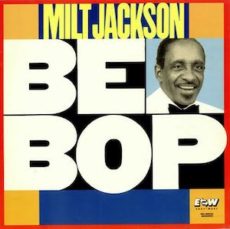
Bebop ~ Milt Jackson | By Eddie Carter
This morning’s discussion is by one of my favorite masters of the vibraphone, Milt Jackson. I was introduced to his music during a performance by The 1972 Newport Jazz All-Stars at Radio City Music Hall. Bebop (East-West – 7 90991-1) celebrates the forties jazz style characterized by a fast tempo, rapid chord changes, instrumental improvisation, and virtuosity that was created by Dizzy Gillespie, Charlie Parker, Bud Powell, and other musicians. On this date, Bags is sharing the spotlight with an outstanding sextet, Jon Faddis on trumpet, J.J. Johnson on trombone, Jimmy Heath on tenor sax, Cedar Walton on piano, John Clayton on bass, and Mickey Roker on drums. My copy used in this report is the 1988 US Full Digital Stereo album.
Side One kicks off with the 1951 jazz standard, Au Privave by Charlie Parker. The trio starts with a nimble introduction coming before the septet’s spirited theme. J.J. lights the first fire with a fierce heat, paving the way to Milt’s enthusiastic reading fueled by the rhythm section. Jimmy swings incisively and vividly next, then Jon travels into outer space with an abundance of high notes. Cedar drives to the finale with potent force ahead of the ensemble’s vigorous climax. Up next is Good Bait by Count Basie and Tadd Dameron. This seldom-performed 1944 tune became a hit at the height of the Bop era. Jackson leads with a friendly, light-hearted solo that’s pleasant. Johnson steps casually into a splendid reading. Heath explores some interesting avenues for the next performance. Faddis also takes things easy with a bluesy tone. Walton closes with a thoughtfully developed statement significant for its understated emotion.
Dizzy’s Woody’n You was written in 1943 and dedicated to Woody Herman. The ensemble moves back into uptempo for the theme. Milt explores the song’s roots first with an effervescent performance. J.J. heats things up next with an agile contribution, then Jimmy is as sprightly as ever on the third solo. Jon keeps things moving with an optimistic interpretation that swings hard. Cedar finishes with some exciting creativity before the septet disappears after the reprise. Now’s The Time by Charlie Parker cruises at a comfortable speed with Cedar taking the first chorus of this irresistible toe-tapper into the collective theme. Bags initiates a very impressive statement that moves smoothly. Johnson embraces the second reading like he’s speaking to an old friend, then Heath gets into an affirmative groove. Faddis opens the throttle a little further in a lively performance, and Walton puts the icing on the closer leading up to the climax.
Side Two starts with Ornithology by Charlie Parker and Benny Bailey. The septet begins with a happy, swinging beat on the unison theme statement. Milt gets things off the ground first, afterward, Jon wails with astounding conviction. Jimmy follows with a very relaxing performance, then J.J. strides confidently into the next reading. Cedar follows with some solid grooving, and John does some tuneful walking on his first solo opportunity preceding the theme’s reentry. One of Dizzy’s most enduring hits from 1944, Groovin’ High keeps the group at an easy tempo with Bags in front of the ensemble on the collective melody. Walton takes the lead this time and turns in some fine work. Jackson is equally easygoing on the second statement. Faddis uses the mute for an informal discussion, then Heath turns in a stirring presentation. Johnson is up next to give a muted trombone reading, and Clayton responds with a brief articulate, and charming finale before the closing chorus.
Birks’ Works was composed by Dizzy in 1951 and the title refers to his middle name. This jazz standard was the title tune for his 1957 Big Band album. John and Bags lead the septet on a bluesy opening chorus. Cedar solos first, taking things relatively easy. J.J. comes in next with a bright and breezy statement. Jimmy makes a positive impression on the third reading. Jon follows, strolling leisurely into the next solo, and Milt makes his points with admirable zest ahead of the out-chorus. Salt Peanuts, written in 1942 by Gillespie and Kenny Clarke begins with a brief introduction by Roker, segueing into a brisk melody. Heath takes flight first swiftly like a cheetah chasing its prey, then Johnson takes over for a speedy sprint. Jackson’s fingers work furiously on the vibes next. Faddis lets his ideas unfold intensely on the following solo, and Walton gets the last of the “salt peanuts” on a freewheeling finale before the ensemble’s reprise and coda.
“Bags” (Milt’s nickname) and his bandmates complement one another marvelously and these cats know how to swing throughout this collection of old favorites. The LP is a full digital recording by engineer Bobby Warner with stunning sound quality surrounding your sweet spot. Bebop is a stellar tribute to the music that remains as fresh today as when first performed in the forties. It’s also a pleasure to hear these great improvisers in a resolute form on an album that’s a high note in his plentiful discography. If you’re a fan of Milt Jackson as a leader or sideman and enjoy Hard-Bop, you won’t regret picking Bebop up on your next vinyl hunt and it’s sure to become an essential album in your library! ~ Birks’ Works (Verve Records MG V-8222) – Source: Discogs.com ~ Good Bait, Woody’n You, Groovin’ High – Source: JazzStandards.com ~ Au Privave, Bebop, Birks’ Works, Now’s The Time, Ornithology, Salt Peanuts – Source: Wikipedia.org © 2021 by Edward Thomas Carter

More Posts: choice,classic,collectible,collector,history,instrumental,jazz,music,vibraphone
Daily Dose Of Jazz…
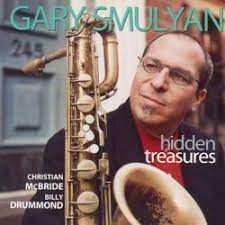
Gary Smulyan was born in Bethpage, New York on April 4, 1956. He studied at Hofstra University before working with Woody Herman. His biggest influence is Pepper Adams. When Adams died, Smulyan recorded an album titled which included eight pieces composed by Adams.
Smulyan has played with the Vanguard Jazz Orchestra, the Mel Lewis Big Band, the Dave Holland Big Band and Octet, the Dizzy Gillespie All Star Big Band. He has performed and recorded with Carla Bley’s Big Band.
He has recorded thirteen albums as a leader, as a sideman seventy-six with Harry Allen, David Byrne, Michel Camilo, Carnegie Hall Jazz Band, Freddy Cole, George Coleman, Dena DeRose, Bill Evans, Gil Evans, Jon Faddis, John Fedchock, Don Friedman, Benny Green, Tom Harrell, Gene Harris, Jimmy Heath, Joe Henderson, Conrad Herwig, Freddie Hubbard, Denise Jannah, B.B. King, Mike LeDonne, Joe Lovano, Joe Magnarelli, Kevin Mahogany, Mark Masters, Mingus Big Band, Grachan Moncur III, Eddie Palmieri, Charlie Parker, Charlie Persip, Diana Ross, Rob Schneiderman, John Scofield, Don Sickler, Mark Soskin, Dave Stryker, Roseanna Vitro, Walt Weiskopf, and Gerald Wilson.
Baritone saxophone Gary Smulyan leads a trio with bassist Ray Drummond and drummer Kenny Washington.
More Posts: bandleader,history,instrumental,jazz,music,saxophone
Daily Dose Of Jazz…
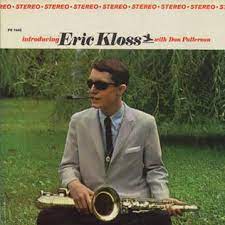
Eric Kloss was born April 3, 1949 in Greenville, Pennsylvania near Pittsburgh, and attended the Western Pennsylvania School for the Blind, which was run by his father. When he was 10, he started on saxophone, and two years later he was playing in night clubs with professional musicians such as Bobby Negri, Charles Bell, and Sonny Stitt. At 16, he recorded his debut album, Introducing Eric Kloss on the Prestige label in 1965, with Don Patterson and Pat Martino.
On his third album, Grits & Gravy, he recorded with musicians over twice his age: Jaki Byard, Richard Davis, and Alan Dawson. He continued recording and performing while a student at Duquesne University. A fan of Elvis Presley and The Ventures, he was attracted to the growth of jazz fusion in the 1960s and ’70s, and eventually played with fusion musicians Chick Corea, Dave Holland, and Jack DeJohnette. He also collaborated with Richie Cole and Gil Goldstein, and did sessions with Cedar Walton, Jimmy Owens, Kenny Barron, Jack DeJohnette, Booker Ervin, Barry Miles, and Terry Silverlight.
By the 1980s, Kloss was teaching at Rutgers University, then Duquesne and Carnegie Mellon. He and his wife, a vocalist, collaborated in a group called Quiet Fire. Saxophonist Eric Kloss has performed and recorded rarely since the Eighties due to health problems.
More Posts: bandleader,history,instrumental,jazz,music,saxophone