

Daily Dose Of Jazz…
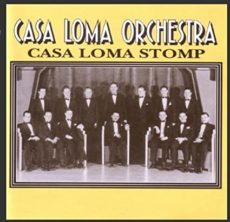
Grady Watts was born in Texarkana, Texas on June 30, 1908 and after attending the Allen Military Academy and the University of Oklahoma, he played in local jazz bands in Louisiana during the late 1920s. By 1931 he had joined the Casa Loma Orchestra, where he became a featured soloist and a composer.
Grady recorded copiously with the ensemble and remained with it until 1942. Among his compositions for the Orchestra was Rhythm Man, You Ain’t Been Livin’ Right, I Remember, and Touch and Go.
The mid-1940s saw Watts abandoning his full-time career as a performer and took jobs in artist & repertoire and as an executive in the chemical engineering industry. Trumpeter and composer Grady Watts passed away in Vero Beach, Florida in January 1986.

More Posts: composer,history,instrumental,jazz,music,trumpet

Daily Dose Of Jazz…
Ken Hyder was born on June 29, 1946 in Dundee, Scotland. He began playing jazz in Scotland before moving south to London, England where he played at the legendary Little Theatre Club – an avant-garde haunt run by the late John Stevens.
For over 40 years Hyder has been playing and composing music and has produced more than three dozen albums of original material. He formed the group Talisker and recorded six albums with this pioneering and proto-type Celtic jazz group. He has recorded with Elton Dean, Chris Biscoe, Tim Hodgkinson, Paul Rogers, Maggie Nicols, Don Paterson, and Frankie Armstrong.
The 1970s saw him moving away from jazz and into collaborations with musicians from different musical backgrounds including Irish, South African and South American players. Later, he became interested in exploring spiritual aspects of music with spiritual practitioners like Tibetan and Japanese Buddhist monks, and Siberian shamans.
Ken combines folk, ethnic and Celtic music with jazz. He has worked and recorded with Dick Gaughan, Vladimir Rezitsky, Phil Minton, Lindsay L. Cooper, Sainkho Namtchylak, Jo’burg Hawk, Marcio Mattos, Jim Dvorak, John Edwards, Dave Webster, John Rangecroft, Radik Tyulyush, Julian Bahula, Lucky Ranku, Larry Stabbins, Harry Beckett, Art Themen, Gary Windo, Pete McPhail, Keith Tippett, Harry Miller, Nick Evans, Raymond Macdonald, Ntshuks Bonga, Hamish Henderson, Jon Dobie, and Lello Colombo.
Fusion drummer and percussionist Ken Hyder continues with his current projects that include K-Space, with Tim Hodgkinson and Gendos Chamzyryn; Hoots and Roots with Scottish singer Maggie Nicols; RealTime with z’ev, Andy Knight and Scipio; Raz3 with Hodgkinson and Lu Edmonds; A revived Talisker, with Nicols and Raymond MacDonald and a duo with pianist Vladimir Miller.
More Posts: bandleader,drums,history,instrumental,jazz,music,percussion
Requisites
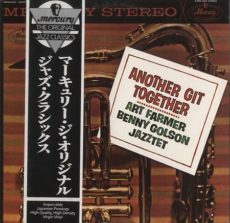
Another Git Together ~ Art Farmer/Benny Golson Jazztet | By Eddie CarterI was listening to this album a few nights ago and that’s what led me to this morning’s choice submitted for your approval by two jazz titans, trumpet and flugelhorn player Art Farmer and tenor saxophonist Benny Golson. Another Git Together (Mercury Records MG-20737/SR-60737) by The Jazztet is a 1962 release and their sixth album as an ensemble. They were together from 1959 to 1962 before disbanding but would reunite in the nineties performing live at jazz festivals around the world. Here, the duo is augmented by Grachan Moncur III on trombone; Harold Mabern on piano; Herbie Lewis on bass and Roy McCurdy on drums. My copy used in this report is the 1985 Japanese Stereo reissue (Mercury EXPR-1002), one of The Original Jazz Classics Series from Nippon Phonogram and Polygram Records.
The album takes flight with a trip to the Space Station by Grachan Moncur III, an uptempo burner beginning with the group in complete agreement on a scintillating melody. Art opens with a vigorously brisk first solo, then Benny blows with audacious confidence next. Grachan gives a statement of spirited exuberance on the third interpretation and Harold provides plenty of enthusiastic energy on a joyous finale.
The sextet changes gears for Domino, a 1950 French tune by Don Raye, Jacques Plante, and Louis Ferrari. It’s also been a hit in the US for numerous vocalists and an unforgettable title song by Roland Kirk on his 1962 album. The trio settles into a relaxed setting for the melody with Farmer on flugelhorn, and Golson and Moncur trailing him softly. Art begins telling a subtle touching story on the opening chorus with a soft tone. Grachan hits his target next with a gorgeous performance. Benny meets the challenge on the third reading, his tenor sax flowing seamlessly. Harold makes his mark on the closing statement with a dazzling display of creativity preceding the ensemble’s climax.
The title track is a soulful blues by John Hendricks and Pony Poindexter that starts with a dialogue between the trio and ends slowly fading into oblivion. The fun begins when Benny goes to work first at a danceable tempo, compelling the listener to snap their fingers, get up and dance. Harold gets into a tantalizing groove next, and Art is passionately driven on the third performance. Grachan expresses his emotions exquisitely with the utmost assurance on the fourth statement. Roy and Harold share an irresistibly appealing, smartly articulated performance on the closer.
Along Came Betty by Benny Golson first appeared on the 1958 album, Art Blakey and The Jazz Messengers while he was a member. The ensemble starts the melody slightly faster than the original recording. Mabern steps up first to create a relaxing atmosphere with a great swinging beat. Golson breathes new life into his tune with a stylish interpretation providing a remarkable timbre and easy rhythm. Farmer executes a flawless statement on the finale before the sextet reconvenes for the coda.
This Nearly Was Mine by Oscar Hammerstein II and Richard Rodgers made its debut in their 1949 Broadway musical, South Pacific, and reappearing in the 1958 film as well. Farmer is back on flugelhorn leading the sextet on the melody of this pretty waltz at a lively pace. The solo order is Art, Benny, Grachan, and Harold with each man giving inspired improvisations.
Reggie, a cheerful original by Benny named for his second son closes the second side with a perfect vehicle for improvisation as the group collectively illustrates on the opening chorus. The tenor man opens the solos with a boldly assertive statement. Farmer comes in next for an enthusiastically agile reading that’s pitch-perfect. Moncur is as cool as the other side of the pillow on the third performance, and Mabern gets the final spotlight to deliver an imaginatively melodic, happy reading leading to the climax. Tommy Nola engineered the original recording of Another Git Together and has also made albums for Argo, ATCO, Atlantic, Contemporary, Riverside, and United Artists Records. The album was produced by Jack Tracy who also was the director of EmArcy and an editor at a little-known jazz magazine named Down Beat that’s still in publication in print and digital form today. The sound quality from Mr. Nola’s original tapes has been gorgeously remastered by Polygram with a spectacular soundstage throughout the highs, midrange, and low end, that’s quite revealing. As noted, writer Leonard Feather mentions in his liner notes, “The Jazztet was one of the finest combos in 1959; it is one of the finest today. This is enough; invidious comparisons are not needed. By the same token, three years from now there will be no need to assume that the present LP has lost, any intrinsic value. Any group in which Farmer and Golson are leaders, and for which they select the rest of the membership, can hardly go wrong”. I agree with every word in that statement and will only add, Another Git Together by The Art Farmer–Benny Golson Jazztet is an LP that’ll reward you with many hours of listening pleasure, especially if you’re a fan of small group jazz! ~ Art Blakey and The Jazz Messengers (Blue Note BLP 4003/BST 84003); Domino (Mercury Records MG 20748/SR 60748) ~ Tommy Nola, Jack Tracy – Source: Discogs.com ~ Album Quote – Source: Album Liner Notes by Leonard Feather ~ Domino – Source: Wikipedia.org ~ Space Station – https://www.youtube.com/watch?v=n3FrCKqP1Fs ~ Domino – https://www.youtube.com/watch?v=DN74iqjXLLs Track List | 34:28
- Space Station (Grachan Moncur III) – 5:10
- Domino (Don Raye, Jacques Plante, Louis Ferrari) – 6:58
- Another Git Together (Jon Hendricks, Pony Poindexter) – 6:12
- Along Came Betty (Benny Golson) – 5:24
- This Nearly Was Mine (Richard Rodgers, Oscar Hammerstein II) – 6:20
- Reggie (Golson) – 4:24
- Art Farmer – trumpet, flugelhorn
- Benny Golson – tenor saxophone
- Grachan Moncur III – trombone
- Harold Mabern – piano
- Herbie Lewis – bass
- Roy McCurdy – drums

More Posts: choice,classic,collectible,collector,history,instrumental,jazz,music,saxophone,trumpet
Daily Dose Of Jazz…
Joe “Fox” Smith was born Joseph Emory Smith on June 28, 1902 in Ripley, Ohio into a family of musicians. His father was a bandleader and his six brothers played trumpet or trombone.
Known throughout his childhood as “Toots”, he originally started as a drummer but was convinced by Ethel Waters that he was a far better trumpeter. By the time he reached New York in 1920, he had his own style, which achieved “the vocalized sound, the blues spirit, and the swing.
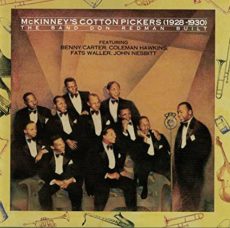
In 1921, Smith joined the Black Swan Jazz Masters in Chicago, Illinois directed at the time by Fletcher Henderson. He went on to work with the Jazz Hounds, the Broadway Syncopators, and finally with McKinney’s Cotton Pickers throughout the 1920s. He became famous from his work accompanying Bessie Smith, recording over 30 records. Some of the other artists he worked with include Billy Paige, Noble Sissle, Eubie Blake, and Allie Ross.
Trumpeter and cornetist Joe “Fox” Smith passed away from complications related to tuberculosis on December 2, 1937 in a Central Islip, New York asylum.
Daily Dose Of Jazz…
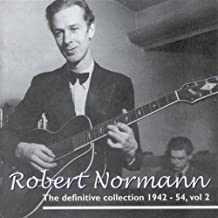
Robert Uno Normann was born on June 27, 1916 in Borge, Østfold, Norway. An autodidact performer on the banjo, accordion and tenor saxophone, he would eventually make the guitar as his main instrument. He was one of the swing era’s most sought after guitar soloists in Norway and was also a pioneer of the electric guitar.
He began his musical career as a wandering street and backyard musician at age 12 and became a professional musician in 1937. As a part of the Oslo jazz scene, he performed in several swing jazz groups, Freddy Valier, String Swing, and Gunnar Due. He simultaneously led his own quartet. During this period he played tenor saxophone with the Pete Brown Big Band from 1945 and various random jazz groups such as Frank Ottersen, and Willy Andresen. He got several career offers from international artists, including from Benny Goodman and Barney Kessel, that he turned down.
He never listened to recordings by Django Reinhardt but got his inspiration from listening to Teddy Wilson and Leon Chu Berry, and various accordionists. From 1955, he was less active in the jazz context because of significant alcohol problems. As a studio musician, Robert participated in close to 1300 productions, composed music to multiple folk texts, film, theater, and small pieces of music inspired by jazz and traditional Norwegian folk music.
Normann retired as an active musician in 1982 and devoted his time to small scale farming and inventions. Guitarist and jazz guitar pioneer Robert Normann, who made his first electric guitar in 1939 by constructing a pickup of copper wire, magnets and pitch stolen from public phones, passed away at the age of 81 on May 20, 1998 in Kvastebyen, Sarpsborg, Østfold, Norway.
More Posts: accordion,bandleader,banjo,guitar,history,instrumental,jazz,music,tenor saxophone