


Daily Dose Of Jazz…
Squire Gersh was born William Girsback on May 13, 1913 in Astoria, Oregon. In the Thirties, he played in San Francisco, California with Lu Watters, Bob Scobey, Turk Murphy, and Mutt Carey. He went on to record with Watters in 1942 and with Murphy multiple times between 1950 and 1966.
Gersh’s agile double bass playing may be heard on Some Of These Days, recorded by Darnell Howard’s Frisco Footwarmers in San Francisco in 1950. He replaced bassist Arvell Shaw and accompanied Louis Armstrong on recording sessions with is All-Stars in “The Edsel Show” on October 13, 1957 and went on a tour of South America with Armstrong between 1956–58.
He then went on to play in Europe with Kid Ory and Red Allen in 1959, along with drummer Alton Redd and pianist Cedric Haywood making up the rhythm section. Never leading his own recordings, little is known about the musician from the Sixties until his death. Tubist and double-bassist Squire Gersh, who played in the traditional jazz genre, passed away on April 27, 1983 in San Francisco.

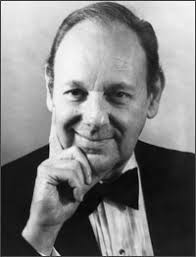
Three Wishes
Dick Katz told Nica if given that his three wishes would be:
-
-
“There would have to be new Steinways in all the clubs.”
-
“Drummers would not be allowed to play as loud as this one.”
-
“I’d like to have time to think about number three.”
-
*Excerpt from Three Wishes: An Intimate Look at Jazz Greats ~ Compiled and Photographed by Pannonica de Koenigswarter

More Posts: baroness,history,instrumental,jazz,music,pannonica,piano,three,wishes
Daily Dose Of Jazz…
Trevor Ramsey Tomkins was born May 12, 1941 in London, England. As a young teenager, he first took up the trombone before switching to the drums on which he made his first professional appearance. Although he studied extensively, mostly in the classical vein, he was deeply interested in jazz, studied harmony and music theory, and in the early 60s moved permanently into this field.
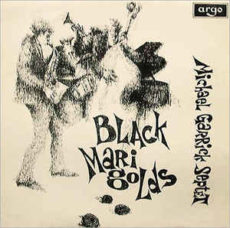
Trevor worked and recorded several albums in small groups with trumpeter Ian Carr, as well as pianist Michael Garrick and saxophonist Don Rendell in the late 1960s and early 1970s. In the Seventies, he was a member of the jazz-fusion group Gilgamesh that was part of the Canterbury scene in Kent, England. He also performed and recorded with saxophonist Barbara Thompson, pianist Mike Westbrook, and others.
After spending some time in the United States, he returned to England and became one of the most sought after jazz drummers in the UK. Tomkins worked with Ian Carr’s Nucleus, Giles Farnaby’s Dream Band, David Becker, and Henry Lowther’s Quaternity. He appears on the 1971 album First Wind by Frank Ricotti and Mike de Albuquerque and on Tony Coe’s 1978 album Coe-Existence. He is also in demand as accompanist to American jazzmen visiting the UK, amongst them Lee Konitz.
Mainstream and bop drummer Trevor Tomkins, who has never been a leader and was a member of various trios and other line-ups with Roy Budd, remains a first call drummer and much-respected teacher on the jazz scene.
More Posts: drums,history,instrumental,jazz,music

Daily Dose Of Jazz…
Oscar Valdambrini was born on May 11, 1924 in Turin, Italy and his professional career didn’t begin until the late 1940s when he played with Rex Stewart. Soon afterward he co-led a small ensemble with Gianni Basso and his association with Basso would continue through the early 1960s.
He also arranged and played as a sideman for Armando Trovajoli toward the end of the Fifties. During the 1960s he played with Gil Cuppini, Duke Ellington, and Giorgio Gaslini, and by the early Seventies, he was working with Maynard Ferguson.
Joining forces once again with Basso the two performed together from 1972 to 1974. He went on to also play with Franco Ambrosetti, Conte Candoli, Dusko Goykovich, Freddie Hubbard, Mel Lewis, Frank Rosolino, Ernie Wilkins, and Kai Winding in the 1970s.
Growing increasingly sick from the middle of the 1980s, trumpeter and flugelhornist Oscar Valdambrini, had a central role in the emergence of a modern jazz movement in Italy, receded from active performance and passed away on December 26, 1996 in Rome, Italy.
More Posts: arranger,bandleader,flugelhorn,history,instrumental,jazz,music,trumpet
Requisites
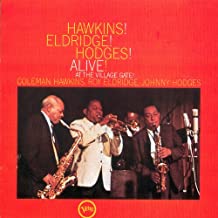
Hawkins! Eldridge! Hodges! Alive! At The Village Gate! ~ Coleman Hawkins, Roy Eldridge, Johnny Hodges | By Eddie Carter
I was in the mood to hear a live recording and came across a title I’ve not heard in a while, but always enjoyed. Hawkins! Eldridge! Hodges! Alive! At The Village Gate! (Verve Records V6-8504) is one of the smoothest live performances ever recorded with a stellar lineup that needs no introduction. Roy Eldridge on trumpet; Johnny Hodges on alto sax; Coleman Hawkins on tenor sax; Tommy Flanagan on piano; Major Holley on bass and Edward Locke on drums. This album was recorded on August 15, 1962, at the Greenwich Village nightclub. My copy used in this report is the 1962 US Stereo release and Satin Doll starts the set. The 1953 jazz standard was written by Duke Ellington, Billy Strayhorn and Johnny Mercer who added the words after the instrumental became a hit. For those unaware, the song is named after a famous black stripper whose stage name was the inspiration for the song. Satin Doll is one of Ellington’s most recorded compositions and has been featured on jazz, pop, and even soul albums.
The rhythm section opens the song gracefully, then Roy’s muted trumpet leads the sextet through the opening chorus thoroughly relaxed with a lightly applied beat. His muted opening statement is executed with sensitive delicacy, then Hodges opens with a sinuously graceful performance next. Tommy shows off his chops next with a gorgeous interpretation that’s relaxed and gracious. Hawk counters with flowing statements of beauty that develop nicely on the third performance and Major makes his presence felt with engaging ideas on the closer preceding the sextet’s strong culmination.
Perdido by Juan Tizol brings Side One to a close with a lively theme treatment that turns up the heat by the sextet and gets your foot tapping along from the outset. It was written in 1941, became a hit for Duke Ellington a year later on Victor, and lyrics were added by Ervin Drake and Hans Lengsfelder in 1944. Hodges opens a dialogue of scintillating energy that drives the trio confidently through the opening statement. Eldridge takes over with a fiery conversation that’s hot enough to glow on the next reading.
Hawk steps up next for a sizzling performance as warm as the summer sun, then Flanagan shines brightly on the next reading with brisk intensity. Holley gets a few final words of utter enthusiasm preceding the ensemble’s rambunctious reprise, finale and appreciative applause by the audience. The Rabbit In Jazz is a slow-tempo blues by Hodges and Hawkins occupying the entire second side that gives the front line plenty of space to play. The sextet begins the song with a solemn opening chorus segueing into Johnny who glides sensuously through a contemplative performance.
Roy follows, enhancing the flavor of this succulent dish with a solo as sweet as sugar. Coleman offers a textbook example of his virtuosity within the boundaries of the blues on the third statement. Tommy takes the final solo with a short and sweet interpretation emphasizing the expressive beauty of his playing into a fitting finale of a live set capturing three giants at their pinnacle.
The men behind the dials are three elite engineers of the recording industry, Frank Greenwald who worked on many Verve jazz albums. Tom Hidley who’s worked on records by Frank Zappa and The Mothers of Invention. Val Valentin whose work appears on many classic MGM and Verve LPs of the sixties, plus other labels including Bethlehem, Contemporary, Pablo, and Tampa.
The result of their combined efforts is an excellent recording with a spacious soundstage that’s very impressive and perfectly matched to the brilliant musicianship exhibited by the sextet throughout the album. At just shy of forty-minutes, Hawkins! Eldridge! Hodges! Alive! At The Village Gate is a gem of a jazz album that I’m sure will make an invaluable addition to any jazz library! An additional live album by Coleman Hawkins hit the stores in 1963 titled Hawkins! Alive! At The Village Gate also featuring Tommy Flanagan, Major Holley, and Edward Locke!
~ Hawkins! Alive! At The Village Gate (Verve Records V-8509/V6-8509); Perdido (Victor 27880); Frank Greenwald, Tom Hidley, Val Valentin – Source: Discogs.com ~ Perdido – Source: jazzstandards.com ~ Satin Doll – Source: Wikipedia.org ~ © 2020 by Edward Thomas CarterHawkins! Eldridge! Hodges! Alive! At the Village Gate! is a live album by saxophonists Coleman Hawkins and Johnny Hodges with trumpeter Roy Eldridge recorded at the Village Gate in 1962 and released on the Verve label.
Track List | 39:01- Satin Doll (Duke Ellington, Billy Strayhorn, Johnny Mercer) – 11:16
- Perdido (Juan Tizol) – 11:36
- The Rabbit in Jazz (Coleman Hawkins, Johnny Hodges) – 16:49
- Coleman Hawkins ~ tenor saxophone
- Roy Eldridge ~ trumpet
- Johnny Hodges ~ alto saxophone
- Tommy Flanagan ~ piano
- Major Holley ~ bass
- Eddie Locke ~ drums

More Posts: choice,classic,collectible,collector,history,instrumental,jazz,music,saxophone