


Three Wishes
Nica asked Jual Curtis what his three wishes would be and he replied:
-
-
“To be straight as far as work is concerned.”
-
“To be able to play.”
-
“To have peace of mind.”
-
*Excerpt from Three Wishes: An Intimate Look at Jazz Greats ~ Compiled and Photographed by Pannonica de Koenigswarter

More Posts: baroness,bass,history,instrumental,jazz,music,pannonica,three,wishes
Daily Dose Of Jazz…
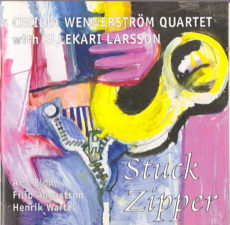
Cecilia Wennerström was born on April 21, 1947 in Stockholm, Sweden and studied saxophone at the music academies in Malmoe and Gothenburg. In 1997 she released her first self-titled album as a leader, Cecilia Wennerström/Minor Stomp on the Four Leaf Records label. Joining her were Ann Blom on piano, Filip Augustson on bass, and Henrik Wartel on drums. Enjoying the small group format she explores classical, bebop/cool-oriented jazz.
Cecilia is currently a member of the Wennerstrom Larsson Explicity with her husband Sven Larsson, who released their first album Tussilago in September 2011. She is also part of the octet LARS 8 which plays compositions by Lars Gullin and other Swedish jazz icons.
In 2013 she released her fourth solo compact disc Lydian Mars with pianist Maria Kvist, bassist Filip Augustson, and drummer Jonas Holgersson. The band on the recording session evolved into the Cecilia Wennerström New Quartet with Chris Montgomery replacing Holgersson on drums.
Saxophonist, flutist, and composer Cecilia Wennerström continues to compose, perform, and record.

More Posts: bandleader,composer,flute,history,instrumental,jazz,music,saxophone
Daily Dose Of Jazz…
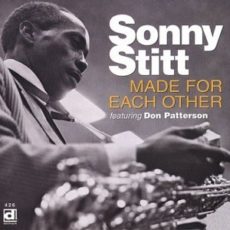
Billy James born William James on April 20, 1936 in Pittsburgh, Pennsylvania. He first came on the jazz scene in the Fifties when he began working with the Lionel Hampton Orchestra, with the bandleader thinking the 15-year-old James was already playing at professional standards. He would then go to work with Booker Ervin. In the early 1960s with played and recorded with James Moody, Candido Camero, Gene Ammons, Sonny Stitt, Don Patterson, and Eddie “Lockjaw” Davis.
With Patterson, he frequently recorded as a duo, and James led his own groups in the latter half of the 1960s. He worked further with Stitt during this time as well as with Eric Kloss. Further associations also include Eddie Harris, Houston Person, Grant Green, and Pat Martino.
Billy’s most illustrious performances including the Patterson side righteously titled Boppin’ and Burnin’ and even better, the Boss Tenors in Orbit! sessions in which Stitt duels with Ammons.
Drummer Billy James, whose most distinctive aspect of drumming is an extremely well-disposed shuffle that he seems able to reinvent endlessly, chorus after chorus, passed away on November 20, 2009.
More Posts: drums,history,instrumental,jazz,music
Requisites
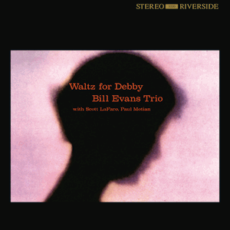
Waltz For Debby ~ Bill Evans Trio | By Eddie Carter
By 1961, pianist Bill Evans not only had one of the best trios in the United States but one of the best groups in jazz with bassist Scott LaFaro who would replace Sam Jones and Paul Motion on drums. Together, this threesome made four incredible albums for Riverside Records. Portrait in Jazz in 1960, Explorations in 1961, and two albums recorded in performance at The Village Vanguard, on June 25, 1961. Sunday at The Village Vanguard released the same year and the subject of this morning’s discussion, Waltz For Debby (RLP 399/RS 9399) in 1962. These LP’s became a standard of excellence among other piano-bass-drums records that followed. My copy used in this report is the 2000 Mono audiophile reissue (DIW-9011 – RLP-399) by DIW Records. This is the third Japanese pressing of Waltz For Debby, but the first Mono reissue manufactured by Victor Entertainment, Inc. The previous two albums released in 1975 and 1984 were both Stereo reissues by Victor Musical Industries, Inc.
The opening track, My Foolish Heart was written in 1949 by Ned Washington and Victor Young! This timeless evergreen became a well-recorded jazz standard and was featured on the silver screen in the film dramatization, the same year. The introduction is a suspenseful and ingeniously planned affair where the trio interacts beautifully so that no one voice dominates or falls subordinate to the others. Bill is ideally suited to this serene standard as the song’s only soloist because he could create compelling improvisations in any context. Here, he crafts a stately delicate reading that unfolds its beauty gently. Scott and Paul complement the pianist with a subtle expression of intimacy that’s beautiful and as lush as any I’ve heard.
Bill’s contribution to the album is the title tune, named for the pianist’s niece and one of two selections heard here that made their first appearance on the 1956 album, New Jazz Conceptions. The introduction is a mild two instrument dialogue by Bill and Scott evolving into a midtempo theme treatment when Paul joins the conversation. Evans’ opening solo is a gorgeous tour-de-force surging with vibrant activity, then LaFaro gives a vigorous exercise on the closer delivered with the utmost assurance that’s impossible not to tap your foot to.
Detour Ahead by bassist and violinist, John Frigo, guitarist Herb Ellis, and pianist Lou Carter is a song that hasn’t lost its charm by being done too often. This jazz standard was written in 1947 after all three musicians left The Tommy Dorsey Orchestra to form a trio, The Soft Winds. Bill masterfully negotiates the opening statement affectionately with skillfully paced cues of rich intonation. Scott closes with an expressive reading that’s inexpressibly poignant and heartfelt into an elegant coda.
My Romance by Richard Rodgers and Lorenz Hart was written in 1935 for the Broadway musical, Jumbo and also returns in the 1962 musical film, Billy Rose’s Jumbo. This evergreen opens with a marvelous solo introduction by Evans, then LaFaro and Motion shine joining him for a midtempo theme treatment that doesn’t fail to please the audience and listener. Bill’s opening solo is on point, emphasizing his remarkable technique and facility for complex melodic invention. Scott moves with supreme confidence and a lively rhythmic drive on the final reading propelled by the nostalgic reinforcement of the piano and drums until the blissful ending.
The opening notes of Some Other Time by Leonard Bernstein, Betty Comden, and Adolph Green recall Evans’ and Paul Chambers’ introduction to Miles Davis’ Flamenco Sketches two years earlier on Kind of Blue. This tune was written in 1944 and featured in the musical, On The Town. The pianist originally planned to record it on his 1958 album, Everybody Digs Bill Evans, but used another Bernstein, Comden, Green composition instead, Lucky To Be Me that’s also heard in the film. The trio presents the melody with a collective warm glow, and Bill delivers a gentle tenderness and tranquility on the song’s only solo that’s bewitching. Scott and Paul add a lovingly subtle supplement that’s just the right touch culminating with a tender climax and warm response from the crowd.
The album closes, paying homage to Evans’ old boss Miles Davis with a scintillating rendition of Milestones, first performed by the trumpeter as the title tune of his 1958 album. This jazz standard opens with a medium-fast introduction by the trio that shifts into uptempo for the melody. Evans is extremely entertaining on the first solo, working efficiently to the sparkling groundwork of his bandmates. The highlight though is the fireworks LaFaro creates on a marvelously energetic closer that’s a perfect finish to a phenomenal set and album.
Scott LaFaro was a gifted hard-bop bassist who was highly engaging. He also added a dimension of artistic delicacy, maturity and meticulousness to the four albums he appeared as a member of The Bill Evans Trio. LaFaro was considered one of the best musicians in jazz and was slated to do greater things in the years ahead. Sadly, that wouldn’t happen because just ten days after this recording was made, he would die in an automobile accident devastating Evans personally and the loss to jazz itself was incalculable. The six selections on this LP were splendidly recorded originally by Dave Jones and the remastering by JVC Mastering Center for this reissue is extraordinary. Like its companion, Sunday at The Village Vanguard, Waltz For Debby is an evocative, riveting live performance that’s captured at its apex and a musical treat by The Bill Evans Trio that I strongly recommend auditioning and occupying a spot in your jazz library!
~ Everybody Digs Bill Evans (Riverside RLP 12-291/RLP 1129); Explorations (RLP 351/RLP 9351); Kind of Blue (Columbia CL 1355/CS 8163); Milestones (Columbia CL 1193/CS 9428); New Jazz Conceptions (RLP 12-223); Portrait in Jazz (RLP 12-315/RLP 1162); Sunday at The Village Vanguard (RLP-376/RLP 9376); Waltz For Debby (Riverside Original Recording Series SMJ-6118); (Riverside Jazz Golden 50 VIJ-113) – Source: Discogs.com
~ Detour Ahead, My Foolish Heart, My Romance, Some Other Time – Source: JazzStandards.com
~ Victor Entertainment, Inc. is the new name for Victor Musical Industries, Inc.
~ Jumbo, Billy Rose’s Jumbo, On The Town, Lucky To Be Me, The Soft Winds – Source: Wikipedia.org
© 2020 by Edward Thomas Carter
Waltz for Debby is a 1962 live album by jazz pianist and composer Bill Evans recorded June 21, 1961 at the Village Vanguard. It was released in early 1962. The album was the fourth and final effort from the unit as bassist Scott LaFaro died in a car accident just ten days after this live date.
Track Listing | 38:29- My Foolish Heart (Victor Young/Ned Washington) – 4:58
- Waltz for Debby [Take 2] (Bill Evans/Gene Lees) – 7:00
- Detour Ahead [Take 2] (Lou Carter, Herb Ellis, Johnny Frigo) – 7:37
- My Romance [Take 1] (Richard Rodgers/Lorenz Hart) – 7:13
- Some Other Time (Leonard Bernstein/Betty Comden/Adolph Green) – 5:11
- Milestones (Miles Davis) – 6:30
- Bill Evans ~ piano
- Scott LaFaro ~ bass
- Paul Motian ~ drums

More Posts: choice,classic,collectible,collector,history,instrumental,jazz,music,piano
Daily Dose Of Jazz…
Piers Lawrence was born on April 19th in New York City, raised in San Francisco, California and Switzerland, where he attended the Conservatoire de Musique de Lausanne and studied guitar and composition.
An alum of the Harlem-based, Jazz-Mobile Orchestra and studying with Barry Galbraith and Ted Dunbar, he has played Broadway shows including Guys and Dolls, Dancin’, Hubie, and Your Arms Too Short to Box With God, and has toured and recorded with R&B hitmakers Wilson Picket, The Main Ingredient, Esther Phillips, Phyllis Hyman, The Caribbean All-Stars and Merl Saunders.
He has recorded sessions and shared the jazz stages with many great musicians including Narada Michael Walden, Sammy Figueroa, Hiram Bullock, Lou Soloff, Jerry Garcia, John Handy, Steve Kimock, Armando Peraza, Bob Weir, Vince Welnick, Reuben Wilson, Jimmy Heath, and Tommy Flanagan.
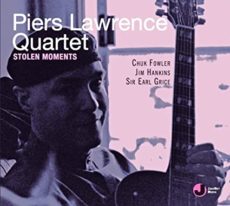
Being based in Manhattan, the jazz guitarist continues to lead the Piers Lawrence Quartet, manage his record label, JazzNet Media, that produced his internationally acclaimed recording Stolen Moments, and produces independent projects and ambient music for film and television.
More Posts: bandleader,composer,guitar,history,instrumental,jazz,music