


Three Wishes
When the Baroness asked Art Davis what he would have as his three wishes he said:
-
-
“Tho be successful and to help people.”
-
“To have anything and everything I want.”
-
“To be loved and admired by everyone.”
-
*Excerpt from Three Wishes: An Intimate Look at Jazz Greats ~ Compiled and Photographed by Pannonica de Koenigswarter

More Posts: baroness,bass,history,instrumental,jazz,music,pannonica,three,wishes
Daily Dose Of Jazz…
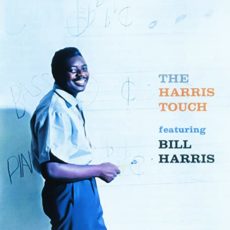
Bill Harris was born on April 14, 1925 in Nashville, North Carolina He studied guitar in Washington, D.C. at the Columbia School of Music and in 1950 began playing with the R&B vocal group The Clovers. He remained with the group through 1958, playing on many of their most successful hit records.
During this time he also recorded as a jazz musician, including two LPs for EmArcy Records, his 1956 self-titled Bill Harris and The Harris Touch In 1957. Through the Sixties, he played in the DC area and in the 1970s taught music, and published several books on guitar technique.
He was awarded a compositional fellowship from the National Endowment for the Arts in 1972. Moving to France he performed there for much of 1972-1973, and after returning to the States, Harris began managing his own jazz club, Pigfoot, in the DC, but by 1981 the club was repossessed by the Internal Revenue Service due to back taxes.
Guitarist Bill Harris worked as an impresario late in life, organizing and presenting concerts in a variety of genres until passing away on December 6, 1988, Washington, D.C.

More Posts: bandleade,guitar,history,instrumental,jazz
Daily Dose Of Jazz…
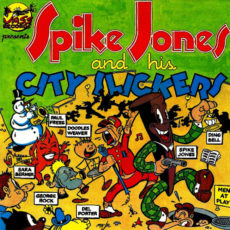
Del Porter was born Delmar Smith Porter on April 13, 1902 in Newberg, Oregon. He first began singing in 1928 as a member of the Foursome, which came to prominence in the Ethel Merman Broadway hit shows, Girl Crazy in 1930 and 1934’s Anything Goes. With the Foursome’s arranger and Porter’s lifelong friend, Raymond M. Johnson, he reorganized the quartet around 1946 as the Sweet Potato Tooters, one of the hottest bands in the country at the time. He would go on to record as a leader, toured with Glenn Miller, and recorded with Bing Crosby, Dick Powell, and Red Nichols.
They recorded extensively for Decca, but a long dry spell followed the quartet’s appearance in the Eleanor Powell movie Born to Dance which resulted in the creation of a six-piece group the Feather Merchants, patterned after the cockeyed musical humor of Frank & Milt Britton and Freddie Fisher’s Schnickelfritz Band. This band evolved into City Slickers, a band he co-founded with Spike Jones about the time the group split up.
The zany band that revolutionized the field of comedy music during World War II, from their earliest days, as lead vocalist, clarinetist, composer, and arranger. He wrote two songs Siam and Pass the Biscuits, Mirandy which became staples of the band’s repertoire. But he was all talent and no ambition, and soon took a back seat to Jones.
After leaving the Slickers in 1945, he returned to lend his melodious voice on Spike Jones Plays the Charleston and their Bottoms Up album. In addition to his music publishing business, Tune Town Tunes, with fellow City Slicker and songwriting partner Carl Hoefle. Porter later wrote jingles for Paper Mate pens, recorded with his Sweet Potato Tooters for Capitol transcriptions, as well as Mickey Katz and Spade Cooley. He continued to dabble in songwriting in his later years.
Vocalist, saxophonist, and clarinetist Del Porter, who in the 1940s, led his own big band, passed away on October 4, 1977 in Los Angeles, California.
More Posts: bandleader,clarinet,history,instrumental,jazz,music,saxophone,vocal
Requisites
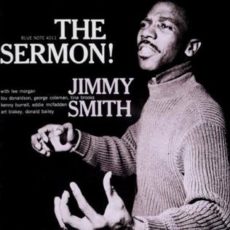
The Sermon! is a 1959 album by jazz organist Jimmy Smith. It was produced by Alfred Lion for the Blue Note record label. The album was recorded at The Manhattan Towers Hotel Ballroom on August 25, 1957 (#2) and February 25, 1958 (#1, 3). The engineer, Rudy Van Gelder, used the ballroom as a recording studio for ensembles to large for his parents’ Hackensack, New Jersey home studio where he recorded artists for Blue Note. Reid Miles designed the cover, Francis Wolff took the photograph and Ira Gitler wrote the liner notes.
Track Listing | 40:10
- The Sermon (Jimmy Smith) – 20:12
- J.O.S. (Jimmy Smith) – 11:56
- Flamingo (Edmund Anderson, Ted Grouya) – 8:02
Track 1 ~ Jimmy Smith – organ, Lee Morgan – trumpet, Lou Donaldson – alto saxophone, Tina Brooks – tenor saxophone, Kenny Burrell – guitar, Art Blakey – drums
Track 2 ~ Jimmy Smith – organ, Lee Morgan – trumpet, George Coleman – alto saxophone, Eddie McFadden – guitar, Donald Bailey – drums
Track 3 ~ Jimmy Smith – organ, Lee Morgan – trumpet, Kenny Burrell – guitar, Art Blakey – drums
The Sermon ~ Jimmy Smith | By Eddie CarterAs Johnny Hodges, Charlie Parker and Sonny Stitt were to the alto sax; Clifford Brown, Miles Davis and Dizzy Gillespie to the trumpet; John Coltrane, Coleman Hawkins and Sonny Rollins to the tenor sax; Duke Ellington, Thelonious Monk and Bud Powell were to the piano; Jimmy Smith was to the Hammond B-3 organ. From his 1956 Blue Note debut, A New Sound, A New Star until 1962 when he left the label moving to Verve Records and throughout the remainder of the decade, any release by the organist was praised as a major event in Jazz. Smith’s contributions to the development of modern jazz on the organ are as many fans and critics alike called him, “incredible”. An accomplished pianist originally, he didn’t begin playing the organ until he was twenty-eight years old but established and personified a jazz language for the instrument by mastering his approach of playing chords with his left hand, harmonic and rhythmic lines with his right hand while walking bass lines with his left foot.
I began my love affair with Jazz at the age of eight and my education into this extraordinary music on Jimmy’s 1959 LP, The Sermon (BLP 4011). It’s the companion to Houseparty, recorded at the same session but released a year earlier in 1958! The all-star group supporting Smith are Lee Morgan on trumpet (tracks: A1, B1, B2); Lou Donaldson (track: A1), George Coleman (track: B1) on alto sax; Tina Brooks on tenor sax (track: A1); Kenny Burrell (track: A1, B2), Eddie McFadden (track: B1) on guitar; Art Blakey (tracks: A1, B2), Donald Bailey (track: B1) on drums. My copy used in this report is the 1992 Toshiba-EMI Limited Japanese Stereo reissue (BST 84011-BN 4011). Jimmy begins the sidelong title tune (dedicated to label mate, Horace Silver) at a bluesy groove with a cool lyricism introducing the melody tastefully supported by Kenny and Art. Smith sustains the momentum on the opening solo at a low flame, building each phrase gradually and enveloping each beat to a marvelous conclusion. Kenny imprints his unmistakable stamp on the next reading with emphasis. Tina is beautifully captured on the third performance with considerable zest and joyous feeling. Lee preaches the next statement of this marathon jazz service with an exquisite interpretation. Lou taps the same impeccable vein on the final solo with a sinuous blues workout into the sextet’s collective summation and Jimmy’s slow fade into nothingness.
Smith opens Side Two, hitting a lively beat that doesn’t let up on his uptempo composition, J.O.S., titled for his full name, James Oscar Smith. Jimmy’s trio of Eddie McFadden and Donald Bailey sets the tone with a high-spirited introduction, blending into the opening statement by Coleman who cooks with boundless energy that’s rocking all the way. Morgan elevates the next solo with the burning intensity of a raging inferno fueling the rhythm section into a high-octane culmination. McFadden is given plenty of space on the next reading and doesn’t disappoint with electrically charged energy that pulls no punches. Smith cooks so hard with a sweltering, soulful closing performance so infectiously swinging, he’s almost unstoppable preceding the ferocious climax. The LP concludes with the lovely ballad, Flamingo by Edmund Anderson and Theodor Grouya, a favorite tune and regular feature of bandleader Duke Ellington. Lee leads the quartet on the theme, setting down a subtle melody that’s absolutely gorgeous. He also reveals his more lyrical side on the first statement with an intimate interpretation, succeeded by Kenny who gives a brief, elegantly articulated reading over Jimmy and Art who anchor with reflective tenderness into the theme’s reprise and finale. These are three excellent reasons why the jazz world referred to him as “The Incredible Jimmy Smith”. His highest praise came from Miles Davis who after hearing him, paid Jimmy the greatest compliment by saying, “this cat is the eighth wonder of the world”. The sound quality is superb with a brilliant soundstage throughout the treble, midrange, and bass spectrum that puts your sweet spot in the center surrounded by the musicians enjoying their music first hand. The Sermon is a must for anyone who loves jazz organ, and an essential acquisition for your jazz library that’s perfect to experience on Sunday, or any other day of the week!
After Smith’s enormous hit of Walk on The Wild Side from his Verve Records debut, Bashin’, Alfred Lion capitalized on his popularity by issuing nine albums by the organist from 1962 to 1968. Jimmy Smith Plays Fats Waller came out in 1962; Back At The Chicken Shack, and Rockin’ The Boat in 1963; and Prayer Meetin’ hit the stores in 1964! The other five titles were previously unissued because of his healthy Blue Note catalog of LP’s that was still selling well: Softly As A Summer Breeze came out in 1965; Bucket and Open House in 1966; I’m Movin’ On in 1967 and Plain Talk in 1968! In 1979 as a reissue label under United Artists Records, Blue Note Classic released Confirmation and Cool Blues in 1980 and On The Sunny Side in 1981! King Record Company released a Japanese Mono compilation album of 45-rpm records titled The Singles. In 1984, Blue Note released another Japanese album consisting of unreleased tracks, Special Guests. Jimmy eventually resigned with Blue Note after the label’s resurgence in 1985, recording four studio albums and two live performances, Go For Whatcha Know in 1986; *The Master in 1994; *The Master II; *Standards in 1998; *Six Views of The Blues in 1999 and the final Blue Note album, *Straight Life was released in 2007, two years after his death in 2005!
~ A New Sound, A New Star (Blue Note BLP 1512-BST 81512/BLP 1514-BST 81514); Back At The Chicken Shack (BLP 4117/BST 84117); Bashin’ (Verve Records V-8474/V6-8474); Bucket (BLP 4235/BST 84235); Confirmation (Blue Note Classic LT-992); Cool Blues (LT-1054); Go For Whatcha Know (BT-85125); Houseparty (BLP 4002/BST 84002); I’m Movin’ On (BLP 4255/BST 84255); Jimmy Smith Plays Fats Waller (BLP 4100/BST 84100); On The Sunny Side (LT-1092); Open House (BLP 4269/BST 84269); Plain Talk (BST 84296); Prayer Meetin’ (BLP 4164/BST 84164); Rockin’ The Boat (BLP 4141/BST 84141); Six Views of The Blues (CDP 21435); Softly As A Summer Breeze (BLP 4200/BST 84200); Special Guests (BNJ-50101); Standards (CDP 21282); Straight Life (Blue Note Connoisseur Series CDP 85192); The Master (CDP 30451); The Master Two (CDP 554662); The Singles (K18P-9280) – Source: Discogs.com
*CD-albums ~ Flamingo – Source: Wikipedia.org © 2020 by Edward Thomas Carter

More Posts: choice,classic,collectible,collector,history,instrumental,jazz,music
Daily Dose Of Jazz…
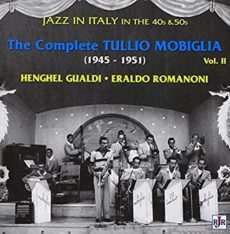
Tullio Mobiglia was born in Carezzano, Italy on April 12, 1911. In the early 1930s, after his studies at the conservatory in Genova and his first local engagements, he made several trips to the United States as a member of an on-board ship’s orchestra. Once in America, he made the acquaintance of the leading tenor saxophonists, including Coleman Hawkins.
In 1940 he visited Berlin, Germany as a member of the Italian Orchestra Mirador and in 1941 Tullio was with the Heinz Wehner Orchestra, and from April to November, he formed his own sextet played in the Patria Bar and was also in the Komiker Cafe’s musical revue Dreams About Me.
In the early Forties, Mobiglia’s orchestra played in the Rosita Bar and he also did some Film and Recordings during this period. Kramer combined musicians from two different generations to form his orchestra utilizing trumpeter Alfredo Marzaroli and saxophonist and clarinetist Francesco Paolo Ricci from the Twenties along with the younger members, Tullio Mobiglia, Eraldo Romanoni, Carlo Pecori, and the Triestino Angelo Bartole that performed during the Second World War II in Berlin.
After the war, he operated mainly in Italy, but also performed in Dortmund and Frankfurt Germany. From 1967 into the ’80s, he was active as a violin teacher at the Sibelius Conservatory in Helsinki, Finland.
Tullio directed a band without interruption in Berlin between 1941 and 1943, along with the Kramer’s Orchestra during the second half of the Thirties, the only stable group in the history of Italian Jazz between the years 1935 and ’43. He enlisted the brilliant and inventive guitarist Alfio Grasso to take part in the recordings.
Tenor saxophonist, violinist and bandleader Tullio Mobiglia passed away on July 24, 1991, aged 80, in Helsinki, Finland.
More Posts: bandleader,history,instrumental,jazz,music,saxophone,violin