


JANE MONHEIT
Jane Monheit is a jazz and adult contemporary vocalist with a deep passion for the Great American Songbook. With many highly acclaimed solo albums, countless awards and accolades, and over two decades of international touring experience, Jane has not only been an extremely successful bandleader, but has had the privilege of making music with some of the greatest musicians, arrangers, and producers in jazz.
During her childhood, Jane studied woodwinds and piano, spent a decade performing in award winning choirs, and participated in community theater on Long Island. Throughout all of this, her focus remained on jazz, especially interpretation of the Songbook. At the age of 20, during her senior year at the prestigious Manhattan School Of Music, Jane placed second in the Thelonious Monk Competition, now known as the Hancock Competition. This led to an incredible career trajectory, catapulting Jane into the jazz stratosphere nearly overnight.
By 22, Jane was working with legends such as Tommy Flanagan, Ron Carter, and Kenny Barron, recording her first albums, and touring the planet. This led to collaborations with jazz luminaries such as Terence Blanchard, Ivan Lins, Tom Harrell, John Pizzarelli, Christian McBride, Vince Mendoza, Jorge Calandrelli, and many more. Countless television appearances followed, including David Letterman, Conan O’Brien, CBS Sunday Morning, Good Morning America, The Tonight Show, The View, and many popular international talk shows. Several successful film soundtracks have also included Jane’s music, including Sky Captain And The World Of Tomorrow and Never Let Me Go.
TICKETS: $25.00 ~ $40.00
More Posts: bandleader,club,genius,instrumental,music,preserving,travel,vocal

Daily Dose Of Jazz…
Clarence Lacquese Penn born on March 2, 1968 in Detroit, Michigan and started playing the drums at around eigh years old. In 1986, while still at high school, he attended the Interlochen Arts Academy. He started studying at the University of Miami in Florida that same year, but transferred to Virginia Commonwealth University.
At Virginia Commonwealth he studied with Ellis Marsalis, and played in the pianist’s trio from 1987 to 1991, including for a tour of Japan in 1990. Penn graduated in classical percussion in 1991 and was part of vocalist Betty Carter’s trio from until 1993.
Penn later went on to work with David Sanchez, Jimmy Smith, Slide Hampton, Jimmy Scott, Greg Hatza, Stanley Clarke, Tim Warfield, Bob Berg, Diana Krall, Cyrus Chestnut, and Stephen Scott.
He recorded his debut album, Penn’s Landing, for Criss Cross Jazz in 1997 with some of the tracks he composed. His sophomore album as leader, Play-Penn, was recorded four years later, followed by a third the following year. He took a nine year hiatus from recording then recorded three more albums.
Drummer Clarence Penn, who also plays organ and rhodes, continues to perform and record.

More Posts: bandleader,drums,history,instrumental,jazz,music,organ,rhodes
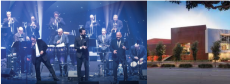
SPANISH HARLEM ORCHESTRA
More Posts: adventure,bandleader,genius,instrumental,jazz,music,preserving,travel
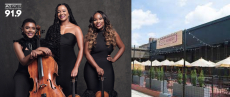
THE STRING QUEENS
Praised for its authentic, soulful, and orchestral sound, The String Queens (TSQ) is a dynamic trio that creates stimulating musical experiences that inspire diverse audiences to love, hope, feel, and imagine! With an array of repertoire spanning from the Baroque era to the Jazz Age to today’s Billboard Hot 100 Chart, TSQ performs versatile programs that take listeners on a rousing musical journey through time and a multitude of musical genres.
Based in Washington, D.C., TSQ has been featured in performances at renowned concert halls and venues across America, including Carnegie Hall in New York City and The John F. Kennedy Center for the Performing Arts in the nation’s capital. Notable appearances include a special performance dedicated to Vice President Kamala Harris at the “We Are One” Presidential Inauguration Concert in January 2021 and rendering a spotlight presentation of TSQ’s electrifying arrangement of Harry Styles’s hit song “Golden” for the world’s most prestigious tennis tournament “The Championships, Wimbledon” in June 2021. As an ensemble who frequents the D.C. jazz scene, other headlining performances include multiple appearances at the DC Jazz Festival and the Capital Jazz Fest.
In August 2022, TSQ released its third album titled “RISE”, which was made possible by a Sphinx Organization MPower Artist Grant. With this album, TSQ sought to sonically address the problems that are currently plaguing the world by creating unique arrangements of timeless classics rooted in hope, joy, peace, and love. Featuring original compositions by Stevie Wonder, Aretha Franklin, Richard Smallwood, The Beatles, Michael Jackson, and more, “RISE” takes listeners on a musical journey that starts in a field of loss and hopelessness and ends in a fortress of faith, triumph, and fortitude. Previous albums from TSQ include a self-titled EP released in 2019 and a holiday EP titled “Our Favorite Things” released in 2020. All TSQ albums are available on its website and all major digital music platforms.
The Ladies ~ Kendall Isadore: Violin, Dawn Johnson: Viola,
Tickets: $35.00 ~ $55.00
More Posts: adventure,bandleader,cello,club,genius,instrumental,music,preserving,travel,viola,violin

50 SHADES OF O: ORRIN EVANS
50 SHADES OF O: Orrin Evans’ 50th Birthday Celebration with the Orrin Evans Trio and special guest vocalist Ms. Lisa Fischer! Orrin Evans and his 2x Grammy-nominated Captain Black Big Band released and will be performing music from their new studio album, Walk A Mile In My Shoe!
For more than two decades, Yamaha pianist Orrin Evans has made an art form of the unexpected. With more than 25 albums to his credit without ever relying on the support of a major label, Evans has become the model of a fiercely independent artist who’s made a habit of rattling the jazz world’s confining cages. That determination has paid off in accolades like topping the “Rising Star Pianist” category in the 2018 DownBeat Critics Poll and two Grammy nominations. As an adventurous composer he traverses stylistic boundaries with abandon, drawing on full-throttle swing, deep rooted blues, expressive soul or bracing excursions into the avant-garde.
After four decades of featured background singing with icons like Luther Vandross, The Rolling Stones, Chaka Khan, Tina Turner, and Nine Inch Nails, Ms. Lisa Fischer set out to take center stage with her own humble, heartfelt song. The 2013 Best Documentary Oscar winning film “Twenty Feet from Stardom” altered the course of Lisa’s musical journey, telling her story, with clips of her legendary duets with Sting or with Mick Jagger on “Gimme Shelter”, left audiences eager to see and hear more.
The Lineup:
Ms. Lisa Fischer ~ vocals
Orrin Evans ~ piano
Robert Hurst ~ bass
Jeff “Tain” Watts ~ drums
Tickets: $45.00 ~ $55.00 + fee | Streaming: 6:00pm Only ~ $15.00 + fee
More Posts: adventure,bandleader,bass,club,drums,genius,instrumental,jazz,music,piano,preserving,travel,vocal