

The Jazz Voyager
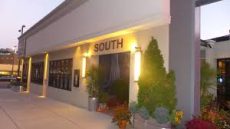
Heading to the City of Brotherly Love for the next stop on the voyage of this traveller. The place I will be seated in for this week’s jazz performance is nestled in the Spring Garden neighborhood of Philadelphia and is called the South Jazz Kitchen. It’s known for the coolest jazz and Southern cuisine in the city.
Vibraphonist Chien Chien Lu and bassist Richie Goods collaborate on this stage for three nights with two shows per evening. When you put together an emerging contemporary percussionist and composer with the youngest bassist ever inducted into the Pittsburgh Jazz Hall of Fame and you get an exciting show and one you will never forget.
The venue’s address is 600 N. Broad Street, Philadelphia, Pennsylvania 19130. For those who want more info go to https://notoriousjazz.com/event/chien-chien-lu-x-richie-goods.

More Posts: adventure,bass,club,genius,jazz,music,percussion,preserving,travel,vibraphone
EKEP NKWELLE BAND
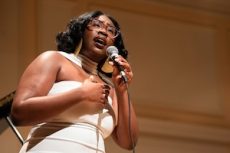
A rising master of her craft, vocalist Ekep Nkwelle entrances audiences with her strong lyrical presence and an uncanny connection to phrasing that’s at once grounded and ethereal. High-level musicality informs her storytelling. To Dizzy’s Club she brings her tight ensemble of acclaimed artists. Expect an evening of imaginative arrangements and compelling treatment of standard tunes.
More Posts: adventure,bass,club,drums,genius,jazz,music,percussion,piano,preserving,travel,trombone,vocal
CHIEN CHIEN LU X RICHIE GOODS
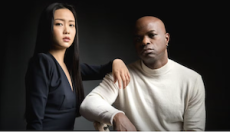
Chien Chien Lu X Richie Goods “Connections” featuring J Hoard
Chien Chien Lu is a vibraphonist, contemporary percussionist, and composer whose Taiwanese upbringing, classical music education, and passion for grooves crystallize into a fresh and distinctive approach to contemporary jazz. Lu has recently been included in the list of 10 Emerging Jazz Artists 2023 by Grammy (Recording Academy). Her collaborative album with bassist Richie Goods “connected“just received 34th Golden Melody Awards “Best Instrumental Album“.
Richie Goods is the youngest person ever inducted into the Pittsburgh Jazz Hall of Fame. After graduating from the prestigious jazz program at Berklee College of Music, the bassist moved to New York City, where he studied under jazz legends Ron Carter and Ray Brown.
Friday & Saturday Showtimes : 7:00pm | 9:30pm
Sunday Showtimes : 6:00pm | 8:30pm
More Posts: adventure,bass,club,genius,jazz,music,percussion,preserving,travel,vibraphone
Daily Dose Of Jazz…
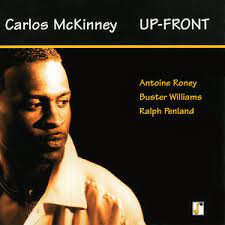
Ralph Morris Penland was born on February 15, 1953 in Cincinnati, Ohio. While in high school he was a percussionist with the Cincinnati Symphony Orchestra. He attended the New England Conservatory of Music and played in Boston, Massachusetts with Gil Scott-Heron and Webster Lewis.
In New York City in the early 1970s he played with Freddie Hubbard among others. By 1975 he was in Los Angeles, California and led his own group, Penland Polygon; he also worked as a session musician for Chet Baker, Kenny Burrell, Eddie Harris, Harold Land, Charles Lloyd, Ronnie Matthews, and Nancy Wilson.
In the 1980s he worked with George Cables, Dianne Reeves, Buddy Montgomery, Charlie Rouse, Jimmie Rowles, Rick Zunigar, Andy Simpkins, Dave Mackay, Bunky Green, Richard Todd, and John Nagourney. In the 1990s he toured with Frank Sinatra, Herbie Hancock, and Carlos Santana.
Ralph was active as a studio drummer, recording with Bob Cooper, Eddie Daniels, James Leary, Marc Copland, Dieter Ilg, Lou Levy, Carmen Bradford, Janis Siegel, Fred Hersch, Rickey Woodard, Carmen Lundy, Joe Sample, and Miki Coltrane.
Drummer and percussionist Ralph Penland, who over the course of his career recorded on fifty-six albums across a wide genre of music, died from a heart attack on March 13, 2014.

More Posts: drums,history,instrumental,jazz,music,percussion
Daily Dose Of Jazz…
Okay Temiz was born on February 11, 1939 in Istanbul, Turkey and was influenced in his early years by his mother, Naciye, who was classically schooled in music.
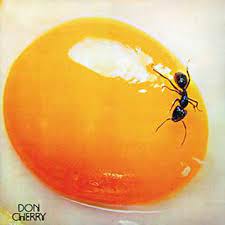
Temiz started playing professionally in 1955 while studying at the Ankara Conservatory and at the Tophane Art Institute. After meeting Maffy Falay and Don Cherry, he settled in Sweden. With Cherry and bassist Johnny Dyani he toured US and Europe in 1971.
In 1972, he founded the band Xaba with Dyani and trumpeter Mongezi Feza. His drums are of his own invention, and are constructed using hand-beaten copper, in the style of Turkish debuka’s.
Fusion jazz percussionist and drummer Okay Temiz has recorded seventy-two albums and continues to perform and record.
More Posts: drums,history,instrumental,jazz,music,percussion