

Daily Dose Of Jazz…
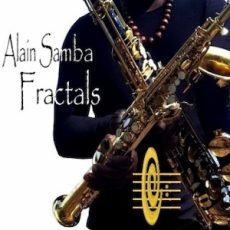
Alain Samba was born on July 10th in Pointe Noire, Congo Brazzaville. His early music experiences began with him playing different kinds of percussion native to the region such as sanza (kalimba), kikongui, marimba and drums. He was influenced by listening to both African and European music. At the age of 8 he moved to France where he studied saxophone and harmony at the American School of Modern Music in Paris.
His music is inspired mostly by the jazz of Duke Ellington, John Coltrane, Charles Parker, Wes Montgomery, Nat King Cole, Ella Fitzgerald and Wayne Shorter, and the music of his native region of Congo such as bantous’ music, lari , téké , mbochi and of course the pygmies polyrhythms and polyphonies.
Since the 90’s he has performed in Paris, France clubs, and all around Europe. He created the Art Ensemble of Africa to illuminate the struggle of world citizenship with the same love of music and sharing. In Stockholm, Sweden he teaches saxophone, harmony and polyrhythms and has played with musicians from around the world based in Sweden. such as Rene Martinez, Celso Paco, Pepe Espinosa, Tropicana se, Marianne Fuglevaag, Derrick Walker, Emilio Estrada, and Jorge Arruda to name a few.
Saxophonist, composer, pianist and percussionist Alain Samba, whose main instruments are tenor and soprano saxophones, continues to mix modern jazz with traditional African music.
More Posts: bandleader,composer,history,instrumental,jazz,music,percussion,piano,saxophone
Daily Dose Of Jazz…
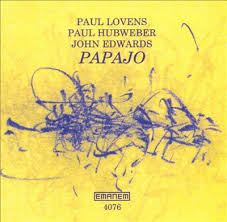
Paul Lovens was born on June 6, 1949 in Aachen, Germany. In the early 1970s, he was part of a trio with pianist Alexander von Schlippenbach. He went on to work with Cecil Taylor, Harri Sjöström, Günther Christmann, Eugene Chadbourne, Peter Brötzmann, Teppo Hauta-Aho, Mats Gustafsson, Thomas Lehn, Phil Wachsmann, Rajesh Mehta and Joëlle Léandre.
He also played with Florian Schneider and Ebehard Kranemann in an early incarnation of Kraftwerk. Since 1967, Lovens has run the record label Po Torch with Paul Lytton
Drummer Paul Lovens, who also plays percussion, singing saw, and cymbals, has performed with the Aardvark Jazz Orchestra and Berlin Contemporary Jazz Orchestra, and continues his musical endeavors.

More Posts: bandleader,cymbals,history,instrumental,jazz,music,percussion,piano,singing saw
Daily Dose Of Jazz…
Michael DiPasqua was born May 4, 1953 born in Orlando, Florida into a highly musical family. He began his professional career very early, gigging as a drummer with a band co-led by Zoot Sims and Al Cohn while still in his mid-teens.
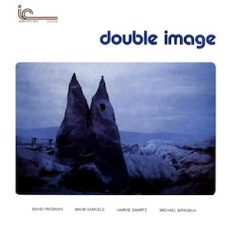
During the next few years DiPasqua played with Don Elliott and Gerry Mulligan, and also accompanied singers Jackie Cain and Roy Kral. Towards the end of the 70s, the drummer was for a number of years co-leader of Double Image, a vibraharp, marimba and bass quartet that toured internationally.
Michael then co-led Gallery and followed that with a spell in Later That Evening, a band led by Eberhard Weber, before joining Jan Garbarek. He was a consistently inventive percussionist with the ability to comfortably co-exist in a range of musical styles, from the modern end of the mainstream through jazz rock to the cutting edge of improvisational music.
He recorded three albums as a leader with his debut on the Inner City label in 1977. He went on to record as a sideman with Jan Garbarek for two albums, three with Eberhard Weber, and one each with Adelhard Roidinger and Robert Towner all for ECM. On a variety of other labels he recorded with Siegfried Fietz, Volker Kriegel, Marian McPartland, and Gerry Mulligan.
Beyond jazz, Michael was locally known for his role in helping to develop over 300 Subway Sandwich Shops in Central Florida, as well as co-founding PCMD Management Company, which owns and operates over 40 Subway franchises.
Cool jazz drummer and percussionist Michael DiPasqua lost his battle with cancer on August 29, 2016. He was 63.

More Posts: bandleader,drums,history,instrumental,jazz,music,percussion
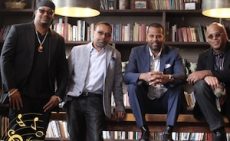
WCLK AT 50 | LIL JOHN & HIS ALL-STAR BAND
To celebrate WCLK 91.9’s 50th Anniversary the Atlanta Jazz Festival is presenting WCLK At 50: Featuring Lil John Roberts with an Atlanta All-Star Band.
Award-winning drummer Lil John Roberts will lead an Atlanta All-Star Band including these outstanding musicians: Phil Davis, Rodney Edge, Tres Gilbert, Derek Scott, Miguel Gaeten, Melvin Jones, Joe Gransden, Kebbi Williams, Jamel Mitchell, Mike Burton, Saunders Sermons, and Daniel Wytanis.
There will be special guest performances by Kathleen Bertrand, Cleveland Jones, Rhonda Thomas, Imani Grace-Cooper, Julie Dexter, Tony Hightower, Dashill Smith, and Alexandra Jackson.
As the Narrator, Jon Goode will weave in stories about the history and legacy of WCLK. Lil John Robert serves as the concert’s Music Director. The event is Co-Produced by Jamal Ahmad, Lil John Roberts, and Ray Cornelius.
More Posts: adventure,bass,concert,drums,festival,genius,jazz,music,percussion,piano,preserving,restaurant,travel,trumpet,vocal
Daily Dose Of Jazz…
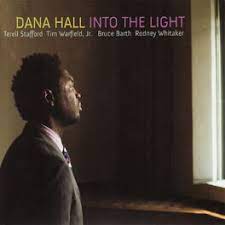
Dana Hall was born on March 13, 1969 in Brooklyn, New York where he spent the first few years of his life, then relocated with his family to his mother’s hometown of Philadelphia, Pennsylvania. There he was exposed to jazz and soul music at an early age through the family’s record collection. The family interest in creative music, and their open door policy toward Philly jazz musicians of the era sparked his curiosity, passion and ultimately career in music.
At the age of 12, Dana’s family moved from Philadelphia to Voorhees Township, New Jersey and began studying drums under renowned drum instructor Vincent “Jim” Hurley at Voorhees Middle School. Following study was with award-winning educator and bassoonist Dennis MacMullin at Eastern Regional High School where he also began playing the oboe and throughout college.
He attended Iowa State University with a double major in aerospace engineering and percussion. At ISU, Hall cultivated his interest in music, studying marimba, vibes, timpani, hand percussion, and drum set. After completing his education in aerospace engineering at Iowa State University, he received his Bachelor of Music degree from William Paterson College and a master’s degree in Composition and Arranging from DePaul University. He is presently a distinguished Special Trustees Fellow pursuing his Doctorate in Ethnomusicology at the University of Chicago.
As a jazz drummer, he is primarily influenced by the work of Art Blakey, Elvin Jones, Philly Joe Jones, Max Roach, and Roy Haynes, Jeff ‘Tain’ Watts, Ralph Peterson, Jr., and Kenny Washington, among many others. The list of artists that Hall has performed, toured, and/or recorded with is too long to mention here but it reflects the diverse, varied approaches of his music-making in the fields of jazz and popular music.
He’s both a member of the Terell Stafford Quintet and the Music Director of the Chicago Jazz Ensemble. He has been a member of the Carnegie Hall Jazz Band, and the Des Moines and the Cedar Rapids Symphonies.
As an educator he has been on the faculty of several colleges and universities including DePaul, Jazz at Lincoln Center Band Director’s Academy, Essentially Ellington faculties. Thelonious Monk Institute of Jazzand the Jazz Institute of Chicago’s Artists Residency Program.
Drummer, percussionist, composer, bandleader, and ethnomusicologist Dana Hall has released one album as a leader and continues to teach, perform, and record.

More Posts: composer,drums,educator,ethnomusicologist,history,instrumental,jazz,music,percussion