

Daily Dose Of jazz…
Ralph Towner was born on March 1, 1940 in Chehalis, Washington. Born into a musical family, his mother a piano teacher and his father a trumpet player, Towner learned to improvise on the piano at the age of three. He started trumpet lessons at the age of five, but did not take up guitar until attending the University of Oregon.
Ralph first played jazz in New York City in the late 1960s as a pianist and was strongly influenced by the renowned jazz pianist Bill Evans. He began improvising on classical and 12-string guitars in the late 1960s and early 1970s; and formed alliances with musicians who had worked with Evans, including flautist Jeremy Steig, Eddie Gomez, Marc Johnson, Gary Peacock ad Jack DeJohnette.
He began his career as a conservatory-trained classical pianist, who picked up guitar in his senior year in college, then joined world music pioneer Paul Winter’s Consort ensemble in the late 1960s. Leaving Winter along with band mates Paul McCandless, Glen Moore and Colin Walcott, they formed the group Oregon, mixing folk, Indian classical, avant-garde jazz and frr improvisation.
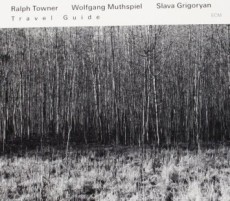
Around the same time, Towner began a longstanding relationship with ECM Records, releasing virtually all of his non-Oregon recordings since his 1972 debut as a leader Trios / Solos. As a sideman he has ventured int jazz fsion with Weather Report on the 1972 album I Sing The Body Electric.
Unlike most jazz guitarists, Ralph only uses 6-string nylon-string and 12-string steel-string guitars. He tends to avoid high-volume musical environments, preferring small groups of mostly acoustic instruments that emphasize dynamics and group interplay. He make significant use of overdubbing, allowing him to play piano or synthesizer and guitar on the same track. During the Eighties he used more synthesizer but has returned to the guitar in recent years.
Composer, arranger, bandleader and multi-instrumentalist Ralph Towner, who plays 12 string guitar, classical guitar, piano, synthesizer, percussion and trumpet, has an impressive catalogue of some five-dozen recordings spread between his role as a leader, with Oregon, and as a sideman with Paul Winter and Weather Report among others. He continues to perform, record and tour.

Put A Dose In Your Pocket
More Posts: guitar,percussion,piano,synthesizer,trumpet
Daily Dose Of Jazz…
T. S. Monk was born Thelonious Sphere Monk, III on December 27, 1949 in New York City. He began his music career as a child when Max Roach gave him his first drum set before he turned 10. After graduating from school he joined his father’s trio touring with him until 1975. Leaving jazz for R&B, he toured with Natural Essence and then formed his own band with his sister.
By the 80s he was recording his debut album House of Music that charted several hits on Billboard, followed by the release of two more albums during the decade.
Shortly after his father died in 1982, in honor his father’s legacy and support the efforts of education, T. S. turned his attention toward forming the Thelonious Monk Institute of Jazz. As chairman, Monk has been at the forefront of helping to create a number of programs that range from sponsoring music education for students in the form of full scholarships to funding and supporting after-school athletic programs across the nation.
In the 1990s, Monk began his solo career taking a jazz-oriented direction and presented “A Celebration Of America’s Music” on ABC TV in 1996 and 1998 hosted by Bill Cosby and bringing together such artists as Natalie Cole, Jon Secada, Tony Bennett, k. d. lang, Herbie Hancock, Pat Metheny and Nnenna Freelon
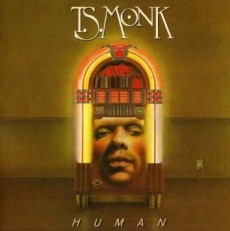
T. S. has received the New York Jazz Awards First Annual “Recording of the Year” award and ‘Downbeat’s’ prestigious 63rd annual Album of the year Reader’s Choice Award for “Monk On Monk”. He continues in the tradition of creating great music as he performs, records and tours.
Give A Gift Of Jazz – Share
More Posts: drums,percussion
Daily Dose Of Jazz…
John Anthony Pompeo, better known as Johnny Rae or John Rae was born on August 11, 1934 in Saugus, Massachusetts and grew up in music, as his mother played piano in night clubs in the Boston area. His area of musical study in jazz led him to become a drummer and vibraphonist. Graduating from East Boston High School in 1952, he went on to study piano at the New England Conservatory and timpani at Berklee College of Music.
Johnny joined Herb Lee’s R&B band right out of high school, gigged with Slim Gaillard and Milt Buckner, played drums and vibes with Al Vega and Jay Migliori. Upon the recommendation of MJQ’s John Lewis, he teamed up with to play with George Shearing, alongside Toots Thielemans, Al McKibbon on bass and three Latin percussionists that included conguero Armando Peraza. It was during this period that Peraza taught him to play timbales.
He played with Johnny Smith, Ralph Sharon, Cozy Cole and Herbie Mann throughout the Fifties. The next couple of decades were equally commanding of his talents by Cal Tjader, Stan Getz, Gabor Szabo, Charlie Byrd, Earl Hines, Art Van Damme, Anita O’Day and Barney Kessel among many others. Though mainly concentrating in the context modern jazz, he never wandered far from Latin music and the Latin jazz percussion he played.
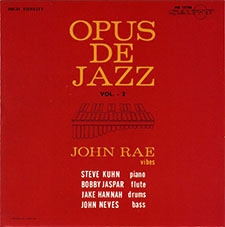
Though he was on more than three-dozen recording sessions, Johnny only recorded one as a leader, “Opus De Jazz, Volume 2” in 1960 for Savoy. A second release under his name was in actuality him fronting Herbie Mann’s band for contractual reasons.
Since the 1980s Rae has worked in music education, has authored several instruction books and was a disc jockey in San Francisco for many years. He assembled a tribute band to Tjader called Radcliff (Tjader’s middle name) and led the band until his death. Johnny Rae, drummer and vibraphonist passed away in 1993 in San Francisco, California.
Dose A Day – Blues Away
More Posts: drums,percussion,timbales,vibraphone
Daily Dose Of Jazz…
Louis “Sabu” Martinez was born on July 14, 1930 in New York City and made his professional debut in 1941 at age 11. He replaced Chano Pozo in Dizzy Gillespie’s orchestra in 1948, and began performing with Benny Goodman’s Bebop Orchestra in 1949.
Over the next 15 years, Martinez worked with jazz luminaries Charlie Parker, Duke Ellington, Count Basie, J.J. Johnson, Mary Lou Williams, Horace Silver, Thelonious Monk, Charles Mingus and Lionel Hampton; vocalist Tony Bennett, Sammy Davis Jr. and Harry Belafonte as well as Latin favorites Noro Morales, Marcelino Guerra, Tito Rodriguez and the Lecuona Cuban Boys.
A prominent conguero and percussionist in the Cubop movement in the 1950s, Martinez appeared on many important recordings and live performances during that period. Martinez also recorded several Latin jazz albums, now recognized as classics of the genre.
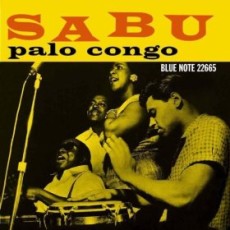
Martinez first recorded with Art Blakey in 1953, and contributed to his Orgy in Rhythm and Holiday for Skins projects from 1957–58. Martinez became a bandleader in 1957, recording his debut album, Palo Congo for Blue Note Records. He followed it up with releases on Vik and Alegre Records.
Martinez moved to Sweden in 1967 and recorded with the Francy Boland-Kenny big band, releasing two albums. Subsequently he led the group Burnt Sugar, which was active into the mid ’70s, but, on January 13, 1979, he died in Sweden at the age of 48.
Take A Dose On The Road
More Posts: conga,percussion
Daily Dose Of Jazz…
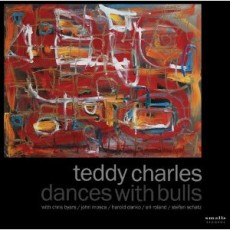
Teddy Charles was born Theodore Charles Cohen on April 13, 1928 in Chicopee Falls, Massachusetts. He began his musical career studying at Julliard School of Music as a percussionist. Later he started recording and making personal appearances as Teddy Cohen with various bands as a vibraphonist, writing, arranging and producing records and in 1951 he changed his last name to Charles.
He was one of many jazz musicians who hung out at an apartment building at 821 Sixth Avenue in New York City known as the Jazz Loft rented by photographer and artist David X. Young who in turn sublet an apartment to Charles’ mentor, Hall Overton. Teddy developed into a skillful musician not only on vibraphone but piano and drums as well and was known for his open-minded approach to more advanced sounds as well as his playing.
Known as an innovator, his main body of work was recorded in the 1950s. Teddy also did session work with musicians and singers as varied as Miles Davis, Oscar Pettiford, Roy Eldridge, Slim Gaillard, Artie Shaw, Benny Goodman, Buddy De Franco and Dion. From 1953-55 he was a member of the Jazz Composer’s Workshop along with Charles Mingus and Teo Macero. This collaboration opened his style to the influences of classical music and freer improvising.
An avid seaman, Charles is the Captain of the Skipjack Pilgrim out of Greenport, Long Island, New York where he performs music locally. After spending years at sea, vibraphonist Teddy Charles started performing again until his passing on April 16, 2012 in Riverhead, New York.
Inspire A Young Mind
More Posts: percussion,piano,vibraphone