

Daily Dose Of Jazz…
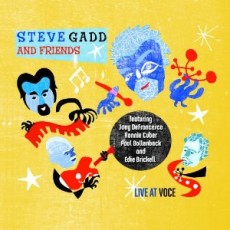
Steve Gadd was born April 9, 1945 in Irondequoit, New York and when he was seven his drummer uncle encouraged him to take lessons. By eleven he had sat in with Dizzy Gillespie. After graduating from Irondequoit’s Eastridge High, he attended the Manhattan School of Music for two years before transferring to the Eastman School of Music in Rochester, playing in wind ensembles and concert bands.
After matriculation in the late ’60s, Steve played regularly with Chuck and Gap Mangione, making his recording debut on Gap’s solo album, “Diana in the Autumn Wind” in 1968. Drafted into the Army he spent the next three years drumming in the Army Music Program as a part of the Jazz Ambassadors. Discharged, Gadd returned to Rochester, formed a band and traveled to New York City where eventually the trio split. Gadd stayed on finding work as a studio musician that led to his short tenure with Chick Corea and Return To Forever.
During the ’70s and ‘80s, he toured internationally, recorded with Paul Simon and also with Al Di Meola’s Electric Rendezvous Band. In 1976, Gadd and other session musicians in New York City, including Richard Tee, Eric Gale and Cornell Dupree formed the group Stuff. Their work included appearances on NBC’s Saturday Night Live.
By the end of the 1970s, Steve Gadd was an accomplished drummer bringing orchestral and compositional thinking, great imagination and a great ability to swing to his playing. In 2005 he was awarded an honorary Doctor of Music degree from Berklee College of Music for outstanding contributions to contemporary music. He is one of the highest paid session drummers in popular music.

Give The Gift Of Kno
More Posts: drums,percussion
Daily Dose Of Jazz…
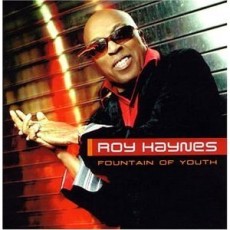
Roy Owen Haynes was born March 13, 1925 in the Roxbury section of Boston, Massachusetts and made his professional debut at the age of seventeen in his native Boston. He began his full time professional career in 1945. From 1947 to 1949 he worked with Lester Young, and from 1949 to 1952 was a member of Charlie Parker’s quintet. He recorded at the time with Bud Powell, Wardell Gray and Stan Getz.
In 1953 Roy toured with Sarah Vaughan for the next five years and then went on to work with more experimental musicians, like John Coltrane, Eric Dolphy, Andrew Hill and Chick Corea.
Haynes extracted the rhythmic qualities from melodies and created unique new drum and cymbal patterns in an idiosyncratic, now instantly recognizable style. Rather than using cymbals strictly for effect, Haynes brought them to the forefront of his unique rhythmic approach. He also established a distinctively crisp and rapid-fire sound on the snare; this was the inspiration for his nickname, “Snap Crackle”.
Over the course of his 60+ career of hard swinging since 1944, Roy is among the most recorded drummers in jazz playing in a wide range of styles ranging from swing and bebop to jazz-fusion and avant-garde. He has recorded or performed with Gary Burton, Miles Davis, Dizzy Gillespie, Christian McBride, Jackie McLean, Pat Metheny, Thelonious Monk, Gerry Mulligan, Art Pepper, Sonny Rollins, Horace Tapscott and many, many others.
As a bandleader Haynes has also led his own groups, some performing under the name Hip Ensemble and his most recent recordings as a leader are “Fountain of Youth” and “Whereas”, both of which have garnered Gammy nominations. In 2010, the National Academy of Recording Arts and Sciences bestowed upon him a Grammy Lifetime Achievement Award. Drummer, percussionist and bandleader Roy Haynes continues to record and perform worldwide.
More Posts: composer,drums,percussion
Daily Dose Of Jazz…
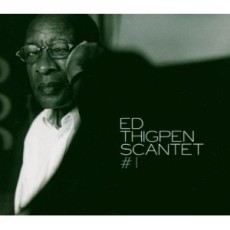
Edmund Leonard Thigpen was born on December 28, 1930 in Chicago, Illinois but was raised in Los Angeles, California where he attended the same high school, Thomas Jefferson, as fellow jazz greats Dexter Gordon, Art Farmer and Chico Hamilton. He majored in sociology at Los Angeles City College, left for East St. Louis to pursue music while living with his father, also a drummer, who played with Andy Kirk’s Clouds of Joy.
Ed first worked professionally in New York City with the Cootie Williams orchestra in 1951 at the Savoy Ballroom, during this decade he played with musicians such as Dinah Washington, Gil Melle, Oscar Pettiford, Eddie Vinson, Paul Quinichette, Charlie Rouse, Lennie Tristano, Jutta Hipp, Johnny Hodges, Dorothy Ashby, Bud Powell and Billy Taylor.
In 1959 he replaced guitarist Herb Ellis in the Oscar Peterson Trio in Toronto, Canada, recorded with Teddy Edwards-Howard McGhee in 1961, led his own 1966 session “Out of the Storm” for Verve, and went on tour with Ella Fitzgerald for five years beginning in 1967.
A move to Copenhagen in 1974 saw Thigpen collaborating with several other American expatriate jazz musicians who over the past two decades had settled in the city such as Kenny Drew, Ernie Wilkins, Thad Jones, along with native Danes Mads Vinding, Niels-Henning Orsted Pederson, Alex Riel and Sven Asmussen. He also worked with visiting musicians Clark Terry, Eddie “Lockjaw” Davis, Milt Jackson and Monty Alexander.
Ed Thigpen, a drummer with over 50 albums to his credit as a leader and sideman, passed away peacefully after a brief period in Copenhagen’s Hvidovre Hospital on January 13, 2010 at the age of 80.
More Posts: drums,percussion
Daily Dose Of Jazz…
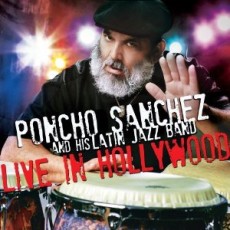
Poncho Sanchez was born October 30, 1951 in Laredo, Texas, the youngest of eleven children, but was reared in Norwalk, California. Exposed to and influenced by Afro-Cuban music (mambo, son, cha-cha, rumba, guaracha, salsa) and bebop jazz, he originally started as a guitarist. Discovering his talent for singing during an R&B band audition, he become the group’s lead vocalist. He later taught himself the flute, drums and timbales before finally deciding to pursue conga playing in high school.
In 1975, Sanchez’s idol, vibraphonist Cal Tjader invited him to perform one set with his band. Seeing the young man’s talent, Tjader hired Sanchez for a week before officially making him a full member of the ensemble. Sanchez played a crucial role as conguero for several years until Tjader’s death in 1982.
Before his death, Tjader suggested to Carl Jefferson, Concord Records founder, to sign Sanchez and his soon-to-be-formed group under the Concord Picante label. Tjader’s wishes were honored, and the first two records were composed and arranged by long-time Tjader collaborator Clare Fischer. Poncho produced 19 albums for the label and garnered a Grammy for his “Latin Soul” album.
He has played with Mongo Santamaria, Hugh Masekela and a host of jazz and Latin musicians and vocalists to numerous to name along with the iconic funk band Tower of Power on his “Do It” project. Poncho Sanchez is respected as one of the top percussionists of our time and continues to perform worldwide.
More Posts: conga,percussion
Daily Dose Of Jazz…
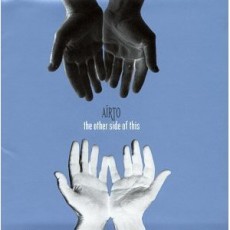
Airto Moreira was born in Itaiopolis, Brazil on August 5, 1941 into a family of folk healers but was raised in Curitiba and Sao Paulo. Showing an extraordinary talent for music at a young age, he became a professional musician at age 13, and his first landmark recording was “Quarteto Novo” with Hermeto Pascoal in 1967. Shortly after, he followed his wife Flora Purim to the U. S., settling in New York City.
Airto began playing regularly with jazz musicians in the city beginning with the bassist Walter Booker and through him began playing with Joe Zawinul, who in turn introduced him to Miles Davis. At this time Miles was mounting the seminal fusion recording Bitches Brew to which Airto became a part of.
After two years with Miles, Airto joined Miles alumni Joe Zawinul, Wayne Shorter and Miroslav Vitous forming Weather Report and recording their self-titled debut album. He left Weather Report and joined Chick Corea’s new band Return To Forever, drumming on the debut Return To Forever and Light As A Feather, commonly regarded as fusion classics.
Airto has played with many of the greatest names in jazz including Cannonball Adderley, Lee Morgan, George Benson, Donald Byrd, Paul Desmond, Dave Holland, Jack DeJohnette, John McLaughlin, Astrud Gilberto, Keith Jarrett and George Duke just to name a few. He also has played with symphonic orchestras and as a solo percussionist, and during live performances often includes a samba solo, where he emulates the sound of an entire band using just a single pandeiro.
In addition to jazz concerts and recordings, Airto has composed and contributed music scores to both television and film including Apocalypse Now and Last Tango In Paris. The drummer and percussionist has taught at UCLA and the California Brazil Camp and collaborated with his wife Flora and P.M. Dawn on “Non-Fiction Burning” for the Aids benefit album Red Hot + Rio produced by the Red Hot Organization.
More Posts: drums,percussion