

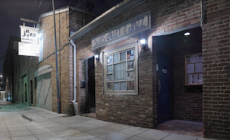
The Jazz Voyager
Departing the Midwest for the nation’s capital is the next hop for this week. The Jazz Voyager is landing at Reagan National and hopping over to Wisconsin and M Streets in Georgetown to the Blues Alley. Situated in an actual alley, this intimate venue has long established themselves as one of the premiere jazz clubs on the East Coast. Opening in 1965 it has hosted the biggest names in jazz and blues along with emerging young stars.
This week I will see the incomparable Grammy nominated guitar Stanley Jordan. Be it bold reinventions of classical masterpieces or soulful explorations through pop-rock hits, to blazing straight ahead jazz forays and ultramodern improvisational works, whether solo or in a group, Jordan can always be depended upon to take listeners on a journey into the unexpected. If you’ve never heard him perform, this is an opportunity to witness his solo virtuosity.
The venue is located at 1073 Wisconsin Ave NW, Washington, DC 20007 and for more information you can visit https://notoriousjazz.com/event/stanley-jordan-3

More Posts: adventure,club,genius,guitar,jazz,music,piano,preserving,travel

JOEY ALEXANDER
Joey Alexander, is an Indonesian jazz pianist. He became the first Indonesian musician to chart on Billboard 200 when his album My Favorite Things debuted at number 174 and then peaked at 59. His first album, My Favorite Things, was released in 2015 when he was 11 years old.
Widely regarded as a wunderkind, Alexander taught himself to play jazz at the age of six by listening to his father’s classic jazz albums. He won the Grand Prix at the 2013 Master-Jam Fest when he was nine.
In 2014, Wynton Marsalis invited him to play at Jazz at Lincoln Center. Alexander played at the Montreal and Newport Jazz Festivals in 2015 and has performed for Herbie Hancock, Bill Clinton, Wendy Kiess, and Barack Obama.
More Posts: adventure,club,genius,guitar,jazz,music,piano,preserving,travel
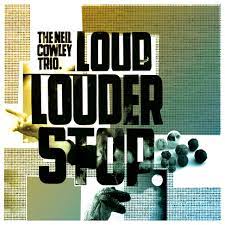
Daily Dose Of Jazz…
Neil Cowley was born on November 5, 1972 in London, England. He began as a classical pianist and performed a Shostakovich piano concerto at the age of 10 at Queen Elizabeth Hall.
In his late teens Cowley moved into being a keyboardist for soul and funk acts Mission Impossible, the Brand New Heavies, Gabrielle and Zero 7. He also appeared as a co-composer and session musician with the jazz-rock group Samuel Purdey. An early album was Foxbury Rules, released under the pseudonym Diamond Wookie.
By 2002 Neil formed the duo Fragile State with Ben Mynott and after it disbanded, it became the Neil Cowley Trio. In 2006, he released an album called Soundcastles under the name Pretz.
Two years later the Neil Cowley Trio recorded cover versions of the Beatles’ Revolution 1 and Revolution 9 for Mojo magazine. In 2012, he appeared as the session pianist on Adele’s album 21. 2013 saw him as Musician in Residence for Derry, when it was designated the inaugural UK City of Culture.
His sophomore album Spacebound Apes was released by Neil Cowley Trio and in 2018 he announced that the trio was on hiatus and he was working on a new electronic focused project.
Contemporary pianist and composer Neil Cowley, who won the 2007 BBC Jazz Award for best album for Displaced, continues to work on his craft and new projects.

More Posts: bandleader,composer,history,instrumental,jazz,music,piano
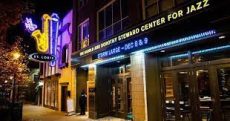
The Jazz Voyager
The Midwest is the next destination for this Jazz Voyager to the city on the Mississippi River with the famous Gateway Arch. But before that monument was built, St. Louis, Missouri was known as a hub for jazz with many musicians being born or migrating from other regions of the country. The venue I’ll be visiting began as a small intimate location Jazz At The Bistro. In 2006 the name was changed to Jazz St. Louis and by 2014 was renovated as is the Harold & Dorothy Steward Center For Jazz.
Performing at this center this week is a friend of mine who I always enjoy seeing, especially in performance. She is internationally renowned vocalist Rene Marie. Over two decades of performing and recording eleven albums, she has cemented her reputation as a composer, arranger, theatrical performer and teacher. Her life lessons are an integral component of her compositions as she borrows various elements of folk, R&B, classical, and country to create a captivating hybrid style. Her body of work is musical and is an affirmation of the power of the human spirit.
The venue is located at 3536 Washington Avenue, 63103 and for more information you can visit https://notoriousjazz.com/event/rene-marie-3
More Posts: adventure,club,genius,jazz,music,piano,preserving,travel,vocal
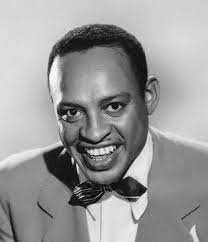
Three Wishes
Pannonica finally got the opportunity to ask Lionel Hampton what he would wish for and his retort was:
-
- “To be in tune with jazz. Jazz to me is like the human emotion of the Negro. From the time he was in bondage praying to God to give him freedom – that was the blues then, coming from the spiritual vein – and when he was freed some, he would make jazz more happy. It was coming from the Negroes. From the time of the slave in the cotton fields, swinging up, you dig? From the time it got popularized and commercial, and left the cotton fields and railroad tracks, and they were putting it in the cafes. It was the days of King Oliver and Sidney Bechet..”
- “The colored man always has been the one to change the color of jazz. As the country advanced, they changes the music. It’s always been moving along, integrated by Negroes, turning to his feelings as he advanced. From Louis Armstrong up to Fletcher Henderson, Don Redman, Edgar Sampson, and Sy Oliver. They started changing the picture of jaz. It was their orchestrations, their chart that made jazz. They began writing arrangements for Benny Goodman, Tommy Dorsey, and so on – for the ofay bands. fats Waller, Jimmie Lunceford, those guys were all great arrangers. Then Monk, Dizzy, Prez, Don Byas, and Charlie Parker, they came in, all influencing the music, all great instrumentalists. As the Negro got free he added more ingredients. You’d need an encyclopedia to tell it all. I hope I’ll always be tuned so I can dig the transitions in jazz. Because there are more transitions coming.”
- “Lots of white folks write about jazz, but they don’t know the pains of it. You should be the one to write about it, because you understand. And musicians will talk to you. Gotta get down on that stand now, but I’ll be over to your pad tomorrow, and we’ll do this with the tape recorder. It’ll take another three of four hours, at the very least. I’ve not done more than get started on the first answer yet, you dig?”

More Posts: bandleader,baroness,history,instrumental,jazz,music,pannonica,percussion,piano,three,vibraphone,wishes