

Daily Dose Of Jazz…
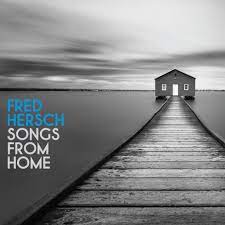
Fred Hersch was born October 21, 1955 in Cincinnati, Ohio to Jewish parents and began playing the piano at the age of four, composing music by eight. By ten he won national piano competitions.
Hersch first became interested in jazz while at Grinnell College in Iowa. He dropped out of school and started playing jazz in Cincinnati, continuing his studies at the New England Conservatory under Jaki Byard and attracting attention from the press in a college recital. Upon graduation, he became a jazz piano instructor at the college.
1977 saw Fred moving to New York City, then gigged with Art Farmer in Los Angeles, California in 1978. He would play with Farmer again three years later, played for singer Chris Connor, then with Joe Henderson. He would go on to perform with Jane Ira Bloom, Jamie Baum, Toots Thielemans, Eddie Daniels, and Janis Siegel. A fortuitous firing of his pianist by Art Pepper gave Hersch the launch of his career when he filled in for the pianist.
In 1986, he taught at Berklee College of Music, performed and recorded sixty-four albums as a leader or co-leader, seventy-nine as a sideman and wrote an autobiography, Good Things Happen Slowly: A Life In and Out of Jazz.
In 1993, Hersch came out as gay and has been treated for HIV since 1984. He fell into a coma in 2008 for two months but when he regained consciousness, he had lost all muscular function as a result of his long inactivity and could not play the piano. After rehabilitation, he was able to play again. He continues to compose, perform and record.
More Posts: bandleader,composer,educator,history,instrumental,jazz,music,piano
The Jazz Voyager
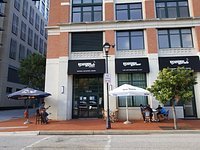
The Jazz Voyager is flying into Baltimore, Maryland on Thursday for crab cakes and jazz. First stop is breaking bread with friends and enjoying the company and camaraderie. The following night I will be in the audience at the Keystone Korner Baltimore to hear the Bill Charlap Trio. It’s been a few years since I’ve heard the trio with Bill on piano, Peter Washington on bass and Kenny Washington on drums.
But there’s so much more to the city so during the day this Jazz Voyager will be moving about the city investigating the Top Of The World Observation Deck, the Lexington Market, National Aquarium and the American Visionary Art Museum.
The trio will be in residence for two nights ~ October 21 & 22, two sets each evening at 7:30 and 10:00 pm, with a Sunday, October 23rd late afternoon show at 5:00pm. Tickets range $35.00 ~ $45.00 plus fee.
The Keystone Korner Baltimore address is 1350 Lancaster Street, 21231. For more information, the number is 410-946-6726 or keystonekornerbaltimore.com.

More Posts: adventure,album,bass,club,drums,festival,genius,jazz,museum,music,piano,preserving,restaurant,travel
Daily Dose Of Jazz…
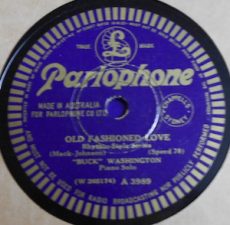
Ford Lee “Buck” Washington was born October 16, 1903 in Louisville, Kentucky. He and John W. Sublett, known by his stage name Bubbles, first began working together in the 1910s, while in his teens. Their duo was known as Buck and Bubbles.
Bubbles was primarily a tap dancer while Washington sang and played stride piano and sang. They were so popular that the duo moved to Manhattan, New York City in 1919 and by the late 1920s they were on Broadway. They played together in the Columbia Theater, the Palace, performing with Eddie Cantor, Al Jolson, and Danny Kaye. They were in the Ziegfeld Follies of 1931.
They became the first black artists to perform at Radio City Music Hall. They toured Europe in the 1930s and appeared on television and in films, including Calling All Stars in 1937 and Cabin in the Sky in 1942. They performed live in the first scheduled high definition television program on November 2, 1936 at Alexandra Palace in London, England for the BBC. In 1927, when Buck and Bubbles were performing at the Sunset Café, Buck developed a working relationship and friendship with Louis Armstrong.
As a pianist, Washington also recorded sessions in the 1930s with jazz musicians including Armstrong, Bessie Smith, Benny Goodman and Coleman Hawkins. He also played trumpet, though he only made home recordings on the instrument. He continued working with Bubbles until 1953, and then for a couple of years worked with Timmie Rogers and Jonah Jones.
Pianist, singer and vaudeville performer Buck Washington, with partner Bubbles were the first black artists to appear on television anywhere in the world, transitioned on January 31, 1955 in New York City.

More Posts: history,instrumental,jazz,music,piano,trumpet,vocal
NEGRONI’S TRIO
The Aventura Jazz Festival presented by Lion Tribe Group presents three-time Latin GRAMMY®-nominated group Negroni’s Trio as part of a two day celebration of outstanding music performances. The Jazz takes place in Aventura!
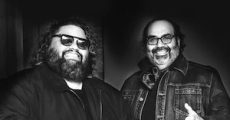
Negroni’s Trio possesses enough musical experience to captivate listeners of any musical genre and is seducing and entertaining audiences across all continents. Negroni’s Trio is comprised of a “father and son team”, José Negroni, on piano and keyboards, Nomar Negroni, on drums and percussions, completing the trio is bassist Rafael Valencia. The Negroni team have worked together since 2002 as Co-Founders and Co-Producers to form an ensemble of master musicians who create their own unique voice in traditionally known jazz classics, Latin jazz and jazz fusion. Taking musical risks with performance and repertoire, the result is an array of classic lyricism mixed with innovative and sincere improvisations that quenches the audience’s thirst for world class jazz.
More Posts: adventure,album,club,drums,festival,genius,jazz,museum,music,percussion,piano,preserving,restaurant,travel
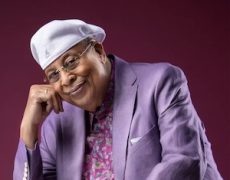
CHUCHO VALDÉS PESENTS LA CREACIÓN
Chucho Valdés presents “La Creación” with the Yoruban Orchestra
Hilario Durán & John Beasley, Musical Director
The extraordinary summation of an extraordinary career
The great Cuban pianist and composer Chucho Valdés presents “La Creación,” a bold new work for big band, Afro-Cuban percussion, and vocals with elements of Santería ritual music, African music, blues, and what Valdés describes as “an atmosphere in the style of Miles Davis’ Bitches Brew.”
More Posts: adventure,album,club,festival,genius,jazz,museum,music,piano,preserving,restaurant,travel