

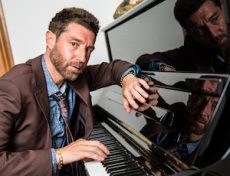
BENNY GREEN
Betty Carter is in all truthfulness, whether I remember it each day or not, effectively my musical mother. Art Blakey, Ray Brown, Oscar Peterson, Milt Jackson and Freddie Hubbard all blessed my life by inviting me to participate in their music, included me on their recordings and live shows, and Art, Ray and Freddie even recorded my original tunes on their records. I have something to share today because I got to play with the hardest swinging bassist and drummer in the history of jazz; i got to feel this!
i have always wanted to belong and be included and be a part of the music, Black-American music, Jazz. anyone who has ever gotten to know me or been in my home, knows exactly what i’m about. i love classic Blue Note quintet records, and the sound and feeling of a trumpet-saxophone front line like Lee Morgan and Hank Mobley or Kenny Dorham and Jackie McLean, is what i love, and it inspires the music i write. i am a Jazz Messenger, my life is dedicated to Jazz.
More Posts: adventure,album,club,festival,genius,jazz,museum,music,piano,preserving,restaurant,travel
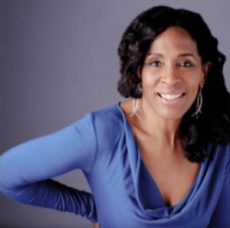
MALA WALDRON
Mala’s music career has taken her all over the world, performing for international tours and festivals, as well in some of NYC’s most prestigious stages, including the Iridium Jazz Club, the Blue Note, the Jazz Standard, the 55 Bar, and Brooklyn’s BAM Café. Most recently she performed in Washington DC at the Kennedy Center.
Mala was a featured performer at the first annual Coltrane Day Festival, was featured in the book, Giving Birth to Sound: Women in Creative Music (Renate da Rin and & William Parker editors) and can be seen in the documentary film, ‘The Girls in the Band,” directed by Judy Chaikin.
More Posts: adventure,album,club,composer,festival,genius,jazz,museum,music,piano,preserving,restaurant,travel,vocal
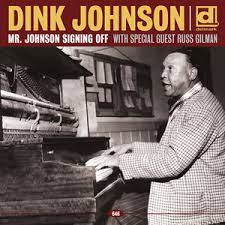
Daily Dose Of Jazz…
Ollie “Dink” Johnson was born in Biloxi, Mississippi on October 28, 1892. He was the younger brother of double bassist William Manuel “Bill” Johnson. He worked around Mississippi and New Orleans before moving to the western United States in the early 1910s. He played around Nevada and California, often with his older brother. He played with the Original Creole Orchestra, mostly on drums.
He made his first recordings in 1922 on clarinet with Kid Ory’s Band. He made more recordings in the 1940s and 1950s, mostly on piano, although Johnson recorded some one-man band sessions, playing all three of his instruments by over-dubbing.
His piano style was influenced by his brother-in-law Jelly Roll Morton, and his clarinet playing by Larry Shields. The tunes he wrote included The Krooked Blues, recorded by King Oliver and So Different Blues.
Pianist, clarinetist, and drummer Dink Johnson, who played in the Dixieland genre, transitioned in Portland, Oregon on November 29, 1954.

More Posts: bandleader,clarinet,drums,history,instrumental,jazz,music,piano
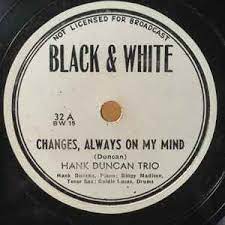
Daily Dose Of Jazz…
Hank Duncan was born Henry James Duncan on October 26, 1894 in Bowling Green, Kentucky. Little is written about his childhood, however he is better known for his work with Fess Williams, King Oliver, Tommy Ladnier, Sidney Bechet, Charles “Fat Man” Turner, and many others.
He toured extensively with Fats Waller. Duncan was sometimes referred to as The Little Man From Memory Lane.
Pianist Hank Duncan transitioned on June 7,1968 in Long Island, New York.
More Posts: history,instrumental,jazz,music,piano

Daily Dose Of Jazz…
Peck Kelley was born John Dickson Kelley in Houston, Texas on October 22, 1898. During the 1920s, he was a popular bandleader who led his own band, Peck’s Bad Boys. The group included players such as Jack Teagarden, Louis Prima, Terry Shand, Wingy Manone, Leon Roppolo and Pee Wee Russell, several would go on to have successful recording careers of their own. Despite the apparent success of this group, no recordings survive from this period.
Rarely played anywhere outside of Texas, however, early in his career he did perform in Missouri and Louisiana. Throughout his career Kelley repeatedly turned down offers by other musicians of the day to play outside of Texas like Bing Crosby, Jimmy Dorsey, Tommy Dorsey and Paul Whiteman. Joining the Dick Shannon Quartet with Glen Boyd on Bass Fiddle, the only studio recordings from this musician to survive were made in Houston in 1957.
He enjoyed playing at the sessions and subsequently listening to the tapes but he refused to allow them to be released. They were eventually released in 1983 by Commodore Records as the Peck Kelley Jam Sessions, Volumes 1 & 2. Some private recordings of this same period have been released on the Arkadia record label.
Throughout his career he wished to remain anonymous, a private man who did not wish fame for himself. Pianist and bandleader Peck Kelley eventually became blind, developed Parkinson’s disease, and transitioned on December 26, 1980, at 82.
More Posts: bandleader,history,instrumental,jazz,music,piano