

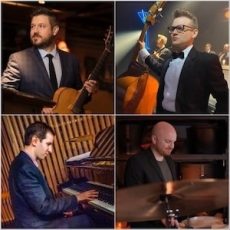
DECHTER | FRANK | SEGIEL | SHAW QUARTET
The quartet frequently performs live at prominent jazz venues like The Baked Potato in Studio City, California, often collaborating with special guest horn players and saxophonists. Guitarist Graham Dechter is known for his work with the Clayton-Hamilton Jazz Orchestra and upright bassist Alex Frank is best known for his work with Jeff Goldblum’s Mildred Snitzer Orchestra.
The Quartet:
Graham Dechter – Guitar
Alex Frank – Upright Bass
Jordon Segiel – Fender Rhodes
Ryan Shaw – Drums
Cover:
$25.00 + $6.25 fee | 1st Set ~ Inside
$20.00 + fee | 2nd Set ~ Inside
$15.00 + fee ~ Patio Seating | Live Video Concert as patio is not inside the club
More Posts: adventure,bandleader,bass,club,drums,genius,instrumental,jazz,music,piano,preserving,travel
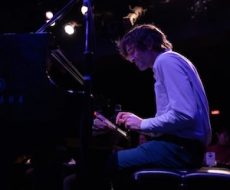
JOE ALTERMAN
He plays with swing, soul, and an unmistakable sense of uplift — the kind of piano that makes people lean forward, smile, and stay a little longer. Les McCann called him “a giant.” Ramsey Lewis called him “an inspiration.” Ahmad Jamal hailed him as “a very special artist.” And George Benson once told him, “You play good and you sound good — and there’s a difference.”
A longtime mentee of Les McCann and Ramsey Lewis, Alterman carries forward their groove-heavy, life-affirming approach to the piano — blending blues feeling and melodic clarity into a voice that is deeply rooted yet unmistakably personal.
Alterman has released eight critically acclaimed albums and performed at iconic venues including the Kennedy Center, Lincoln Center, Birdland, and the Blue Note, sharing the stage with legends such as McCann, Lewis, Houston Person, and Dick Gregory. When he and Gregory shared a bill at the Kennedy Center, Gregory introduced him with a knowing smile and the line, “See? Integration works!”
he Band:
Joe Alterman ~ Piano
Nathaniel Schroeder ~ Bass
Alex Raderman ~ Drums
Cover: $35.00
More Posts: adventure,bandleader,club,genius,jazz,music,piano,preserving,travel
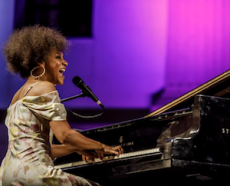
JANY MCPHERSON
Pianist, singer, and composer Jany McPherson is originally from Cuba and launched her brilliant career performing with top-tier musicians such as Omara Portuondo & the Buena Vista Social Club, John McLaughlin, and Andy Narell, to name just a few. Jany’s style is a blend of various genres related to jazz—rich in nuance, at times exotic, but always performed with great personality, originality, and modernity.
The Band:
Jany McPherson ~ piano & vocals
Tony Sgro ~ bass
Lukmil Perez, Ph.D.
Cover:
Tuesday ~ Thursday: 1st Show: CHF 35 / $43.25 | 2nd Show: $24.71
Saturday: 1st Show: CHF 35 / $43.25 | 2nd Show: $37.07
More Posts: adventure,bandleader,club,genius,instrumental,jazz,music,piano,preserving,vocal
Daily Dose Of Jazz…
Onaje Allan Gumbs was born Allan Bentley Gumbs on September 3, 1949 in Harlem, New York but grew up in St. Albans, Queens. Starting to play piano at age 7, Henry Manciniwas one of his earliest and greatest influences, hearing Peter Gunn and Mr. Lucky themes on television. He later studied at the Music and Art High School in Manhattan and was mentored by Erskine Tate Alum Leroy Kirkland.
During this time, he was playing in a Latin band, a big band, playing piano duets and listening to records made by Motown and Blue Note, developing an interest in R&B in conjunction with the straight-ahead jazz of Horace Silver, Dizzy Gillespie, Lalo Schifrin, Gil Evans, Miles Davis, McCoy Tyner and John Coltrane. He went on to study classical piano, composition, arranging and graduated with a degree in Education at the State University of New York at Fredonia in upstate New York.
In 1971, Leroy Kirkland introduced Onaje to guitarist Kenny Burrell and a subsequent gig led him to play with Larry Ridley and The Thad Jones/ Mel Lewis Orchestra. He would join jazz ensemble Natural Essence that included Thelonious Monk Jr. In 1972he went to work with Norman Connors as an arranger on the Dark of Light album and contributed keyboards on the albums Love From the Sun, Saturday Night Special, You Are My Starship, Invitation and Mr. C.
Toward the late 1970s, Onaje spent two years working in Woody Shaw‘s band as pianist, arranger, and occasional composer, in which the group won the Down Beat Reader’s Poll for Best Jazz Group and for Best Jazz Album in 1978 for Rosewood. His first solo piano project was simply titled Onaje and was followed by venturing into R&B and subsequently ending up on the smooth jazz charts and rotations for nearly 20 years with his composition “Quiet Passion”.
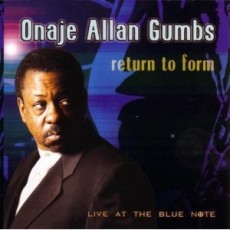
In 2003, Onaje return to straight-ahead with his release of the live album Return to Form, and garnering critical acclaim the next year with a project on his own label, Ejano, titled Remember Their Innocence. These were followed with Grady Tate‘s Sack Full of Dreams before his stroke in 2010 but by year end had recorded and release Just Like Yesterday in Japan, with all signs of a stroke vanished. His sideman work has included stints with Buster Williams, Cecil McBee, and Betty Carter and most recently with Avery Sharpe on the 2012 album Sojourner Truth: Ain’t I A Woman.
He has received the Min-on-Art Award, has his song Dare To Dream chosen by Panasonic as the theme for their 10th anniversary celebration of Kid Witness News, composed, arranged and performed the original score for the Showtime film, Override and was nominated for an NAACP Image Award.
Suffering a stroke in 2010 he was able to return to music two weeks later. In 2015 he was hospitalized again for two weeks but made a full recovery and returned to composing and performance. Pianist, composer, arranger and bandleader Onaje Allen Gumbs passed away at 70 on April 6, 2020.
More Posts: piano
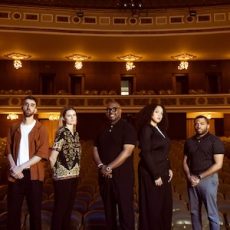
CHRISTIAN MCBRIDE’S URSA MAJOR
Bassist and composer Christian McBride’s most recent project is a quintet showcasing several of the most exciting young players on the scene. Returning to the Miner Auditorium stage for two nights, the cast features tenor saxophonist Nicole Glover, who has toured with Wynton Marsalis and Jazz at Lincoln Center Orchestra, performed with veteran masters such as drummer Al Foster, vocalist Dee Dee Bridgewater, and bassist Reggie Workman, and recorded with pianist Aaron Diehl’s Grammy-nominated 2023 Mary Lou Williams project Zodiac Suite.
Ely Perlman is an exciting young guitarist who has collaborated with Terreon Gully and Braxton Cook, and Chicago pianist Mike King has been touring with Dee Dee Bridgewater, and trumpeters Marquis Hill, Theo Croker, and Marcus Printup. Powering the band is Oakland native Savannah Harris, a remarkably poised young drummer who has made a major impact with the likes of vocalist Cécile McLorin Salvant, Kenny Barron, and Immanuel Wilkins.
Tickets: $40.00 ~ $125.00
More Posts: adventure,bandleader,bass,drums,genius,guitar,jazz,music,piano,preserving,saxophone,travel