

Daily Dose Of Jazz…
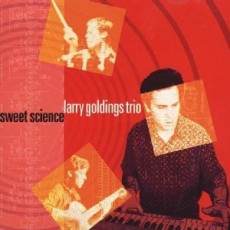
Larry Goldings was born on August 28, 1968 in Boston, Massachusetts and Larry studied classical piano until the age of twelve. While in high school he attended a program at the Eastman School of Music and during this period Errol Garner, Oscar Peterson, Dave McKenna, Red Garland and Bill Evans were prime influences. As a young teenager, Larry studied privately with Ran Blake and Keith Jarrett.
Goldings moved to New York in 1986 to attend The New School and while in college he studied piano with Jaki Byard and Fred Hersch. As a freshman he traveled to Copenhagen with Sir Roland Hanna and played piano with Sarah Vaughan, Harry Sweets Edison and Al Cohn. His later college years saw him touring worldwide with Jon Hendricks and subsequent collaboration with guitarist Jim Hall.
In 1988, Larry started developing his organ style while gigging at Augie’s (now Smoke) in New York City. His 1991 debut release was Intimacy Of The Blues and since then has performed and/or recorded with Charlie Haden, Jack Dejohnette, Carla Bley, Pat Metheny, Madeleine Peyroux, Michael Brecker, Luciana Souza, Steve Gadd, Melody Gardot, David Sanborn, Al Jarreau, Sia, John Scofield and India.Arie to name a few.
Pianist, organist, producer/arranger and composer Larry Goldings has 16 albums as a leader, eighty-four as a sideman, half dozen film and tv credits, has been nominated for a “Best Jazz Album of the Year” Grammy, has twice been a Jazz Journalist Association Winner “Best Organist/Keyboardist of the Year”, has won The New Yorker Magazine Best Jazz Albums for Awareness and Big Stuff. His latest released this year is Rhombus, with Peter Bernstein and Bill Stewart, proves that he continues to compose, perform, tour and record.
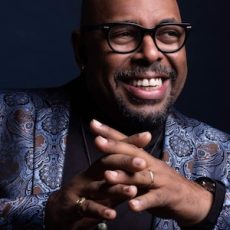
CHRISTIAN MCBRIDE TRIO
Bass genius Christian McBride honors his mentor and greatest inspiration, the legendary Ray Brown, with an all-star trio of Ray Brown Trio alumni — pianist Benny Green and drummer Gregory Hutchinson.
A major figure in the development of bebop and hard bop in the 40s and 50s, Brown was among the most prolific and versatile bassists in jazz history who gained fame through his notable associations with Oscar Peterson, Ella Fitzgerald, and Dizzy Gillespie.
He led a series of remarkable trios in the 1990s and 2000s featuring Green and Hutchinson, whose recordings for the Telarc label stand as benchmarks for the time-honored format.
In addition to his own lengthy histories with both Green and Hutchinson, McBride appeared on Brown’s live 1997 bass summit release SuperBass and 2001 follow-up SuperBass 2 (along with fellow legend John Clayton). He pays tribute to the master with this special performance.
Cover: $45.00 ~ $135.00
More Posts: adventure,bandleader,bass,club,drums,genius,instrumental,jazz,music,piano,preserving,travel
THE COOKERS
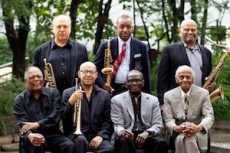
The Cookers take their name from Night of the Cookers, the famous 1965 recorded trumpet summit between Lee Morgan and Freddie Hubbard at Brooklyn’s Club La Marchal. Formed by trumpeter and organizer David Weiss, the group brings together some of the most storied musicians in jazz, players who came up in the 1960s and 70s working alongside the very architects of the music.
Drummer Billy Hart and trumpeter Eddie Henderson were both members of Herbie Hancock’s groundbreaking Mwandishi group. Bassist Cecil McBee anchored Charles Lloyd’s celebrated quartet alongside Keith Jarrett and Jack DeJohnette. Pianist George Cables held the piano chair in bands led by Sonny Rollins, Joe Henderson, Freddie Hubbard, Dexter Gordon, and Art Pepper. Saxophonist Donald Harrison, a recently named NEA Jazz Master, came up performing with Art Blakey, Roy Haynes, and Herbie Hancock.
Together these musicians have contributed to well over a thousand recordings across the history of jazz, and the chemistry between them, forged over decades of shared history on bandstands around the world, is unmistakable. Critics have praised The Cookers for embodying the serious commitment it took to thrive on the New York jazz scene of decades past, and audiences consistently describe their live performances as electrifying, a rare opportunity to witness musicians who don’t simply play the music, but live inside of it. This is a true once in a lifetime chance to experience some of the last living architects of modern jazz in an intimate room.
The Side Door Jazz Club is a dedicated jazz listening room located inside the historic Old Lyme Inn, 85 Lyme Street, Old Lyme, CT. Tickets are reserved seating. Guests dining at the Old Lyme Inn prior to the show receive 10% off their dinner bill.
The Band:
Eddie Henderson – Trumpet
David Weiss – Trumpet
Donald Harrison – Alto Saxophone
Azar Lawrence – Tenor Saxophone
George Cables – Piano
Cecil McBee – Bass
Billy Hart – Drums
Cover: $38.57
More Posts: adventure,bandleader,bass,club,drums,genius,instrumental,jazz,music,piano,preserving,saxophone,travel,trumpet
BILL CHARLAP TRIO
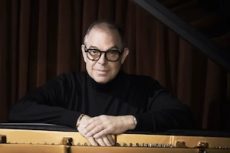
Bill Charlap was born in New York City into a deeply musical family, his father was Broadway composer Moose Charlap, whose credits include Peter Pan, and his mother is singer Sandy Stewart, a Grammy nominated vocalist who toured with Benny Goodman. Charlap began playing piano at age three and never looked back. In the late 1980s he joined Gerry Mulligan’s quintet, and in 1995 secured one of the most coveted piano chairs in jazz with the Phil Woods Quintet. Since then he has performed with an extraordinary range of the music’s leading artists, including Tony Bennett, Wynton Marsalis, Ron Carter, Dee Dee Bridgewater, Houston Person, and Barbra Streisand.
Charlap is widely regarded as one of the most gifted interpreters of the American songbook working today. Time magazine has written that he “approaches a song the way a lover approaches his beloved, no matter how imaginative or surprising his take on a song is, he invariably zeroes in on its essence.” His acclaimed trio, celebrated for its telepathic interplay and deep swing, has been together for decades and has released nearly 20 albums together. In 2016, his collaboration with Tony Bennett, The Silver Lining: The Songs of Jerome Kern, won the Grammy Award for Best Traditional Pop Vocal Album. From 2004 through 2023 he served as Artistic Director of New York City’s Jazz in July Festival at 92NY, and he currently serves as Director of Jazz Studies at William Paterson University.
Joining him for this special four night engagement are bassist David Wong and drummer Dennis Mackrel, two of the most respected rhythm section players in jazz. This is a rare and extraordinary opportunity to experience one of the true masters of jazz piano in an intimate setting.
Bill Charlap – Piano
David Wong – Bass
Dennis Mackrel – Drums
Cover: $38.5
Showtimes:
Thursday~ Saturday: 8:00pm ~ 10:00pm
Sunday: 3:00pm ~ 5:00pm
More Posts: adventure,bandleader,club,genius,instrumental,jazz,music,piano,preserving,travel
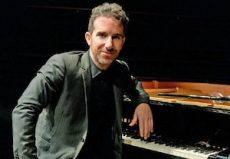
AARON GOLDBERG TRIO
The New York Times has called Aaron Goldberg a “post-bop pianist of exemplary taste and range”, and over a career spanning three decades he has more than earned that distinction. Born in Boston, Goldberg discovered jazz in high school under the guidance of bassist Bob Sinicrope, and later studied with saxophonist Jerry Bergonzi before moving to New York at seventeen to attend the New School for Jazz and Contemporary Music. DownBeat magazine has praised his “quick witted harmonic reflexes, fluid command of line, and cut-to-the-chase sense of narrative logic.”
Goldberg’s career has placed him at the center of some of jazz’s most important collaborations. He toured extensively with Joshua Redman, joined the bands of Kurt Rosenwinkel and Wynton Marsalis, and performed worldwide with the Lincoln Center Jazz Orchestra. He has also collaborated with Charles Lloyd, Madeleine Peyroux, Betty Carter, Freddie Hubbard, and Guillermo Klein, among many others, and somehow found time to earn a master’s degree in philosophy from Tufts along the way. He is a Steinway artist and a member of the celebrated collaborative trio Yes! with Omer Avital and Ali Jackson Jr.
Aaron Goldberg – Piano
Matt Brewer – Bass
Kendrick Scott – Drums
Cover: $27.98
More Posts: adventure,bandleader,club,genius,guitar,instrumental,jazz,music,piano,preserving,travel