

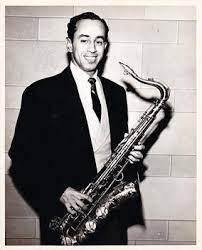
Three Wishes
The question of three wishes came up during the laughter and music one night and Paul Gonsalves simply said:
- “May I wish you happiness, prosperity, and all that you desire for here and ever after.”
*Excerpt from Three Wishes: An Intimate Look at Jazz Greats ~ Compiled and Photographed by Pannonica de Koenigswarter

More Posts: baroness,history,instrumental,jazz,music,pannonica,saxophone,three,wishes
Daily Dose Of Jazz…
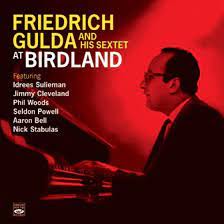
Friedrich Gulda was born on May 16, 1930 in Vienna, Austria and as the son of a teacher began learning to play the piano at age 7 with Felix Pazofsky at the Wiener Volkskonservatorium. In 1942, he entered the Vienna Music Academy, where he studied piano and musical theory under Bruno Seidlhofer and Joseph Marx.
During World War II as teenagers, Gulda and his friend Joe Zawinul were rebellious and would perform forbidden music, including jazz, in violation of the government’s prohibition of playing such music. Winning first prize at the Geneva International Music Competition in 1946, he began to play concerts worldwide, making his Carnegie Hall debut in 1950, and with Jörg Demus and Paul Badura-Skoda, formed what became known as the “Viennese troika”. Friedrich enjoyed a renowned classical career for years before his 1956 engagement at Birdland in New York City and at the Newport Jazz Festival.
In 1966 he organized the International Competition for Modern Jazz in 1966, and established the International Musikforum, a school in Ossiach, Austria two years later, for students who wanted to learn improvisation. From the 1950s on Gulda cultivated a professional interest in jazz, writing songs and free improvisation or open music improvisations. He also recorded as a vocalist under the pseudonym “Albert Golowin”, fooling music critics for years until it was realized that Gulda and Golowin were the same person.
In jazz, he found “the rhythmic drive, the risk, the absolute contrast to the pale, academic approach I had been taught. He also took up playing the baritone saxophone. His 1970 album, As You Like It, includes the standards Round Midnight and What Is This Thing Called Love?, as well as his own classic Blues For H.G. that is dedicated to Hans Georg Brunner-Schwer.
From the late 1960s through the 1980s he continued his straight-ahead swing and bop-based jazz often in European Jazz big bands, which he often organized yearly performances and recordings. He performed and recorded playing clavichord, percussion instruments, and a bass recorder wooden flute with musicians involved in free improvisation, including Cecil Taylor, Barre Phillips, Ursula Anders, John Surman, Albert Mangelsdorff, Stu Martin, and Fritz Pauer. He would go on to collaborate in the coming decades with Herbie Hancock, Joe Zawinul, and Chick Corea.
When the Vienna Music Academy awarded him its Beethoven Ring in recognition of his performances, he accepted it but then later reconsidered and returned it. To promote a concert in 1999, he announced his own death in a press release so that the concert at the Vienna Konzerthaus could serve as a resurrection party.
Pianist and composer Friedrich Gulda, who worked in both the classical and jazz fields, transitioned from heart failure at the age of 69 on January 27, 2000 at his home in Weissenbach, Austria.

More Posts: bandleader,composer,history,instrumental,jazz,music,piano,saxophone
Requisites
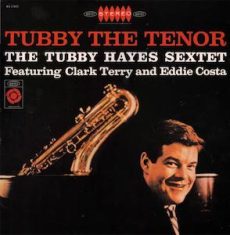
Tubby The Tenor ~ The Tubby Hayes Sextet | By Eddie Carter
Submitted for your approval this morning is a 1962 release by British tenor saxophonist Tubby Hayes. The year before, he traveled to the United States for the first time to appear at the Half Note. This week’s album is an excellent studio session recorded at Columbia Studio A during his engagement and initially released in the U.K. as Tubbs in N.Y. Its U.S. counterpart came out the same year and is titled Tubby The Tenor (Epic LA 16023/BA 17023) by The Tubby Hayes Sextet. Hayes is in good company on this date; Clark Terry on trumpet (tracks: A2, B1), Eddie Costa on vibes (tracks: A2, A3, B3), Horace Parlan on piano, George Duvivier on bass, and Dave Bailey on drums. My copy is the 1995 Classic Records U.S. Stereo audiophile reissue sharing the original catalog number.
Side One gets underway with You For Me by Bob Haymes, a quartet feature for Tubby and the rhythm section. The saxophonist sets the scene with an unaccompanied introduction segueing into the foursome’s lively opening chorus. Tubby takes the song’s only solo and gives a swinging interpretation complemented by the trio’s spirited support leading to the closing chorus. Clark Terry’s easy-going blues, A Pint of Bitter, begins with the sextet stating the carefree melody collectively. The trumpeter is up first with a relaxing lead interpretation; then Hayes is equally laid-back on the following statement. Costa comes in next and delivers a leisurely-paced reading; then, Parlan builds a compelling finale ahead of the ending theme.
Airegin by Sonny Rollins opens with the quintet’s brisk theme. Tubby launches the solos with a spirited presentation, then gives way to Eddie, who swings freely in an exciting reading. Horace has the third spot and gives an energetic performance. George walks briskly behind him, ahead of the tenor sax’s and vibraphonist’s concise conversation preceding the reprise and climax. Side Two takes off with Opus Ocean by Clark Terry, a fast-paced thrill ride that moves quickly from the quintet’s collective theme. Hayes is off to the races wailing at top speed in the opening solo, followed by an exhilarating statement from Terry. Parlan turns the heat up on the third reading, and the front line delivers a spirited exchange before the ensemble takes the song out.
The quartet returns to put some fresh clothes on Soon, an old tune from the songbook of George and Ira Gershwin. Horace briefly introduces himself; then Tubby steps up for an excellent melody that flows seamlessly into his impressive lead statement. Horace is next and completes the solos with a festive interpretation until Tubby reappears for the song’s finish. Doxy by Sonny Rollins is misspelled here as Doxie and begins with a relaxing melody led by Hayes and Costa. Hayes is up first and gets into a comfortable groove on the opening statement. Costa comes in next for a pleasant performance, then Parlan takes a nice turn in the third reading. Duvivier wraps it up with a short walk leading to the ensemble’s finale.
Mike Berniker and Nat Shapiro produced Tubby The Tenor, and it’s unknown who the recording engineer is. However, this Classic Records reissue is an excellent recording with a superb soundstage. Bernie Grundman remastered this album, and it is an outstanding pressing using 180-gram audiophile vinyl that’s silent until the music starts. The front and rear covers also have a high gloss. Though known as a tenor saxophonist, Tubby Hayes played the flute and vibraphone equally proficiently. Until this album, I only knew of his work as a member of The Jazz Couriers with Ronnie Scott, but I am now on the hunt for more of his records. If you’re a fan of the tenor sax, I invite you to check out Tubby The Tenor by The Tubby Hayes Sextet on your next vinyl shopping trip. It’s an ideal introduction to this remarkable musician and an enjoyable album you can listen to any time of the day or evening!
~ Tubbs in N.Y. (Fontana TFL 5183/STFL 595) – Source: Discogs.com ~ Aireign – Source: JazzStandards.com ~ Columbia Studio A – Source: Tubby Hayes: How The Little Giant Conquered The Big Apple by Simon Spillett. Jazzwise Magazine, October 18, 2021. www.jazzwise.com ~ Doxy, Soon – Source: Wikipedia.org © 2023 by Edward Thomas Carter

More Posts: choice,classic,collectible,collector,history,instrumental,jazz,music,saxophone
Requisites
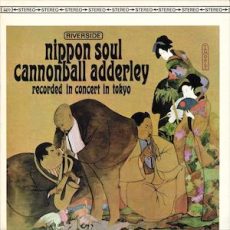
Nippon Soul ~ Cannonball Adderley Sextet | By Eddie Carter
This morning’s discussion is about an album I first heard when I lived in Cincinnati, Ohio, in 1988. Two of my favorite record shops to visit each weekend were Everybody’s Records and Record Theatre. At the latter store, Nippon Soul (Riverside RM 477/RS 9477) by The Cannonball Adderley Sextet was playing over the loudspeakers, which blew me away, and I picked it up immediately. It was recorded during the group’s first Japanese tour in July 1963 at Tokyo’s Sankei Hall and released the following year. The personnel is Nat Adderley on cornet, Julian “Cannonball” Adderley on alto sax, Yusef Lateef on flute (track: A1), oboe (track: B3), and tenor sax (tracks: A2, A3, B1, B2), Joe Zawinul on piano, Sam Jones on bass, and Louis Hayes on drums. My copy is the 1966 US Stereo reissue (Riverside RLP 9477).
Side One opens with Cannonball’s introduction of the title tune, Nippon Soul, an original by the altoist that begins with the sextet’s carefree melody. Nat sets the solos in motion with an infectiously swinging interpretation; then, Cannonball delivers a statement of delightful pleasure. Yusef’s flute compliments both horns on the following performance, and Joe scores a direct hit in the closer ahead of the theme’s reprise and ending. Cole Porter’s jazz standard, Easy To Love, moves briskly from the two-instrument introduction by Cannonball and Louis into the ensemble’s rapid delivery of the melody. Cannonball takes off like a race car covering a great distance in the opening solo, then engages in a vigorous exchange with Hayes into the sextet’s closing chorus, ending abruptly.
The first side finale, The Weaver by Yusef Lateef, is a dedication to a friend, Lee Weaver. Cannonball briefly introduces the song; then, the rhythm section gives an exhilarating introduction featuring each of the horns in the melody. Cannonball opens the solos energetically, then Yusef’s tenor sax enters slowly but expands into an ambitious performance of fierce intensity. Nat delivers an equal amount of heat on the following statement, and Joe enters the spotlight last with a lively aggressiveness preceding the ensemble’s quick reprise and climax. Side Two starts with Tengo Tango, Julian, and Nat’s original that’s suitable for dancing. The sextet opens the melody collectively; then, Cannonball gives a funky solo before the theme returns and the dance ends.
Come Sunday by Duke Ellington comes from his Black, Brown, and Beige suite. It opens with a gorgeous duet between Joe and Sam, the featured performers in this rendition. Joe shows a light touch in his playing that characterizes the beauty of this song to perfection, complimented by Sam’s bass and the front line’s subtle support into a tender ending. Brother John by Yusef Lateef is his tribute to John Coltrane and features him on the oboe as he leads the group through the melody. Yusef takes flight first with an adventurous opening solo. Afterward, Cannonball briefly comments, then Nat blazes into the second statement with considerable agility. Cannonball follows with a swiftly paced presentation, and Joe has one of his best moments ahead of Yusef’s theme restatement and finale.
Orrin Keepnews produced Nippon Soul, but who recorded the album is unknown. However, don’t let that dissuade you. The sound quality is exquisite, with an excellent soundstage that places the listener in the Sankei Hall audience as the musicians perform. If you’re a Cannonball Adderley fan, I invite you to check out Nippon Soul the next time you’re out vinyl shopping. It’s a fantastic set capturing The Cannonball Adderley Sextet at the top of their game, and despite being sixty years old, it sounds as fresh today as when it was first released. This album also complements their New York and San Francisco live releases and is highly recommended for a spot in your library!
~ Jazz Workshop Revisited (Riverside RM 444/RS 9444), The Cannonball Adderley Sextet in New York (Riverside RLP 404/RLP 9404) – Source: Discogs.com ~ Come Sunday, Easy To Love – Source: JazzStandards.com © 2023 by Edward Thomas Carter
More Posts: choice,classic,collectible,collector,history,instrumental,jazz,music,saxophone
Daily Dose Of Jazz…
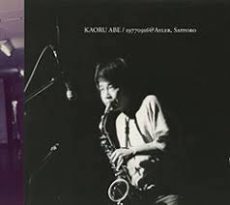
Kaoru Abe 阿部 薫 was born on May 5, 1949 in Kawasaki, Kanagawa, Japan. Self-taught at a young age, at 17 he dropped out of highschool in 1967 to focus on perfecting his playing. The following year he played his first performance at a jazz spot named Oreo.
He generally performed solo but played with notables Motoharu Yoshizawa, Takehisa Kosugi, Yosuke Yamashita, Derek Bailey, and Milford Graves. In 1970, Laoru met guitarist Masayuki Takayanagi and recorded with him.
Abe was prolific, appearing almost every day to jazz spots and concerts. His library consists almost entirely of archival and live recordings, however he has done studio recordings.
His later years saw Kaoru playing different instruments like the bass clarinet throughout his career. By 1976 for two years he was mostly explorative with the harmonica. He was portrayed in Kōji Wakamatsu’s film Endless Waltz by novelist and punk rock singer Kō Machida.
Avant-garde alto saxophonist Kaoru Abe transitioned on September 9, 1978 from Bromisoval overdose causing an acute gastric perforation.
More Posts: bandleader,history,instrumental,jazz,music,saxophone