

Requisites
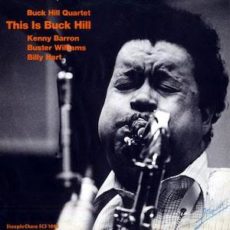
This Is Buck Hill ~ Buck Hill Quartet | By Eddie CarterMy first choice from the library for April is by one of the hidden stars of jazz. His name was Roger Wendell Hill, but everyone would know him by his nickname Buck. Hill began his professional career as a musician in 1943 while working as a Washington D.C. mailman. Buck first worked with Charlie Byrd in the late fifties, later appearing on albums by Shirley Horn, Alan Houser, and Shirley Scott. He also performed with Miles Davis, Dizzy Gillespie, Max Roach, and Sonny Stitt but didn’t record as a leader until the late seventies. Buck also played the clarinet and soprano sax, but the tenor sax was his primary instrument. This Is Buck Hill (SteepleChase Records SCS 1095) is a 1978 release offering all the excitement and energy of an after-hours jam session. He’s working with an outstanding rhythm section, Kenny Barron on piano, Buster Williams on bass, and Billy Hart on drums. My copy used in this report is the 1978 US Stereo album.
Side One starts with Tokudo, an original by Buster Williams that the bassist would record again a year later on his album, Heartbeat. This tune begins at a brisk tempo for the melody, and everyone is afforded a solo opportunity. Buck delivers the goods with aggressive momentum on the first presentation. Kenny shifts into high gear on the next reading. Buster dips into a soulful groove on the third statement, and Billy gives a dazzling performance before the out-chorus. Yesterdays by Jerome Kern and Otto Harbach is one of the most recorded jazz and pop compositions since its creation in 1933. The group swings at a medium tempo on the main theme. Hill gradually builds the excitement on the first statement to a sensational climax. Barron offers a beautiful sentiment in the next reading. Williams swings to a groovy beat preceding a luscious ending.
A blistering introduction by Billy begins Oleo by Sonny Rollins. The foursome gets things underway with a very quick melody. Buck takes off like the Road Runner for a high-octane fast ride including three unaccompanied verses of white heat. Kenny powers the next interpretation with energetic exertion, then Billy has a final furious exchange with Buck culminating into a brilliant climax.
Side Two begins with the first of three selections by the leader. I’m Aquarius is a beautiful ballad that originally appeared in a suite on trumpet player Alan Houser’s 1973 album, No Samba. It opens elegantly with a cascading flow of tenderness from Barron segueing gently into the melody with Hill directing the ensemble softly. The tenor remains tastefully restrained on the opening statement. Kenny closes with a delicate sensitivity leading to a sultry coda.
S.M.Y. is a lively original possessing an irresistible beat exuding happiness from the first notes of the opening chorus. The saxophonist starts the ball rolling with some vigorous blowing. Kenny digs in for some good rocking jazz next, then Buck supplies an abundant supply of high-voltage current into the theme’s reprise. The album closes with Two Chord Molly, an uptempo tune allowing everyone except Hart to contribute lengthy readings. The trio lays down a swinging line on the introduction with Hill providing vast amounts of energy to the festive melody. Barron delivers an enthusiastically rigorous lead solo. Buster gets down to business next with an intense workout. Buck accelerates on the closer producing electrically charged notes. During Hill’s statement, you can hear someone commenting (I’m sure positively) on his performance.
The man behind the controls is Elvin Campbell, whose work can be heard on many jazz albums. This record is well recorded, and the highs, midrange, and bottom end are all very detailed with an excellent soundstage and crystal-clear clarity. Buck recorded three more albums for SteepleChase, Scope (1979), Easy To Love (1982), and Impressions (1983). Hill passed away at age ninety on March 20, 2017. You’d never suspect this was the quartet’s first recording together because the music is excellent, and their interaction is seamless. Buck also meets the challenge of writing good compositions with strong performances inspired by Kenny Barron, Buster Williams, and Billy Hart. On your next vinyl hunt, I’ll hope you’ll consider This Is Buck Hill for a spot in your library. He was a veteran jazzman who certainly deserves a place alongside the greatest to ever blow the tenor saxophone! ~ Easy To Love (SteepleChase SCS-1160), Heartbeat (Muse Records MR 5171), Impressions (SteepleChase SCS 1173), No Samba (Straight Ahead ARS 001), Scope (SteepleChase SCS 1123) – Source: Discogs.com ~ Oleo, Yesterdays – Source: JazzStandards.com ~ Alan Houser, No Samba – Source: Album liner notes by J.R. Taylor ~ Roger Wendell Hill, Tokudo, Heartbeat, Scope, Easy To Love, Impressions, Elvin Campbell – Source: AllMusic.com, Wikipedia.org © 2021 by Edward Thomas Carter

More Posts: choice,classic,collectible,collector,history,instrumental,jazz,music,saxophone
Daily Dose Of Jazz…
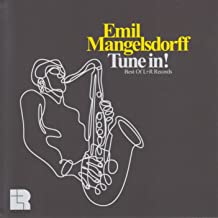
Emil Mangelsdorff was born April 11, 1925, in Frankfurt am Main, Germany. In 1942 and 1943, he studied clarinet at the Hoch Conservatory in Frankfurt, Germany.
As a member of the Frankfurt Hot Club, his performance of jazz with Hans Otto Jung among others, led to his being imprisoned by the Gestapo. He was forced into the German army and was a Russian prisoner of war for four years. In 1949 he returned to Frankfurt and decided to become a professional jazz musician. Emil played in the combos of Joe Klimm and Jutta Hipp, and was also a member of the Frankfurt All Stars and the Jazz-Ensemble des Hessischen Rundfunks from 1958.
Since the 1960s he has directed his own quartet. In 1964 Mangelsdorff wrote an instruction manual for jazz saxophone. In 2006 he was awarded the Goethe-Plakette des Landes Hessen and in 2008 he received the Bundesverdienstkreuz.
Alto saxophonist Emil Mangelsdorff, who also played soprano saxophone, clarinet and flute, has retired from music at 96.
More Posts: bandleader,clarinet,flute,history,instrumental,jazz,music,saxophone
Daily Dose Of Jazz…
Pat La Barbera, born Pascel Emmanuel LaBarbera on April 7, 1944 in Mt. Morris, New York. He moved to Toronto, Ontario, Canada in 1974, and is a member of the faculty at Humber College.
La Barbera began working with Elvin Jones in 1975, touring Europe with him in 1979. While working with Buddy Rich, he also worked in groups led by Woody Herman and Louie Bellson.
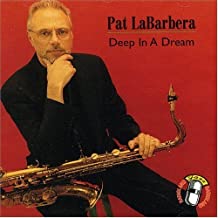
Playing with Carlos Santana, Pat has played a major role in the development of a generation of Canadian saxophonists. In 2000, he won a Juno Award for Best Traditional Instrumental Jazz Album for Deep in a Dream.
Tenor, alto and soprano saxophonist, clarinetist, and flautist Pat LaBarbera, most notable for his work as a soloist in Buddy Rich bands from 1967 to 1973, continues to perform and educate.
More Posts: bandleader,clarinet,educator,fute,history,instrumental,jazz,music,saxophone
Daily Dose Of Jazz…
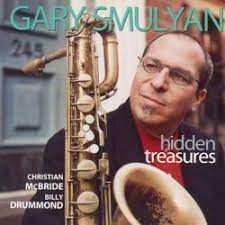
Gary Smulyan was born in Bethpage, New York on April 4, 1956. He studied at Hofstra University before working with Woody Herman. His biggest influence is Pepper Adams. When Adams died, Smulyan recorded an album titled which included eight pieces composed by Adams.
Smulyan has played with the Vanguard Jazz Orchestra, the Mel Lewis Big Band, the Dave Holland Big Band and Octet, the Dizzy Gillespie All Star Big Band. He has performed and recorded with Carla Bley’s Big Band.
He has recorded thirteen albums as a leader, as a sideman seventy-six with Harry Allen, David Byrne, Michel Camilo, Carnegie Hall Jazz Band, Freddy Cole, George Coleman, Dena DeRose, Bill Evans, Gil Evans, Jon Faddis, John Fedchock, Don Friedman, Benny Green, Tom Harrell, Gene Harris, Jimmy Heath, Joe Henderson, Conrad Herwig, Freddie Hubbard, Denise Jannah, B.B. King, Mike LeDonne, Joe Lovano, Joe Magnarelli, Kevin Mahogany, Mark Masters, Mingus Big Band, Grachan Moncur III, Eddie Palmieri, Charlie Parker, Charlie Persip, Diana Ross, Rob Schneiderman, John Scofield, Don Sickler, Mark Soskin, Dave Stryker, Roseanna Vitro, Walt Weiskopf, and Gerald Wilson.
Baritone saxophone Gary Smulyan leads a trio with bassist Ray Drummond and drummer Kenny Washington.
More Posts: bandleader,history,instrumental,jazz,music,saxophone
Daily Dose Of Jazz…
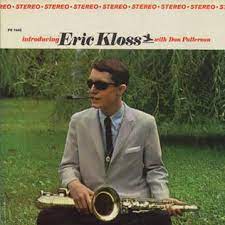
Eric Kloss was born April 3, 1949 in Greenville, Pennsylvania near Pittsburgh, and attended the Western Pennsylvania School for the Blind, which was run by his father. When he was 10, he started on saxophone, and two years later he was playing in night clubs with professional musicians such as Bobby Negri, Charles Bell, and Sonny Stitt. At 16, he recorded his debut album, Introducing Eric Kloss on the Prestige label in 1965, with Don Patterson and Pat Martino.
On his third album, Grits & Gravy, he recorded with musicians over twice his age: Jaki Byard, Richard Davis, and Alan Dawson. He continued recording and performing while a student at Duquesne University. A fan of Elvis Presley and The Ventures, he was attracted to the growth of jazz fusion in the 1960s and ’70s, and eventually played with fusion musicians Chick Corea, Dave Holland, and Jack DeJohnette. He also collaborated with Richie Cole and Gil Goldstein, and did sessions with Cedar Walton, Jimmy Owens, Kenny Barron, Jack DeJohnette, Booker Ervin, Barry Miles, and Terry Silverlight.
By the 1980s, Kloss was teaching at Rutgers University, then Duquesne and Carnegie Mellon. He and his wife, a vocalist, collaborated in a group called Quiet Fire. Saxophonist Eric Kloss has performed and recorded rarely since the Eighties due to health problems.
More Posts: bandleader,history,instrumental,jazz,music,saxophone