

Requisites
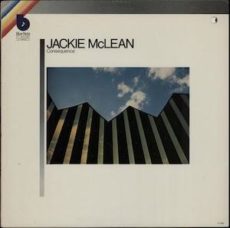
Consequence, as defined in the Merriam-Webster Dictionary, is “something that happens as a result of a particular action or set of conditions”. In effect, that’s a perfect way to describe this morning’s choice from the library, Consequence (Blue Note Classic LT-994). Alto saxophonist Jackie McLean’s two previous releases, One Step Beyond and Destination Out expressed an abstract style toward progressive jazz and both were still selling well. I think this is why Alfred Lion didn’t release the album after it was recorded. However, this 1965 date pairs McLean with one of his favorite collaborators, Lee Morgan on trumpet. The rhythm section is equally stellar, Harold Mabern on piano, Herbie Lewis on bass, and Billy Higgins on drums. My copy used in this report is the original 1979 Stereo LP.
Bluesanova, the first of two tunes by Morgan starts Side One with a dazzling theme led by the front line. Lee takes off first on an enthusiastic rhythmic flight succeeded by Jackie who wails with exciting freshness. Harold weaves a happy spell on the closing performance, then the front line makes one final comment each before the ensemble dissolving into nothingness. Consequence, also by McLean is a speed demon from the outset of the brisk opening chorus. The leader opens the soloing like a meteorite streaking across the sky. Morgan raises the temperature to the searing heat of a tropical summer on the second reading. Mabern delivers a ferocious statement next, then Higgins has a rapid-fire exchange with Lee and Jackie into an abrupt climax.
My Old Flame by Sam Coslow and Arthur Johnston made its debut in the 1934 film, Belle of The Nineties. The lyrics of this beautiful ballad describe a woman recalling a former lover with reflective affection, and the group presents a passionately tender interpretation. Jackie takes the first step with a touching opening statement. Harold and Lee turn in two beautifully expressed readings before Jackie appears again for a delicately elegant ending. A festive mood gets Side Two underway with McLean’s Tolypso, a danceable mid~tempo tune providing the ideal setting for a graciously inviting lead presentation by the altoist. Morgan adds some hot and spicy sauce to this festive occasion and Mabern sizzles with an effervescent spontaneity before the trio leads the partygoers into a fadeout.
Slumber is by Lee Morgan and during the melody, I thought I’d heard it before and was experiencing déjà vu. It turns out I did recognize it because it was recorded two years later on The Procrastinator (1978) as Soft Touch. After the ensemble’s unhurried melody, Lee opens the first solo expressing an enjoyable, relaxed mood. Jackie’s alto swings brightly next and Harold captivates on the closing reading. McLean’s Vernestune was originally recorded as The Three Minors in 1962 for an album that was shelved until its release in Japan, Jackie McLean Quintet (1977). It begins with a speedy main theme in unison. McLean provides plenty of fireworks on the first solo, then Morgan answers with a quick attack. Mabern blazes brightly on the closing presentation with a ferocious determination that doesn’t stop until the upbeat exit.
McLean and Morgan were a perfect match together and Alfred Lion utilized their talents whenever he could. Jackie performed on Lee’s LP’s: Leeway (1961), Cornbread (1967), Charisma (1969), The Sixth Sense (1970), Tom Cat (1980), and Infinity (1981). Lee returned the favor on Jackie’s album Jacknife (1975). The sound of the original recording by Rudy Van Gelder is quite good without a bit of harshness from top to bottom. I did an A-B listening comparison between Consequence and Record Five of The Complete Blue Note 1964-66 Jackie McLean Sessions (1993), which duplicates the LP song sequence. The sound of the Mosaic album is exceptional with a significant improvement in the highs, midrange, and bass. If you like jazz or are a fan of Jackie McLean, Consequence is a solid straight-ahead session with an extraordinary supporting cast that you can’t listen to without tapping your feet. Together, they create thirty-six minutes of enjoyable listening worthy of occupying a spot in any Hard-Bop or Post-Bop library!
Charisma (Blue Note BST 84312), Destination Out (Blue Note BLP 4165/BST 84165), Infinity (Blue Note Classic LT-1091), Jacknife (The Blue Note Reissue Series BN-LA457-H2), Leeway (Blue Note BLP 4034/BST 84034), One Step Beyond (Blue Note BLP 4137/BST 84137), The Complete Blue Note 1964-66 Jackie McLean Sessions (Mosaic Records MQ6-150), Jackie McLean Quintet (Blue Note LNJ-80118), The Procrastinator (Blue Note Classic Jazz Series BN-LA582-J2), Tom Cat (Blue Note Classic LT 1058) – Source: Discogs.com
~ My Old Flame – Source: JazzStandards.com ~ Belle of The Nineties – Source: Wikipedia.org ~ Bluesanova – https://www.youtube.com/watch?v=pBEDJ1Ke5l0 ~ Consequence – https://www.youtube.com/watch?v=-YKe7O6KDxM © 2021 by Edward Thomas Carter
More Posts: choice,classic,collectible,collector,history,instrumental,jazz,music,saxophone
Daily Dose Of Jazz…
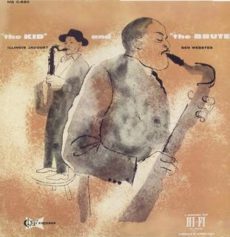
Rick Henderson was born on April 25, 1928 in Washington, D.C. and studied composition as a high schooler and played locally in the late 1940s. He served in the Army from 1951 to 1953, then joined Duke Ellington’s Orchestra after being recommended by Clark Terry.
He played with Ellington during his years on Capitol Records, doing arrangements in addition to his duties as a player. He also composed tunes such as Carney for the Ellington band. After leaving Ellington’s employ in 1956, Rick returned to D.C. where he led the Howard Theatre’s house band until 1964.
Following this he worked as an arranger and composer for jazz orchestras, military bands and school ensembles. Among those who used his charts, in addition to Ellington, were Count Basie, Illinois Jacquet, and Billy Taylor. Henderson continued to lead bands into the 1990s, including the University of Maryland Jazz Ensemble from 1977 to 1978.
Saxophonist and arranger Rick Henderson passed away from arteriosclerotic cardiovascular disease on May 21, 2004.
More Posts: arranger,bandleader,history,instrumental,jazz,music,saxophone
The Quarantined Jazz Voyager
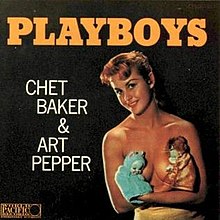
The pandemic has me comfortably relaxing in my listening room selecting my next choice which is the 1956 album Playboys by trumpeter Chet Baker and saxophonist Art Pepper. The album was their third collaboration between Pepper and Baker, following the successes of The Route and Chet Baker Big Band, all three recorded in 1956.
Playboys was reissued in 1961 under the name Picture of Heath after the fifth track (itself a reference to Jimmy Heath, composer of all but two of the tracks). The tracks themselves were presented in a slightly different order, starting with the new title track.
Hugh Hefner reportedly objected to the original album cover (clearly inspired by Playboy magazine with its near-identical wordmark and pinup photo) and threatened to sue. For Picture of Heath, the original cover was replaced with a photo of the artists in the recording studio.
The 1990 Blue Note/Pacific Jazz CD reissue of Playboys used the pin-up cover, but the same label’s 1998 CD reissue returned to the Picture of Health cover.
Track Listing | 40:07 All compositions by Jimmy Heath except as indicated- For Minors Only ~ 4:00
- Minor~Yours (Art Pepper) ~ 6:44
- Resonant Emotions ~ 5:41
- Tynan Tyme (Pepper) ~ 5:32
- Picture of Heath ~ 6:44
- For Miles and Miles ~ 6:25
- C.T.A. ~ 5:12
1998 CD Release
- Picture of Heath
- For Miles and Miles
- C.T.A.
- For Minors Only
- Minor Yours
- Resonant Emotions
- Tynan Tyme
- Chet Baker ~ trumpet
- Art Pepper ~ alto saxophone
- Phil Urso ~ tenor saxophone
- Carl Perkins ~ piano
- Curtis Counce ~ bass
- Larance Marable ~ drums

More Posts: adventure,album,club,genius,jazz,museum,music,preserving,restaurant,saxophone,travel,trumpet
The Quarantined Jazz Voyager
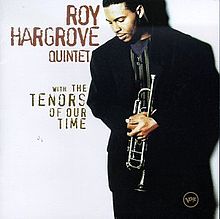
Having completely adapted to a new modus operandi for living this glorious life, I remain vigilant in my social distancing and reminding myself of music I haven’t listened to in a long time. This week I’m pulling out the late great Roy Hargrove who had the vision to record With The Tenors of Our Time. It’s a 1994 release on the Polygram Record label that was recorded at Teatro Mancinelli and Giani Grascinelli Sound Service with executive producer Richard Seidel. The album’s art direction and design is by David Lau, photography by James Minchin, liner notes by Jimmy Katz.
>Others in the team contributing to the production of this album were Larry Clothier ~ production, engineering, mixing; Ed Rak ~ engineering, mastering, mixing; Robert Friedrich ~ assistant engineering; Troy Halderson ~ mastering; Camille Tominaro ~ production coordination; and Nelly Muganda ~ make-up and hair stylist.
Track Listing | 72:56- Soppin’ the Biscuit (composer Roy Hargrove, featuring Stanley Turrentine) ~ 7:59
- When We Were One (composer Johnny Griffin, featuring Johnny Griffin) ~ 5:59
- Valse Hot (composer Sonny Rollins, featuring Branford Marsalis, Ron Blake) ~ 6:57
- Once Forgotten (composer Pamela Watson, featuring Ron Blake on tenor and soprano saxophone) ~ 5:45
- Shade of Jade (composer Joe Henderson, featuring Joe Henderson) ~ 5:24
- Greens at the Chicken Shack (composer Cyrus Chestnut, featuring Johnny Griffin) ~ 5:45
- Never Let Me Go (composer Jay Livingston and Ray Evans, featuring Rodney Whitaker) ~ 5:36
- Serenity (composer Joe Henderson, featuring Joe Henderson) ~ 5:35
- Across the Pond (composer Roy Hargrove, featuring Joshua Redman) ~ 6:47
- Wild Is Love (composer Robert Mickens and G. Brown, featuring Stanley Turrentine) ~ 6:50
- Mental Phrasing (composer Roy Hargrove, featuring Ron Blake, Joshua Redman) ~ 6:25
- April’s Fool (composer Ron Blake) ~ 3:54
- Roy Hargrove – trumpet, flugelhorn (2,4,7,10), production
- Cyrus Chestnut – piano
- Rodney Whitaker – bass
- Gregory Hutchinson – drums
- Ron Blake – soprano, tenor saxophone
- Johnny Griffin – tenor saxophone
- Joe Henderson – tenor saxophone
- Branford Marsalis – tenor saxophone
- Joshua Redman – tenor saxophone
- Stanley Turrentine – tenor saxophone
More Posts: adventure,album,club,genius,jazz,museum,music,preserving,restaurant,saxophone,travel,trumpet
Daily Dose Of Jazz…
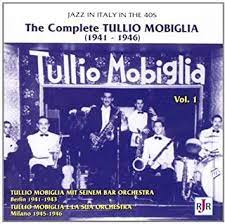
Tullio Mobiglia was born in Carezzano, Italy on April 12, 1911. Passionate about music, he graduated in violin at the Niccolò Paganini Conservatory in Genoa, Italy. In 1934 he began playing in orchestras on ships, often traveling to the United States where he was able to approach jazz, becoming friends with some musicians such as Coleman Hawkins.
He quickly emerged as the best Italian saxophonist of the period, and was called to play in the Mirador Orchestra. By 1940 Tullio was to Berlin, Germany achieving great success, to the point of being hired for a certain period in Heinz. Wehner Orchestra. 1941 saw him forming his first band of Italian musicians, with whom he published the first 78 rpm recordings.
During his career he had the opportunity to play with Django Reinhardt in another Berlin club, the Femina Bar. Due to the ban on playing American music he was only allowed to play European music, however, many pieces are written by Mobiglia himself.
Mobiglia returned to Italy in 1943 and two years later reformed his orchestra with other musicians, obtaining a contract with Columbia Records, where he recorded several 78s. In the following years he recorded with Telefunken, Cetra and Durium, resuming the playing of his first instrument, the violin. By 1967 he was teaching violin at the Jan Sibelius Conservatory of Helsinki, Finland to teach the violin, a position he held until the 1980s, while continuing to perform in the Finnish capital where he spent the last few years of his life. Saxophonist and bandleader Tullio Mobiglia passed away on July 24, 1991 at the age of 80 in Helsinki, Finland.
More Posts: bandleader,history,instrumental,jazz,music,saxophone