

DAily Dose Of Jazz…
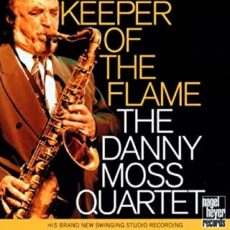
Dennis Moss MBE, known as Danny in the professional world, was born on August 16, 1927 in Redhill, Surrey, England. The son of a toolmaker, his childhood was spent on the south coast, in the Brighton-Worthing area, where he attended Steyning Grammar School. At the age of thirteen, he saw a jazz band appear briefly in a Bowery Boys film, and was so inspired by the clarinet playing that he swapped his most valued possession, his ice skates, for a second-hand instrument of his own. He was self-taught on both this and the tenor saxophone, which he took up at school,
A spell of National Service at the age of eighteen saw Moss performing for three years in a Royal Air Force regional band. After leaving the forces he joined the Vic Lewis Orchestra, then moved around various bands, especially ones with the potential for a soloist. In 1952, he joined Ted Heath’s band, soon discovering novelty numbers and musical reproductions were limiting his skills as an improviser, and he left after three years.
In 1957 Moss joined John Dankworth’s orchestra. Here, with the band’s encouragement, he began to develop his characteristic saxophone sound. He left Dankworth’s band in 1962, and from here, he joined Humphrey Lyttelton’s group, continuing to hone his style for another two years. He formed his own quartet, playing a mix of club gigs, festival appearances and radio broadcasts for the BBC and continued to tour with this quartet throughout the 1970s and 1980s. He also playing and recording with high-profile singers like Tony Bennett, Ella Fitzgerald, Bing Crosby, Sarah Vaughan, and Rosemary Clooney, and appearing with Buck Clayton in the mid-’60s and Louis Armstrong on his last British tour.
Diagnosed in 2005 with pleural mesothelioma, a rare form of lung cancer caused by exposure to asbestos. Saxophonist Danny Moss passed away on May 28, 2008, aged 80.

More Posts: bandleader,clarinet,history,instrumental,jazz,music,saxophone
Three Wishes
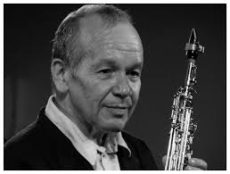
Pannonica asked Steve Lacy what he would wish for if he was given three and he told her:
-
-
“The diversion of all war funds into an exploration of the potentialities of the mind.”
-
“Universal comprehension of art.”
- “The end of fear.”
-
*Excerpt from Three Wishes: An Intimate Look at Jazz Greats ~ Compiled and Photographed by Pannonica de Koenigswarter
More Posts: baroness,history,instrumental,jazz,music,pannonica,saxophone,three,wishes
Requisites
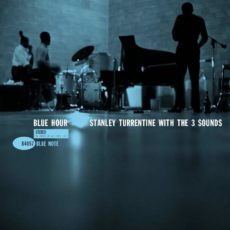
Blue Hour ~ Stanley Turrentine With The Three Sounds | By Eddie Carter
In the hands of Stanley Turrentine, the tenor saxophone was an instrument of soulful creativity and immense power. From his 1960 debut, Look Out to his biggest hit, Sugar in 1971, Turrentine’s credentials were second to none as a giant of Hard-Bop, Modal, and Soul-Jazz. This morning’s choice from the library joins him with Gene Harris on piano; Andrew Simpkins on bass and Bill Dowdy on drums who were collectively known as The Three Sounds. Blue Hour (BLP 4057/BST 84057) was released in 1961 and is the second record where The Three Sounds backed a saxophonist, the other is 1959’s LD + 3 with Lou Donaldson. My copy used in this report is the 2015 Music Matters 33 1/3 Stereo audiophile reissue (MMBST-84057). I Want A Little Girl, written by Murray Mencher and Billy Moll in 1930 starts Side One. This infrequently heard ballad opens with an angelic introduction illustrating Harris’ attentiveness to the lyric and melody. Stanley brings a beautifully expressive sound and delicate sincerity to the opening chorus, then adds a graceful sensitivity to his solo. Gene’s interlude is brief but lovely and the closing by the quartet is captivating.
Gee Baby, Ain’t I Good To You was written in 1929 by Don Redman and Andy Razaf. Its first recording was by The King Cole Trio in 1943 and a year later, it became a hit for Nat King Cole and a jazz standard with numerous recordings to its credit. The Three Sounds provide a respectful treatment with a pensive introduction, allowing Turrentine to deliver the evocative theme with warm and affectionate feelings. The saxophonist also weaves a reverent spell of subtle lyricism on the opening solo. Harris is up next for the closer with a thoughtfully tender interpretation that speaks to the soul. The only original on the album ends the first side, Gene Harris’ Blue Riff takes the tempo to a medium beat during the first statement moving with a finger-popping, toe-tapping groove. The threesome states the melody, then Stanley takes over for a jubilant solo of vivacious spontaneity. Gene takes the next turn for a bouncy, bright presentation with a youthful spirit. Stanley returns for a few final compulsive choruses before the pianist takes the threesome into the fade-out.
Since I Fell For You by Buddy Johnson opens Side Two. He composed both the music and lyrics, introducing it in 1945 with his sister Ella on vocals. The Three Sounds start the song with a stylishly soft, slow-paced introduction as natural as if it was written for this quartet exclusively. This segues into a soothing opening melody by Turrentine who solos twice, putting his stamp on both interpretations displaying tranquil restraint on the first and closing statements. Harris contributes a tender reading that’s lovingly stated, anchored by Simpkins and Dowdy’s voluptuous foundation. Willow Weep For Me, written by Ann Ronell in 1932 begins with the exquisitely mellow tone of Stanley’s tenor sax having an intimate conversation with the rhythm section on the opening chorus. Gene’s first solo is elegant and laid-back, revealing its true beauty with gorgeous verses preceding an alluring climax. Stanley’s closing performance is soulful and bluesy like a leisurely walk on a warm summer evening with the trio proving the ideal companion to take the tune into a luscious coda.
Gene Harris, who was known for his gospel jazz style formed The Three Sounds in 1956 with Andy Simpkins and Bill Dowdy. The group became a hit with the public and when Blue Hour was recorded, the trio was amid a four-year run (1958-1962) recording a total of twelve albums for Blue Note including four in 1960 alone. The other three are Feelin’ Good, It Just Got To Be, and Moods. I believe that’s why Alfred Lion didn’t release the additional eight songs of this session on another album. The Three Sounds’ were together until 1970 when Harris left to embark on a successful solo career. Stanley Turrentine was a veteran of the Soul-Jazz style since the fifties and he recorded a total of seventeen LP’s for the label as a leader, plus several as a sideman with Donald Byrd, Kenny Burrell, Jimmy McGriff, Ike Quebec, Horace Parlan, Duke Pearson, Shirley Scott (who he was married to at the time), Jimmy Smith, and Art Taylor.
In his liner notes, noted author, jazz historian and journalist Ira Gitler offers one definition of the Blue Hour as that early morning time “when you reach across the pillow where your Baby used to lay” and find him (or her) not there. The sound quality is stunning, the remastering of Rudy Van Gelder’s original tapes by RTI Record Technology Incorporated is superb and the gatefold photos of each musician during the session compliments the music marvelously. This record is nearly thirty-nine minutes of enjoyable jazz by Stanley Turrentine and The Three Sounds that adds weight to any jazz library. It’s well worth auditioning for a spot in your library and an LP that’s perfect to enjoy any time of the day, evening, or early morning during the Blue Hour.
~ Feelin’ Good (Blue Note BLP 4072/BST 84072); Gee Baby, Ain’t I Good To You (Capitol 169); It Just Got To Be (Blue Note BLP 4120/BST 84120); LD + 3 (Blue Note BLP 4012/BST 84012); Look Out (Blue Note BLP 4039/BST 84039); Moods (Blue Note BLP 4044/BST 84044); Sugar (CTI Records CTI 6005) – Source: Discogs.com
~ I Want A Little Girl, Gee Baby, Ain’t I Good To You, Since I Fell For You, Willow Weep For Me – Source: Wikipedia.org
© 2020 by Edward Thomas Carter
More Posts: bass,choice,classic,collectible,collector,drums,history,instrumental,jazz,music,piano,saxophone
Daily Dose Of Jazz…
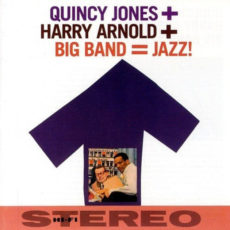
Harry Arnold Persson was born on August 7, 1920, in Helsingborg, Sweden and led his first big band in 1942, playing the saxophone initially but eventually ceased to perform, concentrating on arranging.
From 1949-52 he played and arranged for Thore Ehrling’s band and worked extensively as a studio musician, particularly writing film scores through much of the 1950s. From 1956 to 1965 Arnold led the Swedish Radio Big Band, which included Arne Domnérus, Bengt Hallberg, and Åke Persson.
American trumpeter Benny Bailey played with the band for a time, Quincy Jones arranged and briefly led the group, and they recorded with Ernestine Anderson, Lucky Thompson, Coleman Hawkins, Toots Thielemans, Tony Scott, and Stan Getz.
Disbanding the group in 1965, Arnold continued working as an arranger and led big bands in Europe. Saxophonist and bandleader Harry Arnold passed away on February 11, 1971 at the age of 51 in Stockholm, Sweden.
More Posts: arranger,bandleader,history,instrumental,jazz,music,saxophone

Daily Dose Of Jazz…
Huey “Sonny” Simmons was born on August 4, 1933 in Sicily Island, Louisiana and grew up in Oakland, California, where he began playing the English horn. At age 16 he took up the alto saxophone, which became his primary instrument, playing primarily in an avant-garde style, often delving into free jazz.
His then-wife, Barbara Donald, played trumpet on several of his early records, Staying on the Watch and Music from the Spheres; Arhoolie Manhattan Egos, and Contemporary titles Rumasuma and the double album Burning Spirits.
Partnering with Prince Lasha on several recordings, two of which, The Cry! and Firebirds were also released by Contemporary.
Personal problems derailed both his music career and home life, leading to divorce and homelessness. He busked on the streets of San Francisco for many years, until he resurrected his career in the early 1990s and began playing in night clubs again.
His resurgence in the mid-1990s was marked by two albums, Ancient Ritual and American Jungle, for Quincy Jones’ Qwest Records. Along with appearances in European jazz festivals, Sonny has since remained a regular performer at European festivals.
Since 2000 he has been co-leader of The Cosmosamatics with reed player Michael Marcus and is among the few musicians to play the English Horn in a jazz context. Alto saxophone Sonny Simmons died on April 6, 2021 in New York.
More Posts: bandleader,english horn,history,instrumental,jazz,music,saxophone