

Daily Dose Of Jazz…
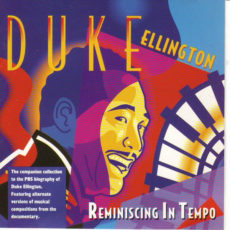
Harold “Geezil” Minerve was born in Havana, Cuba on January 3, 1922, and raised in Florida and began playing music at age 12. He played with drummer Jeff Gibson and vocalist Ida Cox early in his career, then worked as a freelance musician in New Orleans, Louisiana. Following stints with Clarence Love and Ernie Fields, Minerve served in the Army from 1943–46, then returned to play with Fields for a short time.
He worked with Buddy Johnson from 1949~1957, then with Mercer Ellington in 1960, Ray Charles from 1962 to 1964, and then worked as musical director for Arthur Prysock. In 1971 he joined the Duke Ellington Orchestra, filling Johnny Hodges’s spot after Hodges’s death. Minerve remained with the Ellington Orchestra until 1974, then returned to play with Mercer Ellington with the Duke Ellington Orchestra.
Following the success of the Broadway hit Sophisticated Lady when he played with the orchestra on stage and the touring company, Harold left for a brief time, playing with Ruth Brown’s Black and Blue Review in Paris, returning to Ellington in the Eighties. He did further freelance work later in the 1970s.
He would go on to work freelance in and around New York. Alto saxophonist, flutist, and clarinetist Harold Minerve passed away on June 4, 1992.

More Posts: clarinet,flute,history,instrumental,jazz,music,saxophone
Requisites
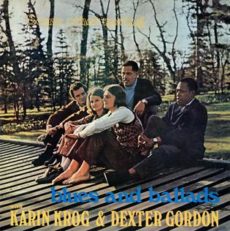
Some Other Spring is an album by Norwegian vocalist Karin Krog with American saxophonist Dexter Gordon recorded in Norway in 1970 and originally released on the Sonet label in Europe. The session was produced by Hallvard Kvale and Johs Berg on May 10, 1970, in Oslo, Norway.
Tracks | 61:54
- Some Other Spring (Arthur Herzog, Jr., Irene Kitchings) – 5:00
- Blue Monk (Abbey Lincoln, Thelonious Monk) – 3:55
- How Insensitive (Antônio Carlos Jobim, Norman Gimbel) – 4:30
- Blue Eyes (Berndt Egerbladh, Karin Krog) – 4:50
- Jelly, Jelly (Billy Eckstein, Earl Hines) – 4:55
- I Wish I Knew (Harry Warren, Mack Gordon) – 5:25
- Everybody’s Somebody’s Fool (Ace Adams, Lionel Hampton) – 4:35
- Shiny Stockings (Frank Foster, Ella Fitzgerald) – 3:40
- Karin Krog – vocals
- Dexter Gordon – tenor saxophone, vocals
- Kenny Drew – piano
- Niels-Henning Orsted Pedersen – bass
- Espen Rud – drums

More Posts: choice,classic,collectible,collector,history,instrumental,jazz,music,saxophone,vocal
Requisites
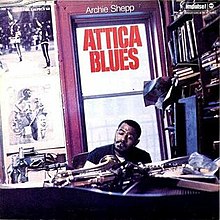
Attica Blues is a studio album by avant-garde jazz saxophonist Archie Shepp, recorded on January 24~26, 1972 at A&R Recording in New York City.. Originally released in 1972 on the Impulse! label, the album title is a reference to the Attica Prison riots. The producer on the sessions was Ed Michel.
Track List | 37:16 All compositions by Archie Shepp except as indicated
- Attica Blues (lyrics by Beaver Harris) – 4:49
- Invocation: Attica Blues (Beaver Harris) – 0:18
- Steam, Part 1 – 5:08
- Invocation to Mr. Parker” (lyrics by Bart Gray) – 3:17
- Steam, Part 2 – 5:10
- Blues for Brother George Jackson – 4:00
- Invocation: Ballad for a Child (Harris) – 0:30
- Ballad for a Child (lyrics by Harris) – 3:37
- Good-Bye Sweet Pops (Cal Massey) – 4:23
- Quiet Dawn (Massey) – 6:12
- Archie Shepp – tenor saxophone (1, 6, 8, 10) and soprano saxophone (3, 5, 9)
- Brass and reed section on tracks 1, 6, 9 and 10
- Clifford Thornton – cornet
- Roy Burrows, Charles McGhee, Michael Ridley – trumpet
- Charles Greenlee, Charles Stephens, Kiane Zawadi – trombone
- Hakim Jami – euphonium
- Clarence White – alto saxophone
- Roland Alexander, Billy Robinson – tenor saxophone
- James Ware – baritone saxophone
- String section on tracks 1, 3, 5, and 8—10
- John Blake, Leroy Jenkins, Lakshinarayana Shankar – violin
- Ronald Lipscomb, Calo Scott – cello
- Marion Brown – alto saxophone (1, 6), bamboo flute (3), flute (4), percussion (3—5)
- Walter Davis, Jr. – electric piano (1, 6), piano (6, 8—10)
- Dave Burrell – electric piano (3, 5)
- Cornell Dupree – guitar (1, 3, 5, 8)
- Roland Wilson (1, 3, 5–6, 8), Gerald Jemmott (1) – Fender bass
- Jimmy Garrison – bass (3—5, 9, 10)
- Beaver Harris (1, 3, 5–6, 8) – drums
- Ollie Anderson, Nene DeFense, Juma Sultan – percussion (1, 6, 10)
- Vocals
- Henry Hull (1, 8), Joe Lee Wilson (3, 5) – vocals
- William Kunstler (2, 7), Bartholomew Gray (4) – narrator
- Joshie Armstead, Albertine Robertson – backing vocals (1)
- Featured exclusively on tracks 9 and 10, written by Cal Massey
- Romulus Franceschini – conductor and co-arranger
- Cal Massey – fluegelhorn (10)
- Waheeda Massey – vocals (10)
- Billy Higgins – drums
More Posts: choice,classic,collectible,collector,history,instrumental,jazz,music,saxophone

Requisites
Griff & Lock is an album by saxophonists Eddie “Lockjaw” Davis and Johnny Griffin recorded in 1960 and released on the Jazzland label. The original sessions were produced by Orrin Keepnews and were recorded at Plaza Sound Studios, New York City on November 4 & 10, 1960. The engineer was Ray Fowler and the cover designs were by Ken Deardoff and Donald Silverstein.
The three studio albums recorded for Jazzland by the aptly named Tough Tenors, Johnny Griffin and Eddie ‘Lockjaw’ Davis, and their calorific Junior Mance-Larry Gales-Ben Riley rhythm section epitomize what this incendiary group was about ~ Swinging! They are at the height of their game together.
Track Listing 1. The Last Train from Overbrook (James Moody) 6:51 2. Hey Lock! (Eddie Davis) 7:56 3. Midnight at Minton’s (Paul Gonzales) 4:20 4. Second Balcony Jump (Gerry Valentine) 5:24 5. I’ll Remember April (Raye-DePaul-Johnston) 6:33 6. Good Bait (Dameron-Basie) 7:39 Personnel Eddie “Lockjaw” Davis & Johnny Griffin Quintet Eddie “Lockjaw” Davis, Johnny Griffin ~ tenor saxophone Junior Mance ~ piano Larry Gales ~ bass Ben Riley ~ drums
More Posts: choice,classic,collectible,collector,history,instrumental,jazz,music,saxophone
Three Wishes
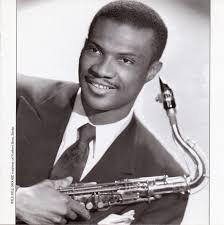
Wild Bill Moore told Pannonica his three wishes would be:
- “To be happy.”
- “To be a successful artist.”
- “To be a successful father and husband ~ no! Put that one second and the other one third.”
*Excerpt from Three Wishes: An Intimate Look at Jazz Greats – Compiled and Photographed by Pannonica de Koenigswarter

More Posts: baroness,history,instrumental,jazz,music,pannonica,saxophone,three,wishes