Daily Dose Of Jazz…
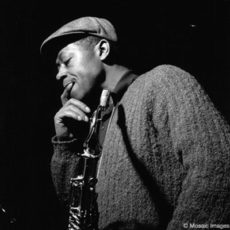
George Bouchard was born Feb. 4, 1944 in Buffalo, New York and was the eldest of three children. His father worked in a factory and the family lived for much of his childhood in an apartment above the family delicatessen. He took saxophone lessons from the owner of a music store but was mostly self-taught, drawing inspiration from famous musicians like Charlie Parker and John Coltrane.
When he was 19, on the night after President Kennedy was assassinated, he found solace watching a jazz band play at a nightclub near his Buffalo home and decided he wanted a career in music. He earned a degree in economics from the University at Buffalo and a master’s in music from Memphis State University. He served in the Navy from 1966 to ’69.
As an educator he spent more than thirty years as a professor teaching music at Nassau Community College and 40 years of teaching during the summers at the Jamey Aebersold Jazz Workshops at the University of Louisville in Kentucky. He released four compact discs as a leader, received numerous awards for excellence in music education and for advancing the arts on Long Island, wrote a widely used instructional book called Intermediate Jazz Improvisation, and performed regularly with his group, The George Bouchard Band.
Soprano saxophonist and composer George Bouchard passed away from cancer on August 12, 2015 in Westbury, New York at age 71.
#preserving genius
More Posts: saxophone

Daily Dose Of Jazz…
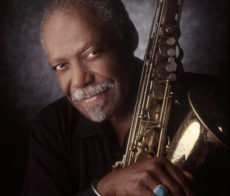
John Richard Handy III was born on February 3, 1933 in Dallas, Texas and first came to prominence while working with Charles Mingus in the 1950s. By the 1960s, he was leading several groups, among them a quintet with violinist Michael White, Jerry Hahn on guitar, Don Thompson on bass, and drummer Terry Clarke. This group’s performance at the 1965 Monterey Jazz Festival was recorded and released as an album and he received Grammy nominations for jazz performance of Spanish Lady and jazz composition for If Only We Knew.
As an educator Handy has taught music history and performance at San Francisco State University, Stanford University, the University of California, Berkeley, the San Francisco Conservatory of Music, and other schools.
The 1980s saw John working on the Mel Martin project Bebop & Beyond, recording tribute albums to Dizzy Gillespie and Thelonious Monk. He has recorded some eighteen albums as a leader for Roulette, Columbia, Impulse!, Warner, MPS, Milestone, Koch Int’l and Boulevard record labels. He has had one compilation released of selections from In The Vernacular and No Coast Jazz, and and has recorded two albums with Brass Fever, as well as, five albums during his time with Mingus.
Alto saxophonist John Handy, who also plays tenor and baritone saxophone, saxello, clarinet, oboe and sings, continues to perform and record.
#preserving genius

Daily Dose Of Jazz..
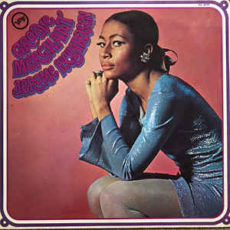
Robert Coull Wellins was born January 24, 1936 in Glasgow, Scotland and studied alto saxophone and harmony with his father Max, and also played piano and clarinet when young. Joining the RAF as a musician playing tenor saxophone and after demobilization he played with a few Scottish bands before moving to London. England in the mid-1950s.
He was a member of the Buddy Featherstonhaugh quintet between 1956 and 1957 with Kenny Wheeler. Around that time Wellins also joined drummer Tony Crombie’s Jazz Inc., where he first met pianist Stan Tracey, and then joined Tracey’s quartet in the early 1960s.
In the mid-1970s he led his own quartet with pianist Pete Jacobsen, bassist Adrian Kendon and drummer Spike Wells. Ken Baldock, and then Andy Cleyndert in the 1980s would replace Kendon. He also worked with Lionel Grigson in 1976 and by the end of the 1970s he was a member of the Jim Richardson Quartet.
The 1980s had him forming a quintet with fellow saxophonist Don Weller and Errol Clarke on piano, Cleyndert and Wells, while the latter featured guitarist Jim Mullen and Pete Jacobsen on piano. Following this group, Wellins led various quartets that included pianist Liam Noble, bassist Simon Thorpe and Dave Wickens on drums. He renewed his association with Spike Wells and put together a quartet with pianist Mark Edwards and bassist Andrew Cleyndert.
In 2012, Wellins was the subject of a documentary film, Dreams are Free, directed by Brighton-based director Gary Barber, tracing the rise, fall and redemption of Wellins. It covered his addiction and depression, how he overcame it and rediscovered the desire to play after ten years away from jazz.
Tenor saxophonist Bobby Wellins, best known for his 1965 collaboration with Stan Tracey on jazz suite inspired by Dylan Thomas’s Under Milk Wood, passed away on October 27, 2016 after being ill for some years.
#preserving genius
More Posts: saxophone

Daily Dose Of Jazz…
George Duke was born on January 12, 1946 in San Rafael, California and raised in Marin City. It was at the young age of 4 that he first became interested in the piano when his mother took him to see Duke Ellington in concert. He began his formal piano studies at the age of 7, at his local Baptist church. Attending Tamalpais High School in Mill Valley, he went on to earn a bachelor’s degree in trombone and composition with a minor in contrabass from the San Francisco Conservatory in 1967.
Initially he played with friends from garages to local clubs, George quickly eased his way into session work, before getting his master’s degree in composition from San Francisco State University. Although starting out playing classical music, his musician cousin Charles Burrell convinced him to switch to jazz and improvise what he wanted to do.
1967 saw Duke venturing into jazz fusion, playing and recording with violinist Jean-Luc Ponty, as well as performing with the Don Ellis Orchestra, and Cannonball Adderley’s band, and recorded with Frank Zappa and The Mothers of Invention on a number of albums through the 1970s. He also played with Ruth Underwood, Tom Fowler, Bruce Fowler from Zappa’s Overnite Sensation band that he was a part of, along with Johnny “Guitar” Watson and jazz guitarist Lee Ritenour. Lynn Davis and Sheila E recorded with him on his late-1970s solo albums Don’t Let Go and Master of the Game.
During the 1980s he collaborated with bassist Stanley Clarke and produced the Clarke/Duke Project that released three albums, he served as a record producer and composer on two instrumental tracks on the Miles Davis albums Tutu and Amandla, worked with a number of Brazilian musicians, including singer Milton Nascimento, percussionist Airto Moreira and singer Flora Purim, and in the 1992 film Leap of Faith featured gospel songs and choir produced by him and choir master Edwin Hawkins.
Duke was musical director for the Nelson Mandela tribute concert at Wembley Stadium in London, temporarily replaced Marcus Miller as musical director of NBC’s late-night music performance program Sunday Night during its first season, and was a judge for the second annual Independent Music Awards to support independent artists’ careers. He worked with Jill Scott on her third studio album, The Real Thing: Words and Sounds Vol. 3; and put together a trio with David Sanborn and Marcus Miller for a tour across the United States.
His educator side had him teaching a course on Jazz And American Culture at Merritt College in Oakland, California. He was nominated for a Grammy as Best Contemporary Jazz Performance for After Hours in 1999, was inducted into The SoulMusic Hall Of Fame in 2012, and was honored with a tribute album My Old Friend: Celebrating George Duke, produced by long-time friend and collaborator Al Jarreau, that received a NAACP Image Award for Outstanding Jazz Album in 2015.
As leader he recorded some four dozen albums and as sideman he worked with such artists as Third World, The Keynotes, Gene Ammons, Billy Cobham, Eddie Henderson, Alphonse Mouzon, Michael Jackson, Deniece Williams, Miles Davis, Dianne Reeves, John Scofield, Chanté Moore, Joe Sample, Phil Collins, Regina Belle, Teena Marie, Joe Williams, Gerald Wilson and Larisa Dolina among many others.
Keyboard pioneer, vocalist guitarist, trombonist, producer and composer George Duke passed away on August 5, 2013 in Los Angeles, California from chronic lymphocytic leukemia. He was 67. His songs have been sampled by Daft Punk, Kanye West and Ice Cube among numerous others.
![]()
#preserving genius
More Posts: bass guitar,flute,keytar,piano,saxophone,synthesizer,trombone,vocal

Daily Dose Of Jazz…
Kenny Davern was born John Kenneth Davern on January 7, 1935 in Huntington, Long Island, New York of Austrian-Irish ancestry. After hearing Pee Wee Russell the first time, he was convinced that he wanted to be a jazz musician and at the age of 16 he joined the musician’s union, first as a baritone saxophone player. In 1954 he joined Jack Teagarden’s band, and after only a few days with the band he made his first jazz recordings.
He would later work with bands led by Phil Napoleon and Pee Wee Erwin before joining the Dukes of Dixieland in 1962. The late 1960s found him free-lancing with, among others, Red Allen, Ralph Sutton, Yank Lawson and his lifelong friend Dick Wellstood.
Davern had taken up the soprano saxophone, and when a spontaneous coupling with fellow reedman Bob Wilber at Dick Gibson’s Colorado Jazz Party turned out be a huge success, one of the most important jazz groups of the 1970s, Soprano Summit, was born. The two co-led the group switching between the clarinet and various saxophones, and over the next five years Soprano Summit enjoyed a very successful string of record dates and concerts. When the group disbanded in 1979, he devoted himself to solely playing clarinet, preferring trio formats with piano and drums.
He revived his collaboration with Bob Wilber in 1991 and the new group was called Summit Reunion. Leading quartets since the 1990s, Kenny preferred the guitar to the piano in his rhythm section, employing guitarists Bucky Pizzarelli, Howard Alden and James Chirillo. He appeared numerous times at the Colorado Springs Invitational Jazz Party; in 1997 he was inducted into the Jazz Hall of Fame at Rutgers University, and in 2001 he received an honorary doctorate of music at Hamilton College, Clinton, New York.
Mainly playing in traditional jazz and swing settings, he ventured into the free-jazz genre collaborating in 1978 with avant-garde players Steve Lacy, Steve Swallow and Paul Motian that produced the album titled Unexpected. He also held an ardour and knowledge of classical music. Clarinetist Kenny Davern passed away of a heart attack at his Sandia Park, New Mexico home on December 12, 2006.
![]()
#preserving genius