

Daily Dose Of Jazz…
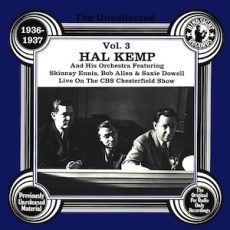
Horace Kirby Dowell, known professionally as Saxie, was born on May 24, 1904 in Raleigh, North Carolina. Attending the University of North Carolina he met Hal Kemp and joined Kemp’s orchestra as a tenor saxophonist, clarinetist, flutist and vocalist in the fall of 1925.
He composed I Don’t Care, which was recorded by Kemp for Brunswick in 1928. When the band’s style changed in the early 1930s to that of a dance band, Dowell became the group’s comedic vocalist for novelty songs. After Three Little Fishies became a hit in 1939, Dowell was involved in a legal dispute with lyricists Josephine Carringer and Bernice Idins. In 1940 he wrote the song Playmates.
Dowell left Kemp and started a big band in 1940. Drafted during World War II he served as a bandleader aboard an aircraft carrier, the U.S.S. Franklin. He went on to record for Brunswick, Sonora, and Victor. Around 1946 he led a naval air station band with 14-year-old Keely Smith as a singer.
>After the war he reunited his orchestra, performing mostly in Chicago, Illinois. In 1949 he became a disc jockey for WGN radio in Chicago, and retired in the late 1950s. He moved to Scottsdale, Arizona and worked as a disc jockey part-time for KTAR in Phoenix during his retirement.
Saxophonist and vocalist Saxie Dowell died on July 22, 1974 in Scottsdale.

More Posts: bandleader,history,instrumental,jazz,music,saxophone,vocal

The Jazz Voyager
On the way east to Music City USA to check out an authentic jazz experience standing out as a beacon in the city that boasts country music. Rudy’s Jazz Room embodies the history and spirit of traditional jazz clubs, where musicians played their hearts out while people gathered to listen, dance, eat, drink and socialize in a swingin’ atmosphere. The venue raises Nashville to the level of other great jazz cities like New York, New Orleans, Chicago, Kansas City and many more.
Hitting the stage this evening is saxophonist Don Aliquo who Presents Bebop Live and explores the various elements, depths and history of bebop jazz. In the early 1940’s when the younger generation of jazz musicians expanded the creative possibilities of jazz and bebop music first hit the jazz scene it wasn’t everyone’s cup of tea.
Tickets: $14.00
Rudy’s Jazz Room is located at 809 Gleaves Street, Nashville, TN 37203. For more information contact the venue at rudysjazzroom.com.

More Posts: adventure,club,composer,genius,jazz,museum,music,preserving,saxophone,travel
Requisites
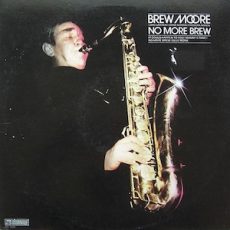
No More Brew ~ Brew Moore | By Eddie Carter
This morning’s album offered for your consideration is a live performance by Brew Moore. No More Brew (StoryvilleSLP-4019) was his final album, released eight years after his passing. Brew was born in Indianola, Mississippi and began playing the trombone at age twelve, later graduating to the clarinet and eventually the tenor saxophone. His professional journey took him from a Texas territorial band before attending college, to New Orleans, Memphis, and New York, to further his craft. He’s joined on stage by Lars Sjösten on piano, Sture Nordin on bass, and Fredrik Noren on drums. My copy is the 1981 U.S. Stereo release.
The set begins with Jimmy Van Heusen and Johnny Burke’s It Could Happen To You. Lars opens with a swinging introduction, setting up the quartet’s theme. Brew launches into a sizzling solo. Lars comes in energetically next. Sture illustrates he’s an effective soloist in a polished reading. Brew and Frednik exchange a brief dialogue, leading to the theme’s return and closure. Moore addresses the audience, then Sjösten’s introduction leads into the ensemble’s lively melody of Manny’s Tune by John Marabuto. Moore takes off first quickly. Sjösten responds with an impressive reading. Moore and Noren wrap things up with a concise conversation ahead of the closing chorus and abrupt finish.
Brew’s contribution to the set, No More Brew begins Side Two with the foursome’s joyful introduction and melody. Moore opens with energetically captivating phrases, then Lars’s vigorous reading flows through the rhythm section like ephemeral shadows. Brew and Fredrik fuel the finale with a concise comment preceding the theme’s return and a short announcement by Moore that concludes with Blue Monk by Thelonious Monk. The quartet begins with a soulful, blues-inspired melody that sets the stage for Moore to accelerate into an extended, captivating solo. Sjösten mines a rich vein of sentimentality next until the tempo slows again for the melody’s reprise and exit.
Rune Öfwerman produced the album, although it’s unknown who recorded it. However, the album’s sound quality is excellent, with a soundstage placing the listener in the club audience as the musicians are performing. Brew Moore, known for his irresistibly appealing tone that could either stir excitement or touch the heart, recorded twelve albums as a band leader and contributed to seven more as a sideman. Tragically, he passed away on August 19, 1973, at age forty-nine after a fatal fall down a flight of stairs. If you’re a fan of swing and bop and also enjoy the tenor sax, I highly recommend exploring No More Brew by Brew Moore on your next record store visit. This exceptional album showcases a talented young musician whose promising career was sadly cut short!
~ Blue Monk – Source: JazzStandards.com
~ It Could Happen To You – Source: Wikipedia.org
© 2025 by Edward Thomas Carter

More Posts: choice,classic,collectible,collector,history,instrumental,jazz,music,saxophone
Daily Dose Of Jazz…
Theodore McCord was born May 17, 1907 in Birmingham, Alabama and was the twin brother of Castor McCord, also a reedist. While both brothers played tenor saxophone and clarinet, in addition Ted played alto saxophone.
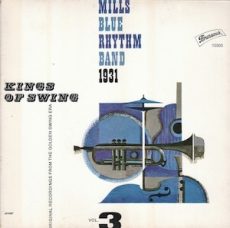
As a student at Wilberforce University in the 1920s, he played in a student group led by Horace Henderson. He also played in Edgar Hayes’s group, the Blue Grass Buddies, and the McKinney’s Cotton Pickers and the Mills Blue Rhythm Band.
He can be heard playing on their sessions with Louis Armstrong. Other credits include recordings with King Carter and the singer Ollie Shepard.
Roping out of music in the Forties, saxophonist Ted McCord, who was principally active in the 1920s and 1930s, his date and place of his death is unknown.
More Posts: clarinet,history,instrumental,jazz,music,saxophone

The Jazz Voyager
On the way east to Music City USA to check out an authentic jazz experience standing out as a beacon in the city that boasts country music. Rudy’s Jazz Room embodies the history and spirit of traditional jazz clubs, where musicians played their hearts out while people gathered to listen, dance, eat, drink and socialize in a swingin’ atmosphere. The venue raises Nashville to the level of other great jazz cities like New York, New Orleans, Chicago, Kansas City and many more.
Hitting the stage this evening is saxophonist Don Aliquo who Presents Bebop Live and explores the various elements, depths and history of bebop jazz. In the early 1940’s when the younger generation of jazz musicians expanded the creative possibilities of jazz and bebop music first hit the jazz scene it wasn’t everyone’s cup of tea.
Tickets: $14.00
Rudy’s Jazz Room is located at 809 Gleaves Street, Nashville, TN 37203. For more information contact the venue at rudysjazzroom.com.
More Posts: adventure,club,composer,genius,jazz,museum,music,preserving,saxophone,travel