


TIA FULLER & LIL’ JOHN ROBERTS
Grammy-nominated saxophonist and composer Tia Fuller has established herself as one of the most compelling voices in modern jazz. Equally at home on the concert stage, in the recording studio, and in the classroom, Fuller is celebrated for her commanding tone, inventive compositions, and electrifying performances. A former member of Beyoncé’s all-female touring band, she has also performed and recorded with jazz luminaries including Esperanza Spalding, Terri Lyne Carrington, Nancy Wilson, and Ralph Peterson. Her critically acclaimed recordings, including the Grammy-nominated Diamond Cut, have solidified her reputation as an artist who effortlessly bridges artistic sophistication and broad audience appeal.
Joining Fuller is world-renowned drummer Lil’ John Roberts, one of the most sought-after drummers in contemporary music. Known for his explosive energy, impeccable groove, and remarkable versatility, Roberts has toured and recorded with an extraordinary roster of artists including Janet Jackson, Stevie Wonder, George Duke, Herbie Hancock, Chaka Khan, and The Crusaders. Together, Fuller and Roberts create a musical chemistry that is both powerful and deeply engaging, blending virtuosity, soul, and spontaneity in every performance.
Cover: $49.00
More Posts: adventure,bandleader,club,drums,genius,instrumental,jazz,music,preserving,saxophone,travel
ANTONIO HART QUINTET
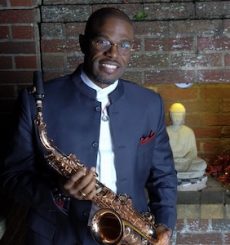
When Antonio Hart was in ninth grade, the music and art programs were cut out of the public schools. Antonio was devastated because the one thing that made school interesting was taken away from him. Having a friend that attended the then new Baltimore School for the Performing Arts, somehow got Antonio an audition. He did the best he could because he really could not read the level of music he was trying to play. He prayed everyday, but he did not think he would get in. One week to the day, he received a transfer letter in the mail; he had been accepted! Hart considers this the beginning of his life as a young man and musician.
Hart’s real study of Jazz began at the Berklee College of Music in Boston. There, he studied with Bill Pierce, Andy McGhee, and Joe Viola. The three teachers gave him the foundation he needed to develop into a professional musician. Hart spent many hours in the library listening to all his favorite musicians, and practicing and playing as much as he could. There were also many late hours in the practice room. Because of the lessons learned at the School for the Arts, he really thought it was important to have a balance between music and academia, so in his sophomore year he became a Music Education Major. The most important friendship at Berklee was with Roy Hargrove. They spent three years touring the world and recording Hargrove’s first three records. Hart considers Hargrove to be his brother in life and music. He even used Hargrove on his first recording ‘For the First Time.’
His 1997 release, ‘Here I Stand’ Impulse records, earned Hart a 1997 Grammy nomination for ‘Best Jazz Instrumental Solo.’ He has also been in much demand as a guest on over 80 recordings. Since then, Hart has recorded seven CDs as a leader. Hart balances his time as a full-time Professor at The Aaron Copland school of Music, Queens College, as well as, traveling on the road with his band, The Dave Holland Big band, and The Dizzy Gillespie Big band.
The Quintet
Antonio Hart ~ Alto Sax
Mejedi Owusu ~ Trumpet
Richard Johnson ~ Piano
Alex “Apolo” Ayala ~ Bass
Jerome Jennings ~ Drums
Cover: $40.00
More Posts: adventure,bandleader,club,genius,instrumental,jazz,music,preserving,saxophone,travel

FRANK LACY
Trombonist Frank Lacy brings his talent to the stage at Smalls. He has spent over two decades as a member of the Mingus Big Band. An alumni of Texas Southern University and Berklee College of Music in Boston, studying trombone and composition. His classmates included Branford Marsalis, Greg Osby, and Marvin Smith.
He played with Illinois Jacquet’s big band, and a couple years later he was musical director for Art Blakey. He released his first album as a band leader in 1991 with his father on guitar.[3] He has also worked with Lester Bowie, Marty Ehrlich, Michael Formanek, Slide Hampton, Roy Hargrove, Rufus Reid, Henry Threadgill, Steve Turre, McCoy Tyner, and Bobby Watson.
Cover: $35.00
More Posts: adventure,bandleader,club,genius,instrumental,jazz,music,preserving,saxophone,travel,trombone
JASON HAINSWORTH
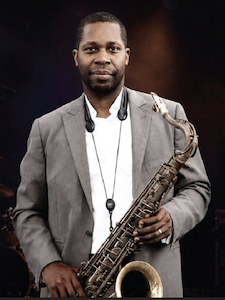
Jason Hainsworth is in demand both as a saxophonist and as a composer/arranger. As a performer, Jason has led his own quartet throughout the world to critical acclaim, most recently headlining the Suriname Jazz Festival. He is a current touring member of Ed Calle’s Mamblue (2016 Latin Grammy Winner), Tito Puente Jr’s Latin Jazz All Stars, and Melton Mustafa Jazz Orchestra. He has performed extensively throughout the United States and South America. He also serves as Associate Dean, and Executive Director Roots, Jazz, and American Music program, at the San Francisco Conservatory of Music.
As a composer/arranger, Jason’s works have been commissioned and performed by Wynton Marsalis and the Jazz at Lincoln Center Orchestra, Michigan State University, San Francisco Symphony Chamber Players, and many others.
A native of Houston, Texas, Jason studied music at the University of New Orleans with legendary jazz educator Ellis Marsalis and saxophonist Victor Goines, earned a bachelor’s from William Paterson University while touring the east coast, and a master’s from Florida State University.
Jason’s debut album, Kaleidoscope, features original compositions and arrangements for big bands, and his latest album, Third Ward Stories, features jazz heavyweights Michael Dease, Josh Evans, Johnathan Blake to name a few.
Tickets: $47.81
More Posts: adventure,bandleader,genius,instrumental,jazz,music,preserving,saxophone,travel
RAVI COLTRANE
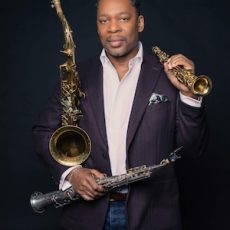
Just days before John Coltrane would have turned 100 his oldest surviving son, saxophonist Ravi Coltrane, presents a blazing young band to mark the milestone.
While Ravi spent the first quarter century of his career focusing on acquiring a diverse array of experience as a sideman and then honing his own lustrous, harmonically ambiguous compositions, he’s taken up the family mantle in recent years. With a variety of ensembles, projects and initiatives on and off the bandstand, he’s championed the legacy of his parents (including with his 2025 stint as an SFJAZZ Resident Artistic Director).
For this celebration he performs with trumpeter Jonathan Finlayson, a longtime collaborator who graduated from Berkeley High and spent years touring and recording with alto sax great and MBASE conceptualist Steve Coleman. A teenage prodigy, Israeli pianist/keyboardist Gadi Lehavi made his Village Vanguard debut with Ravi at 15. Now 30, he’s more than lived up to his enormous potential, playing with consummate technique and capacious imagination. Powering the quartet is Bay Area-reared drum sensation Elé Howell, 28, a supremely musical accompanist who gained national attention when Coltrane started hiring him in 2021 for various projects, including Cosmic Music: Revisiting the Music of John and Alice Coltrane. Though John Coltrane ascended in 1967 at the age of 40, his presence continues to illuminate new directors for exploration.
Tickets: $60.00 ~ $95.00
More Posts: adventure,bandleader,genius,instrumental,jazz,music,preserving,saxophone,travel