

Daily Dose Of Jazz…
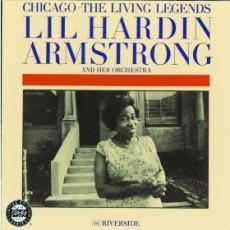
Lil Hardin Armstrong was born Lillian Hardin on February 3, 1898 in Memphis, Tennessee and grew up with her grandmother learning hymns, spirituals and classics on the piano, but she was drawn to pop music and later blues. Her initial piano instruction came from her third grade teacher, Miss Violet White, followed by enrollment in Mrs. Hook’s School of Music, but it was while attending Fisk University that she was taught a more acceptable approach to the instrument.
In 1918, Lil moved to Chicago and landed a job as a sheet music demonstrator at Jones Music Store for $3 a week. Shortly afterward bandleader Lawrence Duhé offered her $22.50 she joined him. From cabaret to the De Luxe Café to Dreamland playing behind Alberta Hunter and Ollie Powers. Replace by King Oliver’s Creole Jazz Band, he asked her to stay, which led to an engagement in San Francisco, back to Chicago playing eventually with Oliver again.
Hardin met Louis Armstrong when Oliver sent for him and subsequently were married in 1924. She took him shopping and taught him how to dress more fashionably, and finally convinced him to strike out on his own. Moving to New York City he joined Fletcher Henderson, while she stayed in Chicago with Oliver and then leading her own band.
Hardin, Armstrong, Kid Ory, Johnny St. Cyr and Johnny Dodds comprised the Hot Five recordings for Okeh Records. She would go on to record sessions with the same group as a leader for Vocalion, Columbia Records and New Orleans Wanderers. In the late 1920s Hardin and Louis parted ways and she formed a band with a cornet player she considered Louis equal, Freddie Keppard. In the 1930s, she sometimes billed herself as Mrs. Louis Armstrong, led an All Girl Orchestra, then a mixed-sex big band, which broadcasted nationally over the NBC radio network.
The same decade she recorded a series of sides for Decca Records as a swing vocalist, recorded with Red Allen, and back in Chicago collaborated with Joe Williams, Oscar Brown Jr., Red Saunders and Little Brother Montgomery. Throughout the rest of her career she continued to perform and record, and began writing an autobiography that she never completed. A month after attending Louis’ funeral in New York City, she was performing at a televised memorial concert for Louis, Lil Hardin Armstrong collapsed at the piano and died on the way to the hospital.
Pianist, composer, arranger, singer and bandleader Lil Hardin Armstrong, second wife and recording collaborator of Louis Armstrong in the 1920s, passed away on August 27, 1971. Her compositions have been sampled and revived by many and was inducted into the Memphis Music Hall of Fame in 2014.

Inspire A Young Mind
Daily Dose Of Jazz…
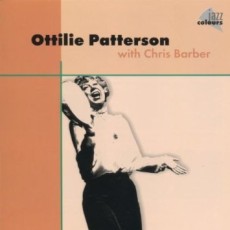
Ottilie Patterson was born Anna Ottilie Patterson on January 31, 1932 in Comber, County Down, Northern Ireland, the youngest of four children. With both sides of the family musical, she trained as a classical pianist from the age of eleven, but never received any formal training as a singer.
In 1949 Ottilie went to study art at Belfast College of Technology where a fellow student introduced her to the music of Bessie Smith, Jelly Roll Morton and Meade Lux Lewis. By 1951 she began singing with Jimmy Compton’s Jazz Band, and in 1952 she formed the Muskrat Ramblers with Al Watt and Derek Martin.
The summer of 1954, while on holiday in London, Ottilie met Beryl Bryden who introduced her to the Chris Barber Jazz Band. She joined the Barber band full-time in December of that year and her first public appearance was at the Royal Festival Hall the following January. Between 1955 and 1962 she extensively toured with Barber and issued many recordings both as a leader and vocalist with Barber, and whom she would marry and divorce 24 years later.
From approximately 1963 she began to suffer throat problems and ceased to appear and record regularly with her husband until officially retiring from the band in 1973. During this period she recorded some non-jazz/blues material and in 1969 issued a now sought after collectible solo LP, 3000 Years With Ottilie.
During her recording period she released nineteen singles, five EPs, four solo LPs, twenty albums with Barber, and performed on twenty-five other CD projects. Traditional jazz and blues singer Ottilie Patterson passed away June 20, 2011.
Give The Gift Of Knowledge
More Posts: vocal
Daily Dose Of Jazz…
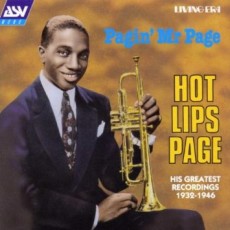
Hot Lips Page was born Oran Thaddeus Page on January 27, 1908 in Dallas, Texas. His main trumpet influence was Louis Armstrong as well as early influence from Harry Smith and Benno Kennedy. In his early teens he moved to Corsicana, Texas and traveled across the Southwest and toured as far East as Atlanta and north to New York City. He played in circuses and minstrel shows and backed blues singers Ma Rainey, Bessie Smith and Ida Cox.
In 1926 he caught the eye of the bassist Walter Page (no relation) who had recently assumed leadership of the Oklahoma City Blue Devils and by 1928 was playing and touring. In 1931 he left to join the Bennie Moten Orchestra in Kansas City.
Hot Lips went on to occasionally appear as vocalist, emcee and trumpet soloist with Count Basie’s Reno Club orchestra after Moten’s sudden death disbanded the group. It was during this period that Page embarked upon a solo career, playing with small pick up bands from Kansas City. At the behest of Armstrong’s manager Joe Glaser, he moved to New York City in 1936.
His career as a bandleader got off to an auspicious start in 1937 with sold-out appearances and an extended run at Harlem’s Smalls Paradise, but struggling by 1939 he was struggling to maintain a regular working band, he led small combos and bands on 52nd Street through the Fifties. Page was known as “Mr. After Hours” to his many friends for his ability to take on all comers in late night jam sessions, recorded for the Mezzrow-Bechet Septet in 1945, as Pappa Snow White, with Mezz Mezzrow, Sidney Bechet, Pops Foster, Chu Berry, Sid Catlett and vocalist Pleasant Joe.
Over the course of his short career Hot Lips made over 200 recordings, most as a leader, for Bluebird, Vocalion, Decca and Harmony Records, among others. He toured extensively throughout the southern and northeast states and Canada, led as many as thirteen different big bands, appeared with Bud Freeman and Artie Shaw, recording over 40 sides with the latter. His band backed the singer Wynonie Harris was the leader of the Apollo Theater, recorded duets with Pearl Bailey on The Hucklebuck and Baby It’s Cold Outside and twice toured Europe.
Known as Hot Lips to the public and Lips by fellow musicians, the bandleader and trumpeter heralded as one of the giants of the Swing Era and a founder of what became rhythm and blues, passed away due to mysterious circumstances in New York on November 5, 1954 at the age of 46.
Inspire A Young Mind
Review: Denise Donatelli | Find A Heart
Singers come and go but vocalists are that rare breed who understand how to get inside the lyric and claim it as their own, regardless of the composer. The vocalist is a storyteller, a vehicle to transport you to faraway destinations that you may have nestled in the forgotten regions of your memory or have yet to be fortunate enough to visit. This is the voyage I book every time I sit down to listen to Denise Donatelli.
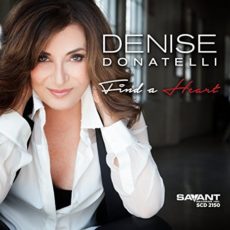
With her latest release, Find A Heart, Denise has compiled a cache of eleven compositions that speak To one of her favorite subjects… Love! She has the unique ability to discover rare gems that easily translate to jazz and she delivers each song with the fluidity of a seasoned concierge.
Denise surrounds herself with incomparable talent that is enviable to say the least. Her quartet is comprised of pianist and music director Geoffrey Keezer, drummer Marvin “Smitty” Smith, bassist Carlitos Del Puerto, guitarist Leonardo Amuedo. Beyond this is her ability to know when less is more as with Not Like This and Day Dream where her voice is one instrument in the duet.
Like the innovators who challenged the status quo to evolve the music, Denise knows when to enlist the right voices to translate her vision for songs composed by Sting, Crosby, Ferrante and Beck, to name a few, that sit easily alongside Hampton, Mercer, Burke and Strayhorn in the Great American Songbook. As with Fagen’s Big Noise, New York she brought in the fiery tenor saxophone of Bob Sheppard only to offset the more gentle Love and Paris Rain with the mellow tones of Christine Jensen’s soprano.
She also knows when to bring in the sensuality of the Chris Botti trumpet and the lush strings of Alma Fernandes, Matt Funes, Darrin McCann and Giovanna Clayton to ease you through the exposé of my personal favorite Practical Arrangement. If that isn’t enough incentive for one to lend an ear, without any fanfare she pours out her heart to pen lyrics to Billy Child’s In This Moment.
One will notice that the arrangements equally invite the listener into the conversation between the musicians which compliments the listening experience. Each time you listen past her wonderful voice you will hear a nuance you did not notice in prior encounters. This is a key component to great musicianship and why she has been nominated once again for a Grammy.
Setting aside any prejudice one may think I harbor as a longtime fan and musical supporter, I take my listening seriously and there is no price on my musical enjoyment. Suffice it to say, I may not know where the journey will lead me but I am excitedly anticipatory of the beauty I will encounter. Denise Donatelli may not promise me the moon, but she always delivers the poetry of the stars.
carl anthony | notorious jazz | january 23, 2016
Give A Gift Of Jazz ~ Share 
#preserving genius
More Posts: bandleader,history,instrumental,jazz,review,vocal
Daily Dose Of Jazz…
José James was born January 20, 1978 in Minneapolis, Minnesota and has been referenced as a jazz singer for the hip-hop generation. Blending modern jazz and hip-hop, his influences come from John Coltrane, Marvin Gaye and his “musical mother” Billie Holiday.
José attended The New School for Jazz and Contemporary Music and in 2008 he released his debut album, The Dreamer, on the Brownswood label. Blackmagic followed in 2010 and the same year For All We Know came out on the Impulse label, winning both the Edison Award and L’Académie du Jazz Grand Prix for best Vocal Jazz Album of 2010. His styling on his early singles and in live performances borrowed from the soul jazz of Terry Callier and the crossover of Gil Scott-Heron to make his sound distinct.
2012 was the year James signed to Blue Note Records issuing Trouble, his first single for the label. His fourth album, No Beginning, No End, followed and he began composing while on the road, reflecting the music of Nirvana and Radiohead that he grew up with as well as newer artists like Frank Ocean and James Blake. This led him to a recording session for While You Were Sleeping, blending rock, R&B and jazz.
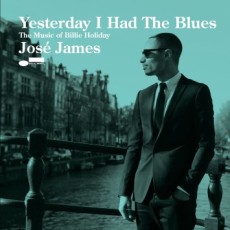
In commemoration of Billie Holiday’s 100th birthday, he recorded nine songs written or associated with Billie Holiday, titled Yesterday I Had The Blues and utilizing the talents of Jason Moran, John Patitucci and Eric Harland. To date he has six albums as a leader and seven collaborations with Junior Mance, Jef Neves, J.A.M., Kris Bowers and the Soil & Pimp Sessions. Vocalist José James continues to compose and perform, record and tour.
Inspire A Young Mind
More Posts: vocal