

Daily Dose Of Jazz…
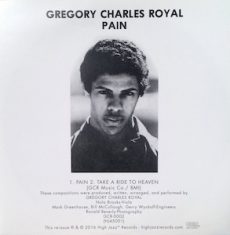
Gregory Charles Royal was born on October 10, 1961 IN Washington, D.C. As a student at Howard University he received the 1982 DownBeat Magazine Student Music Award for Jazz Vocal Group and Graduate College Outstanding Performance in the Jazz Instrumental Soloist Category. He graduated from Howard University with a Master of Music in Jazz Studies.
Royal went on to play with the Duke Ellington Orchestra for a decade beginning in 1989, then with Art Blakey and The Jazz Messengers, Slide Hampton and his World of Trombones, and Howard University Jazz Ensemble. He has appeared onstage as a trombonist with the Broadway shows Five Guys Named Moe and Jelly’s Last Jam.
He has written and appeared in a play God Doesn’t Mean You Get To Live Forever, which was presented at the Baruch Performing Arts Center. and at Theatre Row on 42nd Street in New York. Royal also wrote and appeared in the short film World’s Not for Me. The film won the Harlem Spotlight Best Narrative Short Award at the Harlem International Film Festival in 2016.
Trombonist, composer, writer Chuck Royal, who is the co-founder of The BeBop Channel Corporation, the former parent owner of JazzTimes, continues to pursue his career in music.

More Posts: bandleader,composer,history,instrumental,jazz,music,trombone,writer
Daily Dose Of Jazz…
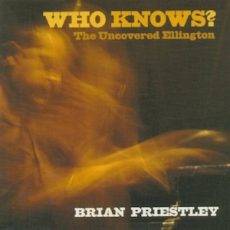
Brian Priestley was born on July 10, 1940 in Manchester, England and began studying music at the age of eight. In the 1960s he gained a degree in modern languages from Leeds University, while playing in student bands. In the mid-1960s, he began contributing to the jazz press and was responsible for entries in Jazz on Record: A Critical Guide to the First Fifty Years, 1917–1967.
In 1969 he moved to London, England and began playing piano with bands led by Tony Faulkner and Alan Cohen. Priestley helped transcribe Duke Ellington’s Black, Brown and Beige, and Creole Rhapsody for Cohen. He formed his own Special Septet featuring Digby Fairweather and Don Rendell. His compositions include Blooz For Dook, The Whole Thing and Jamming With Jools, based on a live broadcast with Jools Holland.
As a broadcaster he worked on the BBC, London Jazz FM, and for BBC Radio London, and influenced the renewed interest in jazz in the 1980s. Priestley taught jazz piano at Goldsmiths College from 1977 until 1993, and has taught jazz history for various other universities and conservatoires over the years.
Priestley has also written biographies of Charles Mingus, John Coltrane and Charlie Parker, as well as the book Jazz on Record: A History. He co-authored The Rough Guide to Jazz, as well as contributing to several other reference books, and has compiled and/or annotated more than a hundred reissue compilations.
Writer, pianist and arranger Brian Priestley has lived in Tralee, Ireland since 2006 where he continues playing the piano and presents a show on Radio Kerry.

More Posts: arranger,bandleader,educator,history,instrumental,jazz,music,piano,writer
Daily Dose Of Jazz…
Stanley Frank Dance was born in Braintree, Essex, England on September 15, 1910. As a youth, he claimed he was “fortunate” to have been sent to boarding-school at Framlingham College, where he first encountered American recordings of bands fronted by Jelly Roll Morton and Benny Moten, among others. While working in the family business he continued to pursue his interest in music and soon learned of Louis Armstrong, Fats Waller and Duke Ellington through the music newspaper Melody Maker.
Focusing on the music of black bands he started writing opinion pieces about the jazz scene for Hugues Panassié’s French-language magazine Jazz Hot in 1935, modeling his articles on those written by John Hammond. A 1937 three week visit to New York City’s jazz scene had Stanley at the Savoy Ballroom and similar venues in the evenings, listening in on recording sessions during the day and an introduction to Canadian writer Helen Oakley.
Joining the RAF he was assigned to the Royal Observer Corps in East Anglia, and for a period of nine years his opportunity to listen to Black American bands was curtailed. He missed the start of Bebop, which developed during the war and a recording-musicians’ strike in the US, but he found Oakley when the American OSS assigned her to London late in the war.
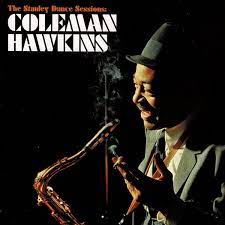
Dance and Oakley married in 1947, resided in England until 1959 then moved to Connecticut. He wrote a monthly jazz column for Jazz Journal, he coined the term mainstream to describe those in between revivalist Dixieland and modern bebop. In 1958, Decca’s Felsted Records commissioned him to produce a series of New York recordings of Coleman Hawkins, Cozy Cole/Earl Hines, Billy Strayhorn/Johnny Hodges, Buddy Tate, and several others, which were released under the collective title Mainstream Jazz.
Leaving England for Connecticut with a commission from EMI’s English Columbia label to make proprietary jazz recordings, Stanley used his and Helen’s contacts with the Ellington players to produce seven albums that were quite successful in Europe. He also assembled two albums for RCA as well as writing liner notes and shared a 1963 Grammy with Leonard Feather for his liner notes to The Ellington Era, Vol. 1.
He went on to publish five books on jazz, write articles for several magazines, helped Duke Ellington write his autobiography and is credited with helping to revive the careers of several musicians including Helen Humes and Earl Hines. By 1979 the Dances moved to Southern California where he consulted with Ken Burns during the development of his documentary television series Jazz, served as book editor for Jazz Times and donated their journals, photographs, and recordings to the Yale Music Library’s Special Collections.
Over his career, his priority was advocating for the music of black ensembles performing sophisticated arrangements, based on Swing-era dance music. Jazz writer, business manager, record producer, and historian Stanley Dance who was personally close to Duke Ellington which put him in a position to author official biographies, transitioned from pneumonia at 88 on February 23, 1999 in Vista, California.

More Posts: historian,history,instrumental,jazz,music,producer,writer
Daily Dose Of Jazz…
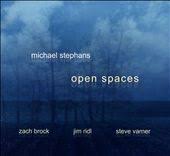
Michael Stephans was born in Miami, Florida on June 9, 1945. He has performed and recorded with artists including Dave Liebman, Bennie Maupin, Joe Lovano, Bob Brookmeyer, Don Menza, and Alan Broadbent.
Stephans’ first solo recording, Om ShalOM, was critically lauded in 2007 by UK critic Tom Barlow as an album of the year in the December 2007 – January 2008 issue of Jazzwise.
He has received multiple composition grants from the National Endowment for the Arts. In 1974, this association afforded him the opportunity to write the large ensemble composition Shapes and Visions for vibraphonist Karl Berger, which was performed at the Smithsonian Museum of Natural History in Washington, D.C.
In his role as a poet Michael has been published in The Note and Inscape, and received the Rachael Sherwood Poetry Prize by the English department at Cal State Northridge. He is the author of Experiencing Jazz: A Listener’s Companion, and Experiencing Ornette Coleman: A Listener’s Companion.
He is a professor who has taught at Pasadena City College, the University of Miami, and Bloomsburg University of Pennsylvania. Drummer Michael Stephans continues to pursue his career in jazz.

More Posts: bandleader,drums,educator,history,instrumental,jazz,music,poet,writer
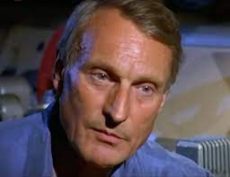
Three Wishes
Francis Paudras replied to the query of three wishes by the Baroness with:
- “To ‘ave ze Beatles naked on ze stage on all fours, cut zeir ‘air, and zen close zem up, and force zem to listen to ze works of Monk, twenty-four hours on twenty-four!”
- “Zat ze world of music take conscience of ze importance, ze true place of Bud Powell in music, not just jazz.”
- “I would like for jazz coming ze ambassador for peace in ze world.”
*Excerpt from Three Wishes: An Intimate Look at Jazz Greats ~ Compiled and Photographed by Pannonica de Koenigswarter
More Posts: baroness,history,instrumental,jazz,music,pannonica,piano,three,wishes,writer