

Daily Dose Of Jazz…
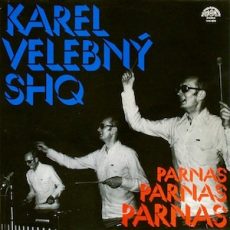
Karel Velebný was born March 17, 1931 in Prague, Czechoslovakia and at seven years old, he played piano and at fifteen was a modern jazz enthusiast who taught himself to play alto saxophone. He graduated from Gymnasium then studied drumming at the Prague Conservatory, making his first public performance as a student, and became a full-time professional as soon as he graduated.
From 1955 to 1958 he played with Czech jazzman Karel Krautgartner’s orchestra, then joined contrabassist Luděk Hulan to co-found Studio 5, which became the key ensemble of modern Czech jazz. He continued to work with Krautgartner until the latter emigrated in 1968.
In 1960, the Studio 5 ensemble was absorbed by the Dance Orchestra of Czechoslovakia Radio, but Velebný and the original Studio 5 members soon quit. In 1961, he and flautist Jan Konopásek co-founded SHQ, initially part of the Spejbl and Hurvínek Theatre thus Spejbl and Huvínek Quintet, but later began taking independent performances.
SHQ became one of the most important bands in Czech jazz history. He was its leader, composer, arranger, played as a multi-instrumentalist and taught the younger band members. SHQ’s instrumental line-up and membership changed frequently. Karel played with various Czech jazz ensembles, including Kamil Hála’s orchestra, the Linha Singers ensemble and with other regular collaborators.
As a composer, Velebný concentrated solely on jazz, in compositional styles and arrangements reminiscent of Gerry Mulligan, Chick Corea, Gary Burton and Benny Golson. He wrote mainly for his own ensembles notably Studio 5 and SHQ but also for the Kamil Hála Orchestra, the Karel Vlach Orchestra and others.
In 1978 he was invited to the Berklee College of Music, where he studied jazz teaching and the different approaches of European and American jazz. He organized and led the Summer Jazz Workshop in Frýdlant, Czech Republic until his death. As a teacher, he emphasized knowledge of techniques which could be broadly applied on jazz standards. He also wrote the specialist jazz textbook The Jazz Practical.
Diagnosed with a serious heart disease he was forced to quit as a saxophonist and vibraphonist and was restricted to piano. On March 7, 1989 vibraphonist, pianist and saxophonist Karel Velebný,who was also a composer, arranger, actor, writer and music pedagogue and one of the founders of modern Czech jazz in the second half of the 20th century, died in Prague.

More Posts: bandleader,history,instrumental,jazz,music,piano,saxophone,vibraphone
Requisites
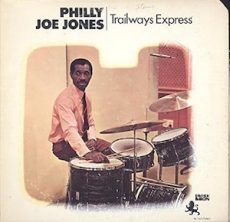
Trailways Express ~ Philly Joe Jones | By Eddie Carter
A few nights ago, I spent the evening listening to albums by three of my favorite drummers: Art Blakey, Elvin Jones, and Philly Joe Jones. This morning’s record from my library inspired me to take a trip aboard the Trailways Express (Polydor – Black Lion Records 2460 142), a 1971 U.K. release by Philly Joe Jones. It was his sixth album as a leader and was recorded in 1968, a year after he moved to London. He’s accompanied on this date by Les Condon on trumpet (track: B1), Kenny Wheeler on flugelhorn (A1 to A3, B2, B3) and trumpet (B1), Chris Pyne on trombone (B3), Peter King on alto sax (A2, A3, B1 to B3), Harold McNair on flute (A2, B2) and tenor sax (A1, B1 to B3), Mike Pyne on piano, John Hart (B1), and Ron Matthewson (A1 to A3, B2, B3) on bass. My copy is the 1975 U.S. Stereo reissue (Black Lion Records BL-142).
The group jumps headfirst into the spirited melody of Mo Jo by Philly Joe Jones. Mike ignites the opening statement with electrifying notes. Harold continues creating a crisp, upbeat solo, and then Kenny glides and soars smoothly on the flugelhorn next. Mike and Philly exchange ideas as the song progresses until the final chorus and conclusion. The tempo shifts as the front line introduces Gone, Gone, Gone by George and Ira Gershwin. It starts with a slower beat that steadily climbs as the septet embarks on their theme. Peter is up first and delivers a vibrant interpretation. Kenny, still on flugelhorn, spreads his wings next. Philly’s exquisite brushwork closes the solos before the ensemble returns to the theme.
Baubles, Bangles, and Beads by Robert Wright, George Forrest, and Alexander Borodin begins with Philly’s short introduction, preceding the group’s lively melody. Peter initiates the good times in the first solo, followed by Kenny, again on flugelhorn, who keeps the brisk mood alive. Mike takes over for a short, jubilant performance, and then Ron walks in vivaciously. Philly Joe precedes the ensemble’s closing chorus with a succinct remark. The title tune, Trailways Express by Philly Joe Jones, kicks off Side Two with Les taking over on trumpet and Philly’s introduction calling the group to action. Harold lights the fuse in the opening presentation; then Peter continues spreading the fire next. Philly fans the flames further toward the theme’s reprise and gradual descent to a fadeout.
Here’s That Rainy Day by Jimmy Van Heusen and Johnny Burke begins with Philly guiding the ensemble’s melody in his introduction. Peter starts with a soothing statement, and Harold narrates the next solo masterfully on the flute. Mike comes in next with a relaxed, easygoing reading. Philly delivers the song’s final festive swing ahead of Harold and Peter’s closing theme and the finale. The final track is Ladybird by Tadd Dameron and Ted Heath. Philly starts with a brief introduction before the septet’s vibrant theme. Mike sets the stage for the goodies to come. Harold follows him cheerfully, and Kenny moves along swiftly with cat-like ease next. Chris amazes in a dazzling interpretation, and Philly concludes with a final flourish, leading the ensemble back to the reprise and climax on a high note.
Alan Bates produced Trailways Express, though the identity of the recording engineer remains a mystery. Nonetheless, the album boasts a strong soundstage that listeners will find delightful. Philly Joe Jones was an outstanding drummer and the powerhouse behind the first great Miles Davis Quintet of the fifties. His nickname, Philly, distinguished him from another renowned drummer, Jo Jones. Although Jones’s discography as a leader is limited, he collaborated with numerous top-tier musicians as a sideman throughout his career. For fans of hard-bop and post-bop who seek exceptional drumming, Trailways Express by Philly Joe Jones is a must-listen. Its exceptional musicianship, led by Jones’s drumming, makes it a pleasure to listen to repeatedly!
~ Here’s That Rainy Day – Source: JazzStandards.com
~ Baubles, Bangles and Beads, Ladybird – Source: Wikipedia.org
© 2025 by Edward Thomas Carter

More Posts: choice,classic,collectible,collector,drums,history,instrumental,jazz,music
Daily Dose Of Jazz…
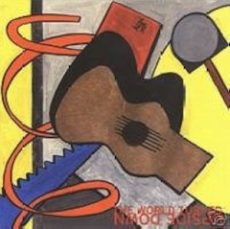
Keith Rowe was born March 16, 1940 in Plymouth, England. He began his career playing jazz in the early 1960s with Mike Westbrook and Lou Gare. His early influences were guitarists Wes Montgomery, Charlie Christian, and Barney Kessel. Growing tired of what he considered the genre’s limitations he began experimenting, stopped tuning his guitar and began playing free jazz and free improvisation.
Rowe developed prepared guitar techniques: placing the guitar flat on a table and manipulating the strings, body, and pick-ups in unorthodox ways. He has used needles, electric motors, violin bows, iron bars, a library card, rubber eraser, springs, hand-held electric fans, alligator clips, and common office supplies in playing the guitar.
Rowe has worked with Oren Ambarchi, Burkhard Beins, Cornelius Cardew, Christian Fennesz, Kurt Liedwart, Jeffrey Morgan, Toshimaru Nakamura, Evan Parker, Michael Pisaro, Peter Rehberg, Sachiko M, Howard Skempton, Taku Sugimoto, David Sylvian, John Tilbury, Christian Wolff, and Otomo Yoshihide.
Guitarist Keith Rowe, who was a founding member of both AMM in the mid-1960s, M.I.M.E.O. and is seen as a godfather of EAI electroacoustic improvisation, continues to compose, record and tour.
More Posts: bandleader,guitar,history,instrumental,jazz,music

Daily Dose Of Jazz…
Harry Haag James was born on March 15, 1916 in Albany, Georgia the son of a bandleader in a traveling circus, the Mighty Haag Circus, and Myrtle Maybelle Stewart, an acrobat and horseback rider. He started performing with the circus at an early age, first as a contortionist at the age of four, then playing the snare drum in the band from about the age of six.
James started taking trumpet lessons from his father at age eight, and by age twelve he was leading the second band in the Christy Brothers Circus, for which his family was then working. James’s father placed him on a strict daily practice schedule. In 1924, his family settled in Beaumont, Texas and in the early 1930s he began playing in local dance bands when he was 15. While still a student at Dick Dowling Junior High School, he was a regular member of Beaumont High School’s Royal Purple Band, and in May 1931 he took first place as trumpet soloist at the Texas Band Teacher’s Association’s Annual Eastern Division contest held in Temple, Texas.
His first job was playing at the Peabody Hotel in Memphis, Tennessee and played regularly with Herman Waldman’s band, where he was noticed by Ben Pollack. In 1935 he joined Pollack’s band, but left two years later and joined Benny Goodman’s orchestra through 1938. He was nicknamed “The Hawk” early in his career for his ability to sight-read. With financial backing from Goodma, Harry debuted his own big band in Philadelphia, Pennsylvania, in 1939, but it didn’t click until adding a string section in 1941. Subsequently, known as Harry James and His Music Makers, he went on to produce hits, appeared in four Hollywood films, and toured with the band into the 1980s.
Trumpeter and big band leader Harry James was a heavy smoker, drinker, and gambler, in 1983 he was diagnosed with lymphatic cancer. He played his last professional job, with the Harry James Orchestra, on June 26, 1983, in Los Angeles, California dying just nine days later in Las Vegas, Nevada on July 5, 1983, at age 67. Frank Sinatra gave the eulogy at his funeral, held in Las Vegas.
More Posts: bandleader,history,instrumental,jazz,music,trumpet

Daily Dose Of Jazz…
Antonio Ciacca was born in Wuppertal, Germany March 14, 1969 and raised in Italy. He began playing the piano at the age of seven and studied with Steve Grossman, Jaki Byard, Bruce Barth and Barry Harris.
Ciacca toured Europe with the Larry Smith Quartet in 1995 and 1996, played in Japan with the Eiji Nakayama Quartet in 1998, and toured Europe with Wes Anderson and Steve Lacy in 1999. His study with Jaki Byard in 1998–99, and dedicated the album Hollis Avenue to him.
He founded the Detroit Gospel Singers, and toured Europe with them in 2000. He earned his undergraduate Diploma at the G.B. Martini Conservatory in Bologna, Italy. He became Director of Programming at Jazz at Lincoln Center from 2007 to 2011. Earning his master’s degree in jazz studies at City College in New York City and his DMA, Doctor of Musica Arts at Stony Brook University.
Pianist Antonio Ciacca is currently the adjunct professor of Jazz History at Marymount Manhattan College, and Professor of Jazz Arranging and Composition at the G. Nicolini Conservatory in Piacenza, Italy.
More Posts: arranger,bandleader,composer,history,instrumental,jazz,music,piano