

Daily Dose Of Jazz…
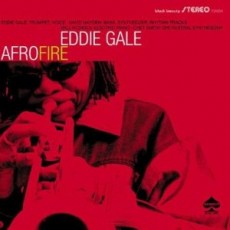
Eddie Gale was born Edward Gale Stevens Jr. on August 15, 1941 in Brooklyn, New York. Early in life, he studied trumpet with Kenny Dorham. In the early 1960s he was introduced to Sun Ra by drummer Scoby Stroman and spent many hours exposed to Sun Ra’s philosophy about music and life. That experience has enabled him to play ideas he could have never imagined or find in extreme books. Throughout the Sixties and Seventies Eddie toured and recorded extensively with Sun Ra until Ra’s death in 1993.
Helping to bring jazz into the 21st century, the trumpeter made numerous appearances with Oakland hip-hop outfit The Coup, whereby Gale’s trumpet could be heard engaging with the music’s break beats and turntables. In the late 1990s Eddie Gale also held regular creative music workshops at the Black Dot Café, an Oakland grassroots performance space ran by artist/activist Marcel Diallo and his Black Dot Artists Collective.
Trumpeter Eddie Gale, known for his work in free jazz, has recorded five albums as a leader and also recorded and performed as a sideman with Cecil Taylor, Sun Ra, Larry Young, Elvin Jones, John Coltrane, Jackie McLean, Booker Ervin and Illinois Jacquet among others. He continued to perform and record until his death on July 10, 2020, at the age of 78.
More Posts: trumpet
Daily Dose Of Jazz…
Walter Blanding Jr. was born on August 14, 1971 in Cleveland, Ohio to a musical family and began playing the saxophone at age six. In 1981, he moved with his family to New York City, and by age 16, he was performing regularly with his parents at the Village Gate.
Blanding attended LaGuardia High School for Music & Art and continued his studies at the New School for Social Research. Living in Israel for 4 years he had a major impact on the music scene, inviting great artists such as Louis Hayes, Eric Reed and others to perform. He also taught in several Israeli schools and toured the country with his ensemble.
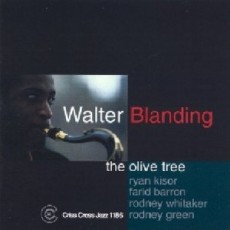
Walter’s first recording, Tough Young Tenors, was acclaimed as one of the best jazz albums of 1991. He has performed or recorded with numerous musicians, such as Cab Calloway, the Wynton Marsalis Septet, Marcus Roberts, Illinois Jacquet, Eric Reed and Roy Hargrove among others. His last release, The Olive Tree, features fellow members of the Jazz at Lincoln Center Orchestra.
Clarinetist, tenor and soprano saxophonist Walter Blanding Jr. has taught at the Shanghai branch of Jazz At Lincoln Center, and continues to record as a sideman with a variety of musicians and perform as a member of the Jazz at Lincoln Center Orchestra.
Daily Dose Of Jazz…
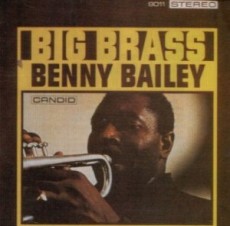
Benny Bailey was born Ernest Harold Bailey on August 13, 1925 in Cleveland, Ohio. Having some training in piano and flute in his youth, he switched to trumpet, concentrating on the instrument while at the Cleveland Institute of Music. He was influenced by his hometown colleague, Tadd Dameron, seven years his elder, and subsequently had a significant influence on other prominent Cleveland musicians including Bill Hardman, Bobby Few, Albert Ayler, Frank Wright and Bob Cunningham.
In the early 1940s he worked with Bull Moose Jackson and Scatman Crothers. He later worked with Dizzy Gillespie, toured with Lionel Hampton and while on the European tour with Hampton, decided to stay and spend time in Sweden. This Swedish period saw him working with Harry Arnold’s big band. His preference for big bands over small groups associated him with several European big bands including the Kenny Clarke/Francy Boland Big Band.
For a while her worked with Quincy Jones returning to the States briefly in 1960. During this time, he worked with Tony “Big T” Lovano and recorded with Freddie Redd’s sextet invited to the studio as part of Freddie Redd’s sextet on the Blue Note Records album Redd’s Blues. Shortly thereafter, he returned to Europe first to Germany, and later to the Netherlands where he would settle permanently.
In 1969 he played on the Eddie Harris/Les McCann project Swiss Movement, recorded live at the Montreux Jazz Festival that included a memorable unrehearsed solo on “Compared To What”. Then in 1988 he worked with British clarinetist Tony Coe and kept producing albums until 2000 when he was in his mid-70s. He recorded 18 albums as a leader and another half-dozen as a sideman working with such luminaries as Eric Dolphy, Benny Golson, Randy Weston and Jimmy Witherspoon. Bebop and hard bop trumpeter Benny Bailey died at home in Amsterdam on April 14, 2005.

Give The Gift Of Knowledge
More Posts: trumpet
Daily Dose Of Jazz…
Thurman Green was born on August 12, 1940 in Texas. A jazz trombonist, who primary performed in the bebop orientation, spent time playing in Los Angeles with swinging big bands, such as, the Clayton-Hamilton Jazz Orchestra. He an occasional member of the Horace Tapscott Quintet, one of many groups headed by the late pianist that no one bothered to record. Thurman was open-eared enough to play quite credibly in free settings now and then.
Thurman recorded as a sideman with Willie Bobo, Donald Byrd and Bobby Hutcherson on the Blue Note label. In 1962, Green and baritone saxophonist Hamiet Bluiett were jamming buddies at the Navy School of Music in Washington D.C. They soon went their separate ways but hoped to team up again some day.
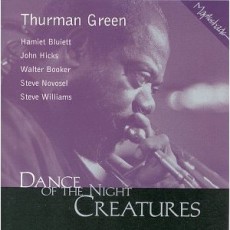
It was thirty-two years later, in 1994, that Bluiett was able to give his old friend his first opportunity to lead his own record date with Dance of the Night Creatures that had pianist John Hicks, bassist Walter Booker or Steve Novosel and drummer Steve Williams. It is a shame that it took over four years for the music to finally come out because Green suddenly died at age 57 on June 19, 1997.
More Posts: trombone

Daily Dose Of Jazz…
Russell Procope was born on August 11, 1908 in New York City and grew up in San Juan Hill, attending school with Benny Carter. His first instrument was the violin, but he switched to clarinet and alto saxophone. He began his professional career in 1926 as a member of Billy Freeman’s orchestra. At the age of twenty he recorded with Jelly Roll Morton and went on to play with bands led by Benny Carter, Chick Webb, Fletcher Henderson, Tiny Bradshaw, Teddy Hill, King Oliver and Willie Bryant by the mid-Thirties.
Procope would play with Roy Eldridge, Bill Coleman, Frank Newton, Dizzy Gillespie, Dickie Wells and Chu Berry. He made his first trip to Europe in 1937 as part of Teddy Hill’s band with “The Cotton Club Revue,” an all-Black show, which during its European tour appeared at the London Palladium.
In 1938 Russell replaced Pete Brown in John Kirby’s sextet and made a name for himself until 1945 with a three-year interruption in the Armed Services during World War II. He joined the reed section of the Ellington orchestra in ’46 as an alto saxophonist but made his name and reputation as a clarinetist. During the summer of 1950 the band returned to Europe bringing him back once again as a member and he stayed until the bandleader’s death in 1974,
Playing alto saxophone he recorded the 1956 album “The Persuasive Sax of Russ Procope” under the London Records label. Although his early playing reflected the influence of Benny Carter, alto saxophonist and clarinetist Russell Procope, most highly regarded for his woody, understated clarinet solos, lyrical approach and forceful swinging attack, passed away on January 21, 1981.
More Posts: saxophone