

Daily Dose Of Jazz…
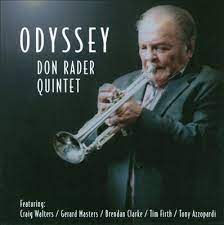
Donald Arthur Rader was born October 21, 1935 in Rochester, New York and began playing trumpet at age five, being taught by his father. He studied at Sam Houston State Teachers College before serving in the Navy in the 1950s as a member of the band.
At the end of the decade he played and arranged for Woody Herman into the Sixties, followed by Maynard Ferguson, Count Basie, Louie Bellson, Harry James, Terry Gibbs, Frank Foster, Henry Mancini, Les Brown from 1967 to 1972. Then he left Brown for the Stan Kenton Orchestra.
He toured with Della Reese, Sarah Vaughn, Andy Williams, Percy Faith, Diana Ross, Elvis Presley, Jerry Lewis and Bob Hope, both intermittently for 28 years with five tours of wartime Vietnam with the latter.
Assembling a quintet in Los Angeles, California in 1972 Don continued working with West Coast jazz musicians, including Lanny Morgan, Lew Tabackin, and Toshiko Akiyoshi. He recorded as a leader and worked in music education for many years, including in Australia in the 1980s.
He has recorded eight albums as a leader, and as a sideman three with Count Basie, and seven with Maynard Ferguson. Trumpeter Don Rader continues to perform at the age of 87.

More Posts: bandleader,history,instrumental,jazz,music,trumpet
Daily Dose Of Jazz…
William Jones Jr. was born October 20, 1929 in New York City, New York and mainly taught himself to play the drums, and played left handed. He performed and recorded with pianist Thelonious Monk in 1953, making his debut on the album Thelonious Monk and Sonny Rollins. Two years later he appeared with Monk on The Tonight Show.
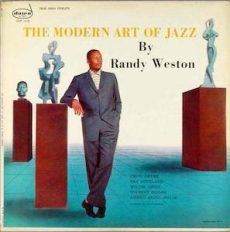
He went on to become a sideman for another recording in 1955 on pianist Elmo Hope’s Meditations and with Randy Weston on his The Modern Art of Jazz by Randy Weston in the following year. Jones also played with Kenny Dorham, J. J. Johnson, Charlie Parker, and Cecil Payne in the mid-1950s.
In 1955–56 Jones was part of Charles Mingus’ Jazz Workshop, and was the drummer in the bassist’s band that recorded Pithecanthropus Erectus, which helped develop a freer form of group improvisation. Willie was tenor saxophonist Lester Young’s drummer from late 1956 to early 1959. In 1961, he played on Sun Ra’s The Futuristic Sounds of Sun Ra.
He went into obscurity after this recording session and his date of death was taken from social security records.
More Posts: drums,history,instrumental,jazz,music
The Jazz Voyager
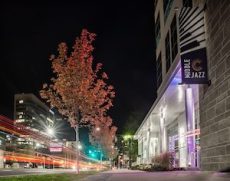
Flying cross-country always gives me the opportunity to unplug, watch a movie and take a nap as I head for North Carolina. As a lifelong jazz listener always on the prowl to hear someone new, The Jazz Voyager’s destination is Middle C Jazz in Charlotte. It’s an intimate upscale club setting with southern charm and hospitality, with small plates and craft cocktails.
This week I will discover the talents of vocalist Veronica Swift. A fixture in the modern jazz scene she has recorded two albums that explore mu;tiple genres of music that she incorporates into her sound.
Middle C Jazz is located at 300 South Brevard Street 28202. Get more info by visiting the Jazz Calendar at https://notoriousjazz.com/event/veronica-swift

More Posts: adventure,club,genius,jazz,music,preserving,travel,vocal
Daily Dose Of Jazz…
Rozanne Levine was born on October 19, 1945 in New York City, New York. She was introduced to the jazz/new music community as a performer with William Parker and Patricia Nicholson Parker’s Centering Music/Dance Ensemble during the late Seventies.
Throughout the 1980’s and 1990’s Levine performed in saxophonist/clarinetist Mark Whitecage’s Glass House Ensemble, playing both clarinet and Whitecage’s sound sculptures. In 1993 she rejoined the Parkers as a founding member of their New York-based Improvisors Collective, performing in the Collective Orchestra and with Collective members in smaller ensembles. During her three year tenure with the Collective she formed two ensembles, Crystal Clarinets and the Clarinet Choir, which performed in New York City and Connecticut.
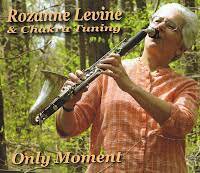
In 1999 Rozanne and Whitecage formed a touring duo, RoMarkable, to showcase their acoustic and electronic forays. They performed at numerous clubs and festivals around the country. She led Chakra Tuning, with Mark Whitecage, clarinetist Perry Robinson and violinist/vocalist Rosi Hertlein. Her compositions form the thematic material from which the musicians improvise, each artist adding their distinct voice to the mix. The group released their highly-praised debut album, Only Moment, in 2009, on her and Whitecage’s label, Acoustics.
Levine performed with Mark Whitecage and The Bi-Coastal Orchestra, Anthony Braxton, The New Reed Quartet, Jason Kao Hwang, Jackson Krall, Theo Jorgensmann, Blaise Siwula, and Who Knows?, among others.
Alto clarinetist, bamboo flutist and composer Rozanne Levine, who became a noted photographer that were incorporated into her performances, transitioned in Morristown, New Jersey on June 18, 2013.
More Posts: bamboo flute,bandleader,clarinet,composer,history,instrumental,jazz,music
Daily Dose Of Jazz…
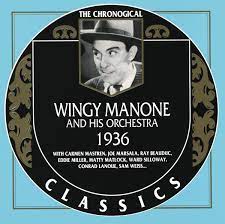
Conrad Lanoue was born on October 18, 1908 in Cohoes, New York. He started on piano when he was ten years old and attended the Troy Conservatory.
Beginning his career in his 20s, he played piano at hotels in his hometown. Conrad recorded with Red McKenzie in 1935, and under the combined leadership of trumpeter Eddie Farley and trombonist Mike Riley in 1935–36. During the 1930s he worked for Louis Prima, then Wingy Manone from 1936 to 1940 followed by playing with pianist Joe Haymes.
From the 1940s to the 1960s, he was a member of bands led by Lester Lanin, Charles Peterson, and Hal Landsberry. He also wrote big band arrangements. Pianist and arranger Conrad Lanoue, who never recorded as a leader, retired in 1968 due to illness and transitioned in Albany, New York on October 15, 1972.