

Daily Dose Of Jazz…
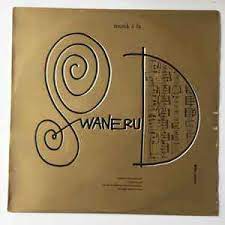
Thore Swanerud was born June 18, 1919 in Stockholm, Sweden. He started out his professional career playing extensively with major Swedish dance bands in the 1940s, such as those of Simon Brehm, Miff Görling, and Stan Hasselgård.
In 1949-1951 Thore led his own six-piece ensemble, then led smaller groups in the 1950s and 1960s. His associations include work with Ernestine Anderson and James Moody.
He is best remembered for an eight-bar improvised solo he made during a 1949 recording of I’m In The Mood For Love, in a quintet headed by Moody while touring Sweden. Eddie Jefferson created the 1952 song Moody’s Mood For Love in vocalese style by adapting lyrics to Moody’s song. The song later became a jazz standard, covered by many singers.
Pianist, vibraphonist, arranger, conductor, and composer Thore Swanerud, who scored three films, appeared in two and recorded five albums and five singles, transitioned in Stockholm on December 8, 1988.

More Posts: arranger,composer,conductor,history,instrumental,jazz,music,piano,vibraphone
Daily Dose Of Jazz…
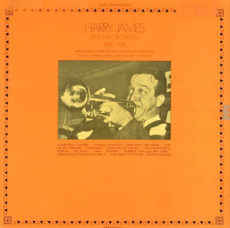
Dominick Buono was born on June 17, 1917 in North Park, California and started playing trumpet at age 11 with the music group at Nazareth Home, near to the North Park Mission. He would go on to play as a member of the 110-piece Bonham Brothers Greater North Park Boys Music Group, which performed concerts at Balboa Recreation area.
In his early professional career Buono performed trumpet in a variety of west coast-based dance and golf swing rings, including those led by Ken Baker, Cally Holden, Bobby Grain and Vido Musso. In 1939 he experienced fellow trumpeter Harry Wayne. At that time, Musso’s music group was fronted by well-known entertainer Johnny ‘Scat’ Davis and playing engagements at Chicago’s Blackhawk cafe. Buono joined Wayne and remained with the group until the innovator’s death more than 40 years later.
During the 1940s, Harry James, while working the Sherman Resort’s Panther Space with his first music group, invited Nick to be his lead trumpeter. He loved the obvious sound and stage presence of the trumpeter and hired him.
Over the years, Nick recorded and toured with Wayne, playing all over America with extended residencies in Nevada, where he and Wayne both had homes. They toured internationally to the United Kingdom and several other European countries. Happy with his anonymity, he sometimes played solos on radio broadcasts, on songs such as Ciribiribin and Sing, Sing, Sing.
The lead trumpeter inside a big music group is vital, certainly, he could well be considered the key guy. Trumpeter Nick Buono, whose charisma and skill often led to solos in the Wayne group, transitioned on October 14, 1993 in his hometown of North Park.
Bestow upon an inquiring mind a dose of a North Park trumpeter to motivate the perusal of the genius of jazz musicians worldwide whose gifts contribute to the canon…
More Posts: history,instrumental,jazz,music,trumpet
The Quarantined Jazz Voyager
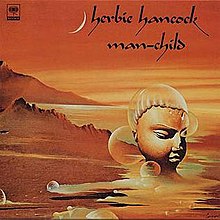
This week the ever vigilant Jazz Voyager is watching this new version of the virus creeping back to once again exploit humanity’s complacency relative to the collective health. People are still dying, maybe not at the rate over the past two years but dying. So in the spirit of staying healthy, I am selecting a classic funk~fusion album from the shelves and placing it on the turntable to take a renewed listen. This week it is the album Man-Child by Herbie Hankcock.
It is the fifteenth studio album by the jazz pianist. Recorded between 1974 and 1975, it was released on August 22, 1975 by Columbia Records, it was the final studio album to feature The Headhunters. The album was produced by David Rubinson and Hancock, and was recorded at Wally Heider Studios and Funky Features in San Francisco, California as well as Village Recorders and Crystal Studios in Los Angeles, California.
Departing from the music of his early career, Herbie gives us one of his most funk-influenced albums. Utilizing more funk based rhythms around the hi-hat, and snare drum, the tracks are characterized by short, repeated riffs by both the rhythm section, horns accompaniment, and bass lines. With less improvisation, more repetition of riffs along with brief solos, he re-introduces the electric guitar to this new sound.
The core group of The Headhunters was Paul Jackson, Bill Summers, Harvey Mason, Bennie Maupin, and Mike Clark (who replaced Harvey Mason post-1974). Hancock had toured and recorded with them for the previous three years. This was their final album as a group.
Tracks | 45:17- Hang Up your Hang Ups (Hancock, Melvin Ragin, Paul Jackson) ~ 7:29
- Sun Touch ~ 5:12
- The Traitor (Hancock, Ragin, Louis Johnson, Wayne Shorter) ~ 9:38
- Bubbles (Hancock, Ragin) ~ 9:03
- Steppin’ In It ~ 8:42
- Heartbeat (Hancock, Ragin, Jackson) ~ 5.16
- Herbie Hancock ~ piano, keyboards
- Bud Brisbois ~ trumpet
- Jay DaVersa ~ trumpet
- Garnett Brown ~ trombone
- Dick Hyde ~ trombone, tuba
- Wayne Shorter ~ alto and soprano saxophones
- Bennie Maupin ~ soprano and tenor saxophones, bass clarinet, alto and bass flutes, saxello, percussion
- Jim Horn ~ flute, saxophone
- Ernie Watts ~ flute, saxophone
- Dewayne McKnight, David T. Walker ~ guitar
- Wah Wah Watson ~ synthesizer, voice bag, guitar
- Henry E. Davis ~ bass guitar
- Paul Jackson ~ bass guitar
- Louis Johnson ~ bass guitar
- Mike Clark ~ drums
- James Gadson ~ drums
- Harvey Mason ~ drums
- Stevie Wonder ~ harmonica
- Bill Summers ~ percussion

More Posts: adventure,album,club,genius,jazz,museum,music,piano,preserving,restaurant,travel
Daily Dose Of Jazz…
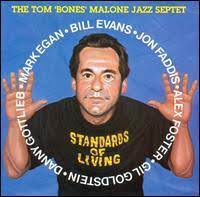
Thomas “Bones” Malone was born June 16, 1947 in Honolulu, Hawaii. He began playing professionally as lead trumpeter for Brenda Lee at a club in Jackson, Mississippi while enrolled at the University of Southern Mississippi. In response to a call from Warren Covington, leader of the Tommy Dorsey Orchestra, he began contracting musicians. After transferring to North Texas State University, Malone continued working as both a player and a contractor for groups. He graduated from North Texas State University with Lou Marini, and both were members of the One O’Clock Lab Band at North Texas.
After graduation, he worked in bands of Woody Herman in 1969, and during the early Seventies he worked with Duke Pearson, Louie Bellson, Doc Severinsen, Frank Zappa, and Blood, Sweat & Tears. In 1973, Malone began a close, fifteen-year association with Gil Evans, whom he has called a mentor. He recorded albums with Evans and toured Europe, Japan, and the Far East. In 1975 Malone toured with Billy Cobham and in 1976 with The Band.
From 1975 to 1985 he worked as arranger for Saturday Night Live and from 1981 to 1985 as musical director. He wrote the chart for the skit that introduced John Belushi and Dan Aykroyd as the Blues Brothers and worked on the film score for Blues Brothers 2000. He joined the CBS Orchestra in 1993, and contributed more than 1,600 arrangements to the Late Show with David Letterman.
As a studio musician, he has been heard on more than 1,000 records, more than 3000 radio and television commercials, and over 4,000 live television shows. In 2007 Bones was invited by music director Geoffrey Moull to arrange and perform a concert with the Thunder Bay Symphony Orchestra. In 2011 Malone was a guest artist with the University of Southern Mississippi Symphony Orchestra.
Trombonist, arranger, and producer Tom Malone, who also plays saxophone, trumpet, tuba, flute, and bass guitar, continues to expand his creative reach.
More Posts: bass guitar,flute,history,instrumental,jazz,music,saxophone,trombone,trumpet,tuba

Daily Dose Of Jazz…
Nancy King was born June 15, 1940 in Springfield, Oregon. She started gigging in 1959 with fellow University of Oregon music students. After moving to San Francisco in 1960, her accomplished scat singing landed her many gigs with various bebop artists. Performing the Playboy Club circuit and Las Vegas, Nevada during the 1960s, it was during Monday night hits at the Jazz Workshop where she met her future husband Sonny King. By the Seventies she took a break from touring, settled in Eugene, Oregon and raised her three sons while doing weekend gigs at Portland’s Benson Hotel.
Known for her masterful scatting and elastic range, Nancy has performed in worldwide tours and recordings, as well as collaborations with such artists as Jon Hendricks, Vince Guaraldi, Ralph Towner, Karrin Allyson and Dave Friesen among others.
King has released ten albums beginning with her 1991 debut release of Impending Bloom and including her 2004 recording of her performance Live At Jazz Standard with pianist Fred Hersch. In 2011 she released her Prennia project on the Ornry Diva label.
Vocalist Nancy King would occasionally pop into jazz loving cities to perform but by 2014, suffering from degenerative hips has limited her ability to travel and perform. Though Covid had postponed the operation he is looking forward to replacement surgery, recovery and getting back onto the stage and recording studio.
More Posts: bandleader,history,instrumental,jazz,music,vocal