

Daily Dose Of Jazz…
Jan Bertil Allan was born on November 7, 1934 in Falun, Sweden and at 17 began his career in 1951 as a pianist. After moving to Stockholm, he switched to the trumpet as his main instrument, playing in Carl-Henrik Norin’s orchestra. From 1954–55 he worked with Lars Gullin and Rolf Billberg and again with Norin from 1955–59 while earning a Ph.D. in physics.
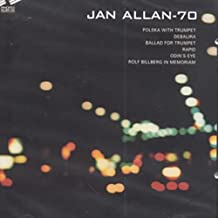
In the early Sixties, he led a quintet with Billberg and throughout the decade worked with Arne Domnérus, Georg Riedel, and Bengt Hallberg, among others. From 1968 to 1975 he was a member of the Swedish Radio Jazz Group. His album Jan Allan~70, featuring Rolf Ericson, Nils Lindberg, Bobo Stenson, Jon Christensen, and Rune Gustafsson, won a Grammis Award for Jazz of the Year in 1970.
Allan played with the same group and Georg Riedel on the trio-album Sweet And Loverly. His 1998 album Software has an affinity with the West Coast jazz genre of Gerry Mulligan and Stan Getz.
Over the course of his career, Allan also recorded albums with Bosse Broberg, Benny Carter, Dorothy Donegan, Lars Gullin, Jan Johansson, Thad Jones, Roger Kellaway, Lee Konitz, Nils Lindberg, Georg Riedel, George Russell, and Monica Zetterlund.
In 2000, his Bach trumpet, which was engraved with his name and he played for 35 years, was stolen. A movie about the theft and missing trumpet was broadcast on Swedish television in 2015 and had 1.1 million viewers. In 2009 he was honored with a Swedish Golden Django as a Master of Jazz. He composed for several films such as The Adventures of Picasso, Sopor, and Trollkarlen. He recorded eight albums as a leader and forty-six as a sideman.
Trumpeter and pianist Jan Allan, is considered among the most important modern jazz musicians in Sweden, continues to compose and perform.
More Posts: bandleader,history,instrumental,jazz,music,piano,trumpet
Daily Dose Of Jazz…
Johnny Parker was born on November 6, 1929 in Beckenham, Kent, England. In 1940, his family moved to Wiltshire where he was exposed to American Forces Network broadcasts and first heard boogie-woogie piano at a U.S. Air Force base. He returned to Beckenham after the Second World War and worked a paper round to be able to buy records by pianists such as Pete Johnson and Albert Ammons.
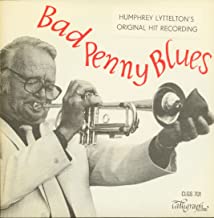
While in Beckenham, he regularly watched George Webb’s Dixielanders perform, joined the Catford Rhythm Club, played at regular sessions, and became the resident pianist, until 1948. At this point, he was called up for National Service with the Royal Army Ordnance Corps as an ammunitions examiner, while accompanying jazz musicians. After his armed service Parker enrolled at Regent Street Polytechnic, and from 1950 to 1951 played in Mick Mulligan’s band. He would later join Humphrey Lyttelton’s band and was the pianist on the trumpeter’s 1956 hit record Bad Penny Blues. Staying with Lyttleton for six years, he also performed with Sidney Bechet, Louis Armstrong, Eddie Condon, and Big Joe Turner.
After a failed attempt to start his own band, Johnny took a position inspecting components at an aircraft assembly plant. He continued playing in jazz bands alongside Alexis Korner, Diz Disley, Cyril Davies, and Long John Baldry among others. Early 1969, he joined Kenny Ball’s Jazzmen, but undergoing a spinal operation in December that year, he recovered within months and returned to regular touring.
He performed with Ball until 1978 and subsequently led his own jazz groups around London and toured the Middle East. Retiring in 2005 due to long-term health problems, pianist Johnny Parker passed away on June 11, 2010.
More Posts: bandleader,history,instrumental,jazz,music,piano
Daily Dose Of Jazz…
Red Wooten was born Lawrence Bernard Wooten on November 5, 1921 in Social Circle, Georgia and started his career playing country & western before moving to big band jazz. While still in his teens, he landed a six-dollar-a-week gig on Archie “Grandpappy” Campbell’s C&W show on radio station WDOD in Chattanooga, Tennessee. The band included future Sons of the Pioneers guitarist Roy Lanham. Texas crooner Gene Austin hired the band and dubbed them the Whippoorwills. He toured with Austin for a time, then quit the band due to exhaustion.
Red went on to play with several successful big bands of the ’40s, including those led by Jan Savitt and Tony Pastor. Beginning in 1949, he played with a succession of prominent swing bandleaders, including Tommy Dorsey, Woody Herman, and Charlie Barnet. In 1957, he recorded with Harry Babasin’s Jazzpickers in a rhythm section that also included Red Norvo. He hooked up with Norvo and recorded and toured with the vibist in 1957-1958.
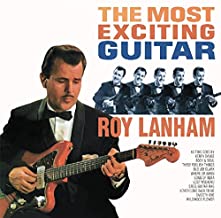
He recorded The Most Exciting Guitar with Lanham in 1959. That year, Wootten also toured with Benny Goodman and Frank Sinatra. With Sinatra, he did movies, TV, and worked the Sands Hotel in Las Vegas. In the ’60s and ’70s, he worked mostly in the studios, composed and arranged for film, and authored a book of musical exercises for bass instruments.
In addition to the aforementioned, Wootten played with Merle Travis, Glen Campbell, Eddie Dean, Mary Ford, Tex Williams, Jimmy Bryant, Joe Maphis, and Roy Rogers, among many others. He also worked on Gene Autry’s Melody Ranch radio show. Returning to country and won an Academy of Country Music Award as Best Bassist in 1982.
By the start of the Seventies, he was less active as a jazz musician and concentrated more on studio work. He also composed and arranged film scores. In the mid-1970s he recorded with Anita O’Day. Double bassist Red Wooten, whose name was sometimes spelled Wootten, at present no date of his transition is available.
More Posts: bass,history,instrumental,jazz,music
Daily Dose Of Jazz…
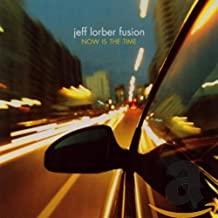
Jeff Lorber was born November 4, 1952 into a Jewish family in Cheltenham, Pennsylvania. He started to play the piano when he was four years old and after playing in a number of R&B bands as a teen, he attended Berklee College of Music, where he developed his love for jazz. There he met and played alongside guitarist John Scofield and for several years he studied chemistry at Boston University.
Moving to Vancouver, Washington in 1972, his first group, The Jeff Lorber Fusion, released their self-titled debut album in 1977 on Inner City Records. Recording five albums under his name, these early sessions showcased a funky jazz fusion sound, and his 1980 album, Wizard Island, introduced saxophonist Kenny G. In 1982, Lorber recorded his first solo album, It’s a Fact, which explored his R&B roots with a smoother, more synthesizer-heavy sound along with vocals.
Many of his songs have appeared on The Weather Channel segments as well as their compilation albums. He has had six Grammy Award nominations and his Prototype album won for Best Contemporary Instrumental Album in 2018. Keyboardist, composer and record producer Jeff Lorber continues to produce, compose and perform.
More Posts: bandleader,composer,history,instrumental,jazz,keyboard,music

Daily Dose Of Jazz…
Jane Monheit was born November 3, 1977 and grew up in Oakdale, New York on Long Island. Her father played banjo and guitar, her mother sang and played records by vocalists beginning with Ella Fitzgerald. At an early age, she was drawn to jazz and Broadway musicals.
She began singing professionally while attending Connetquot High School in Bohemia, New York. She attended the Usdan Summer Camp for the Arts and at the Manhattan School of Music, studying voice under Peter Eldridge, and graduating in 1999.
She was runner-up to Teri Thornton in the 1998 vocal competition at the Thelonious Monk Institute of Jazz, in Washington, DC. The next year when she was 22, she recorded her debut album, Never Never Land that was released the following year. Jane recorded many songs from the Great American Songbook and after recording for five labels, she started her own, Emerald City Records. The label’s inaugural release was The Songbook Sessions in 2016, an homage to Fitzgerald.
Monheit’s vocals were featured in the 2010 film Never Let Me Go for the titular song, written by Luther Dixon, and credited to the fictional Judy Bridgewater.
She has released eleven albums as a leader and has been a guest vocalist on eight albums recorded by David Benoit, Terence Blanchard, Les Brown, Tom Harrell, Harold Mabern, Mark O’Connor, Frank Vignola, and Joe Ascione. Vocalist Jane Monheit continues to perform and record.
More Posts: bandleader,history,instrumental,jazz,music,vocal