

Daily Dose Of Jazz…
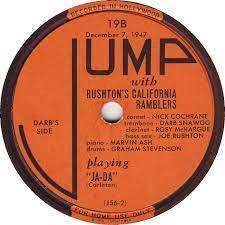
Joe Rushton was born in Evanston, Illinois on November 7, 1907. He started out playing clarinet and all of the other standard saxophone varieties, and was occasionally recorded with these other instruments. Settling on the bass saxophone, through the early to mid Forties he worked with Ted Weems, Jimmy McPartland, Bud Freeman, Floyd O’Brien, Benny Goodman, and Horace Heidt.
Joining Red Nichols’s Five Pennies in 1947 became a musical relationship and collaboration that went well into the early 1960s. He recorded six sides for Jump Records in 1945/47, but otherwise appears on record only as a sideman.
Bass saxophonist Joe Rushton, who is one of the best-known jazz performers to concentrate on bass saxophone, aside from Adrian Rollini, which he played from 1928. transitioned on March 2, 1964, in San Francisco, California at the age of 56.

More Posts: bandleader,history,instrumental,jazz,music,saxophone
Daily Dose Of Jazz…
Edgar Melvin Sampson was born on October 31, 1907 in New York City, New York. He began playing violin aged six and picked up the saxophone in high school, then started his professional career in 1924 in a violin piano duo with Joe Colman. Through the rest of the 1920s and early 1930s, he played with many big bands, including those of Charlie “Fess” Johnson, Duke Ellington, Rex Stewart and Fletcher Henderson.
In 1934, Sampson joined the Chick Webb outfit and during his period he created his most enduring work as a composer, writing Stompin’ at the Savoy and Don’t Be That Way. Leaving Webb in 1936, his reputation as a composer and arranger led to freelance work with Benny Goodman, Artie Shaw, Red Norvo, Teddy Hill, Teddy Wilson and Webb.
Becoming a student of the Schillinger System in the early 1940s, Edgar continued to play saxophone through the late 1940s and started his own band at the end of the decade. He worked with Latin performers such as Marcelino Guerra, Tito Rodríguez and Tito Puente as an arranger.
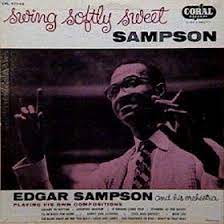
He recorded one album under his own name, Swing Softly Sweet Sampson, in 1956. Due to illness, he stopped working in the late Sixties. Composer, arranger, saxophonist, and violinist Edgar Sampson, nicknamed The Lamb, transitioned on January 16, 1973.

More Posts: arranger,bandleader,composer,history,instrumental,jazz,music,saxophone,violin
Daily Dose Of Jazz…
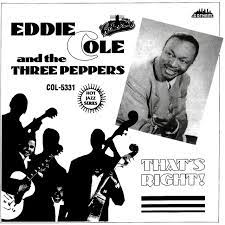
Edward Bennett Coles was born October 29, 1910 in Montgomery, Alabama and was the second oldest of ten children and the oldest son. He studied both piano and bass from a young age and formed his first band at age 17. Three years later at age 20, he joined Noble Sissle’s band the Sizzling Syncopators, stayed there six years and performed with greats such as Sidney Bechet and Clarence Brereton.
After a tour of Europe in 1936, Cole left Sissle’s band to join his brother Nat’s group, the Rogues of Rhythm. He appeared in the TV show Bourbon Street Beat in 1959 and later appeared on The Law and Mr. Jones and The Jack Benny Program.
Retiring in the 1960s, bassist, pianist and vocalist Eddie Cole, who was a member of the Cole dynasty of Nat, Freddy and Ike, transitioned on June 18, 1970 at the age of 59 in Los Angeles, California.
More Posts: bandleader,bass,history,instrumental,jazz,music,piano,vocal
Daily Dose Of Jazz…
George Washington was born October 18, 1907 in Brunswick, Georgia and raised in Jacksonville, Florida. He began playing trombone at age ten and attended Edward Waters College in the early-1920s.
Washington relocated to Philadelphia in 1925 and played with J.W. Pepper before moving to New York City shortly thereafter. In New York, he studied under Walter Damrosch at the New York Conservatory, playing with various ensembles in the late 1920s.
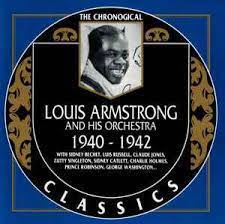
In 1931, he began playing with Don Redman, and gigged with Benny Carter in 1932 and Spike Hughes in 1933. In the mid-1930s, he played and arranged for the Mills Blue Rhythm Band and worked with Red Allen and Fletcher Henderson. From 1937 to 1943, he played in Louis Armstrong’s orchestra. After his tenure with Armstrong he moved to the West Coast, and played with Horace Henderson, Carter again, and Count Basie.
From 1947 he led his own ensemble, playing in California and the Las Vegas Strip in Nevada. He and drummer Johnny Otis collaborated often, and in 1960 Washington worked with Joe Darensbourg. He did freelance work as a player and arranger later in his life. To date there is no record of his death
More Posts: bandleader,history,instrumental,jazz,music,trombone
Daily Dose Of Jazz…
Leeds “Lee” Collins was born on October 17, 1901 in New Orleans, Louisiana. As a teenager he played in brass bands, including the Young Eagles, the Columbia Band, and the Tuxedo Brass Band. The 1910s saw him playing in New Orleans alongside Louis Armstrong, Papa Celestin, and Zutty Singleton.
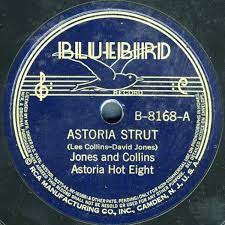
Moving to Chicago, Illinois in 1924 he replaced Louis Armstrong in King Oliver’s band. He also played with Jelly Roll Morton but the two had disagreements and fell out when Collins claimed that Morton stole the song Fish Tail Blues from him. He returned to New Orleans, where he played on the recordings of the Jones & Collins Astoria Hot Eight in 1929. He traveled to New York City in 1930 and played with Luis Russell.
Arriving back in Chicago he played through the Thirties with Dave Peyton, the Chicago Ramblers, Johnny Dodds and Baby Dodds, Zutty Singleton, Mezz Mezzrow, Lovie Austin, and with Jimmy Bertrand in 1945. Lee played around the city during this period in his career as an accompanist to many blues singers and in nightclubs. After 1945, he led his own band at the Victory Club, on Clark Street and gigged with Bertha Hill, Kid Ory, and Art Hodes in the early Fifties.
While in Europe he performed with Mezz Mezzrow in 1951 and 1954 and in California with Joe Sullivan in 1953. In the mid-1950s he retired because of poor health
Trumpeter Lee Collins, wrote an autobiography, Oh, Didn’t He Ramble, and with the aid of his wife, Mary, who published it posthumously in 1974, transitioned in Chicago on July 3, 1960, at the age of 58.
More Posts: history,instrumental,jazz,music,trumpet