

Daily Dose Of Jazz…
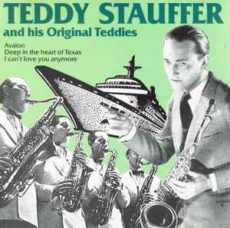
Ernst Heinrich “Teddy” Stauffer was born May 2, 1909 In Murten, Fribourg, Switzerland He was dubbed Germany’s “Swing-King” of the 1930s. He formed the band known as the Teddies, which is also billed as the Original Teddies or the International Teddies, which continued after he left in 1941.
Annual trips to the Swiss cities of St. Moritz, Arosa and also a guest appearance in London, England were responsible for the international fame of the Teddies band. Until 1939, he appeared with his Original Teddies-Band especially in Berlin and Hamburg, Germany. He enjoyed his popularity at the 1936 Olympics, had hits with Goody~Goody, and turned Horst Wessel Lied, the National Socialist’s anthem, into a jazz number in 1938. With his jazzy swing music, however, Stauffer increasingly got in trouble with the Reichsmusikkammer, a Nazi institution that promoted “good German music” which was composed by Aryans and seen as consistent with Nazi ideals.
Returning to Switzerland in 1939, he eventually emigrated to the United States and then to Mexico. His reputation as a playboy and a well~known womanizer who was married to Hedy Lamar, did not sway him from also having affairs with Rita Hayworth and Barbara Hutton.
Violinist, saxophonist and bandleader Teddy Stauffer who was also an actor, nightclub owner, and restaurateur transitioned on August 27, 1991 in Acapulco, Mexico at the age of 82.

More Posts: bandleader,club owner,history,hotelier,instrumental,jazz,music,saxophone,violin

Daily Dose Of Jazz…
Henderson Chambers was born on May 1, 1908 in Alexandria, Louisiana and studied at Leland College and Morehouse College before joining the Neil Montgomery band in 1931. He played in Nashville with Doc Banks in 1932, then with Jack Jackson’s Pullman Porters, Speed Webb, Zack Whyte, and Al Sears in Kentucky.
After two years with Tiny Bradshaw in the middle of the Thirties, Chambers moved to New York City where he played with Chris Columbus at the Savoy Ballroom in 1939-40. Following this he played for the next three years with Louis Armstrong.
Later in the 1940s, he worked with Don Redman, Sy Oliver, Lucky Millinder, and Count Basie. By the 1950s he would spend time with Cab Calloway, Doc Cheatham, Duke Ellington, and Mercer Ellington. For a period he worked as a studio musician, however, after joining Ray Charles’s band from 1961 to 1963, Henderson played with Basie again until 1966.
He recorded seven albums with Count Basie, five with Buck Clayton and ten with Gene Ammons, Cat Anderson, Sammy Davis Jr., Ella Fitzgerald, Edmond Hall, Arthur Prysock & Count Basie, Jimmy Rushing, Frank Sinatra & Count Basie, and Ernie Wilkins.
Trombonist Henderson Chambers’ final performances were with Edgar Battle, shortly before his transition from a heart attack on October 19, 1967 in New York City.
More Posts: history,instrumental,jazz,music,trombone
Daily Dose Of Jazz…
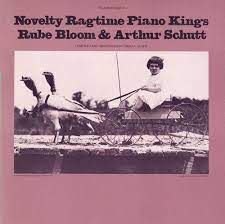
Reuben Bloom was born April 24, 1902 in New York City, New York to Jewish parents. During the 1920s he wrote many novelty piano solos, recorded for the Aeolian Company’s Duo-Art reproducing piano system various titles including his Spring Fever. His first hit came in 1927 with Soliloquy; his last was Here’s to My Lady in 1952, which he wrote with Johnny Mercer. In 1928, he made a number of records with Joe Venuti’s Blue Four for OKeh, including five songs he sang, as well as played piano.
He formed and led a number of bands during his career, most notably Rube Bloom and His Bayou Boys, which recorded three records in 1930. The Bayou Boys consisted of Benny Goodman, Adrian Rollini, Tommy Dorsey, Mannie Klein and Frankie Trumbauer in the Sioux City Six.
His I Can’t Face the Music, Day In Day Out, Fools Rush In (Where Angels Fear To Tread) and Give Me The Simple Life has become a part of the Great American Songbook and jazz standards.
During his career, he worked with many well-known performers, including those mentioned above and Ruth Etting, Stan Kenton, Jimmy Dorsey and collaborated with a wide number of lyricists, such as Ted Koehler, and Mitchell Parish.
Pianist, arranger, bandleader, recording artist, vocalist, and author Rube Bloom published several books on piano method before he transitioned on March 30, 1976 in his home city.
More Posts: arranger,author,bandleader,composer,history,instrumental,jazz,music,piano,vocal
Daily Dose Of Jazz…
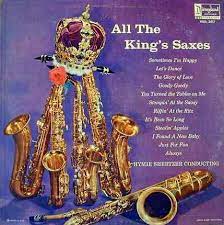
Hymie Schertzer was born Herman Schertzer on April 22, 1909 in New York City, New York and began playing violin when he was nine years old. He picked up the saxophone when he was a teenager and went on to work as a sideman for Gene Kardos at the club Birdland, then joined Benny Goodman’s band, where he was the lead saxophonist until 1938, though he recorded with Goodman intermittently until the mid-1940s.
Between 1938 and 1940 Hymie was in Tommy Dorsey’s band, and recorded in the late 1930s with Bunny Berigan and Lionel Hampton. He worked with Billie Holiday in 1941 and again in 1944, then became a house musician for NBC radio and television.
Working as a session player for studio recordings Schertzer was behind Ella Fitzgerald, Frank Sinatra, Sarah Vaughan, Sy Oliver, Louis Armstrong, and Artie Shaw during the years 1947-1953. He continued working with Goodman live, on television, and on record from 1951 until 1969.
Saxophonist and conductor Hymie Schertzer, who was a member of the Tonight Show Band during its Johnny Carson era, transitioned in New York City, on March 22, 1977 at the age of 67.
More Posts: conductor,history,instrumental,jazz,music,saxophone
Daily Dose Of Jazz…
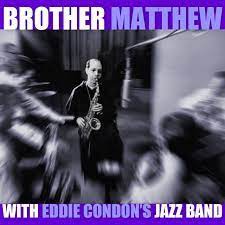
Boyce Brown was born on April 16, 1910 in Chicago, Illinois. He worked with Wingy Manone, Paul Mares, and Danny Alvin. Best known of his recordings is a 1935 session with Paul Mares and his Friars Society Orchestra, that was first issued on LP in 1955 as part of Columbia’s Chicago Style Jazz album and a 1939 session with Jimmy McPartland & his Jazz Band, which was first released as part of Decca’s Chicago Jazz album. Both of these sessions had Brown demonstrating a driving, harmonically advanced style.
In 1953, Boyce entered a monastery of the Roman Catholic Servite Order, however, he returned in 1956 to release his one and only album as Brother Matthew, backed by a band organized by Eddie Condon.
Alto saxophonist Boyce Brown, who played in the dixieland genre, transitioned from a heart attack on January 30, 1959 at the age of 48.
More Posts: bandleader,history,instrumental,jazz,music,saxophone