

Requisites
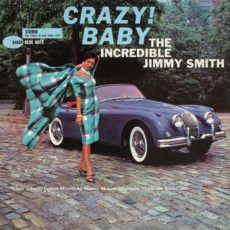
Crazy! Baby ~ Jimmy Smith | By Eddie Carter
The Incredible Jimmy Smith steps into the spotlight for this morning’s discussion with his first release of the sixties and fifteenth of his career. Crazy! Baby (Blue Note BLP 4030) is a 1960 trio album featuring the organist’s bandmates, Quentin Warren on guitar, and Donald Bailey on drums. My copy used in this report is the 1966 Liberty Records Stereo reissue (BST 84030).
When Johnny Comes Marching Home, the album opener has been around since 1863 and the Civil War. I first heard the 45-rpm single of this song in 1962 and was blown away by the group’s musicianship. Quentin is up first after the ensemble’s introduction and marching theme for an opening statement that goes down smoothly and easily like chilled Chardonnay. Jimmy follows with one of his meatiest solos, nearly five-minutes of electrifying jazz preceding the out-chorus march and trio vanishing. Makin’ Whoopee by Gus Kahn and Walter Donaldson premiered in the 1928 Broadway musical, Whoopee! The trio eases into the wonderfully nostalgic theme and Smith executes a marvelous mellow interpretation with a stunning bass line using his left foot.
A Night In Tunisia by Dizzy Gillespie and Frank Paparelli was first sung as a vocal by Sarah Vaughan under the title Interlude on the 1950 album, Hot Jazz. This 1942 Bebop classic is one of Gillespie’s most recorded tunes and the trio establishes the opening chorus made famous by Dizzy. Jimmy kicks off the lead solo with a riveting performance. Quentin closes with a funky statement matched by Donald’s rocking timekeeping propelling the trio into a thrilling coda.
Sonnymoon For Two is by tenor saxophonist Sonny Rollins and the composer introduced it on the 1957 album, A Night at The Village Vanguard. The group opens with a bluesy melody, then Warren dances and grooves on two short, but strong verses. Jimmy comes in next for some extensive wailing on the finale before the reprise and fadeout. Mack The Knife by Kurt Weill and Bertolt Brecht made its debut in the 1928 German play, The Threepenny Opera. This jazz and pop evergreen is a showcase for Smith who does a superlative job illustrating the title character in a thoroughly satisfying performance.
Up next is the thoughtfully pensive ballad by Bob Haggart and Johnny Burke, What’s New? Smith starts with a delicately wistful melody, segueing into a melancholic one-sided interpretation reflecting on the love that’s now just a memory before ending his conversation in grand fashion. The album closes with Smith’s dedication to Blue Note co-founder Alfred Lion, Alfredo. The trio flows vibrantly on the melody into Quentin soloing first with a leisurely, carefree swing that’ll get fingers snapping and toes tapping. Jimmy raises the temperature on a vivaciously brisk closing presentation taking no prisoners into the ending.
Rudy Van Gelder’s recording has a pleasant soundstage across the treble, midrange and bass spectrum resulting in sweet sounds emerging from your speakers that make this LP an easy choice to recommend for your library. If you’re a fan of jazz organ or are just discovering the music of Jimmy Smith, I submit for your consideration, Crazy! Baby. It’s a tasty combination of Hard-Bop and Soul-Jazz that once heard, you’ll want to replay repeatedly!
~ A Night at The Village Vanguard (Blue Note BLP 1581/BST 81581); Hot Jazz (Remington RLP-1024) – Source: Discogs.com ~ A Night In Tunisia, Mack The Knife, Makin’ Whoopee, What’s New? – Source: JazzStandards.com ~ When Johnny Comes Marching Home – Source: Wikipedia.org ~ When Johnny Comes Marching Home https://www.youtube.com/watch?v=7YpKGKF7_XY ~ A Night In Tunisia – https://www.youtube.com/watch?v=S3c-564EE0o © 2020 by Edward Thomas Carter Synopsis
Crazy! Baby is an album by jazz organist Jimmy Smith with performances that were recorded on January 4, 1960 and released by Blue Note. This was the first album Smith recorded at Rudy Van Gelder’s studio in Englewood Cliffs, New Jersey.
Tracks | 37:08
- When Johnny Comes Marching Home (Traditional) – 7:58
- Makin’ Whoopee (Walter Donaldson, Gus Kahn) – 4:57
- A Night in Tunisia (Dizzy Gillespie) – 5:40
- Sonnymoon for Two (Sonny Rollins) – 7:15
- Mack the Knife (Bertolt Brecht, Kurt Weill) – 4:58
- What’s New? (Bob Haggart, Johnny Burke) – 3:50
- Alfredo (Jimmy Smith) – 4:30
- Jimmy Smith – organ
- Quentin Warren – guitar
- Donald Bailey – drums
- Alfred Lion – producer
- Rudy Van Gelder – engineer
- Reid Miles – design
- Bob Ganley – photography
- Leonard Feather – liner notes

More Posts: choice,classic,collectible,collector,history,instrumental,jazz,music,organ
Daily Dose Of Jazz…
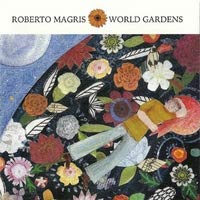
Roberto Magris was born June 19, 1959 in Trieste, Italy. By the 1980s he was leading the jazz trio Gruppo Jazz Marca with whom he recorded three albums, Comunicazione Sonora, Aria di Città and Mitteleuropa. In 1987 he put together an Italian quartet that stayed together for nearly 20 years, touring Europe, Asia, Australia, and South America and recording two albums, Life in Israel and Maliblues.
In the 1990s he founded the acid-jazz groups DMA Urban Jazz Funk and Alfabeats Nu Jazz, performing in Europe and in America. In 1998 Magris formed the Europlane Orchestra that included several jazz musicians from various European countries. With the Europlane Orchestra he recorded three albums Live At Zooest, Plays Kurt Weill, and Current Views.
2005 saw Magris partnering with Hungarian saxophonist Tony Lakatos on the album Check-In in 2005 he went on to collaborate with bassist Art Davis and drummer Jimmy “Junebug” Jackson on the album Kansas City Outbound issued by JMood. That same year, he hooked up with alto saxophonist Herb Geller on the album Il Bello del Jazz and some years later, JMood released another album with Herb Geller titled An Evening with Herb Geller & The Roberto Magris Trio – Live in Europe 2009.
During his time in the United States, Magris has become the musical director of JMood and has also recorded two albums in tribute to the trumpeter Lee Morgan, two trio albums with Elisa Pruett and Albert “Tootie” Heath devoted to the music of pianist Elmo Hope, and another to the legacy of alto saxophonist Julian “Cannonball” Adderley.
While in Los Angeles, California he recorded with Idris Muhammad and saxmen Paul Carr and Michael O’Neill, one album with Sam Reed, a double CD set in tribute to the bebop era, three albums with his trio from Kansas City and performed with his sextet that included trumpeter Brian Lynch at the WDNA Jazz Gallery in Miami, Florida. In Chicago, Illinois he recorded with a group including trumpeter Eric Jacobson and tenor saxophonist Mark Colby.
His influences have been Wynton Kelly, Tommy Flanagan, Bill Evans, Kenny Drew, Jaki Byard, Randy Weston, McCoy Tyner, Andrew Hill, Paul Bley, Don Pullen, and Steve Kuhn. He has recorded nearly three dozen albums as a leader or as a member of groups he has founded. Pianist, composer and arranger Roberto Magris continues to perform, record and tour.

More Posts: bandleader,history,instrumental,jazz,music,piano
Requisites
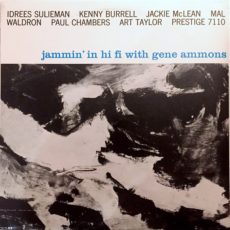
JAMMIN’ IN HI-FI WITH GENE AMMONS | By Eddie Carter
Submitted for your consideration this morning is a 1957 session led by tenor saxophonist Gene Ammons that’s one of the fine jam sessions Prestige released in the late Fifties. Jammin’ In Hi-Fi With Gene Ammons (Prestige 7110) brings the saxman together with a world-class sextet of musicians who would become leaders themselves and create some of the best music known as Hard-Bop. Idrees Sulieman on trumpet; Jackie McLean on alto saxophone; Kenny Burrell on guitar; Mal Waldron on piano; Paul Chambers on bass and Art Taylor on drums. My copy used in this report is the 1984 Mono reissue (Prestige Original Jazz Classics OJC-129 – P-7110).
The album opener is the first of two originals by pianist Mal Waldron, The Twister comes at you at medium speed, swinging from the opening notes of the septet’s melody. Gene leads off the solos cruising at a comfortable speed with plenty of imagination in each verse of the opening statement utilizing a few excerpts from Kerry Dance, Moose The Mooche, and 52nd Street Theme. Idrees follows with a bluesy reading stamped with a down-home, soulful flavor. Jackie takes the next solo enthusiastically building a series of foot-tapping excitement in each verse, then Kenny takes over making his presence felt on the next interpretation with a fine solo performance. Mal follows with a blues-rooted groove that flows smoothly. Paul solos impressively on a brief reading leading to an exchange of riffs between all three horns and Kenny into the ensemble’s closing coda.
Four by Miles Davis was written in 1954, making its first appearance on the ten-inch album, Miles Davis Quartet released that year. The septet’s version of the jazz standard takes an unusual journey after the collective theme treatment. Sulieman, Ammons, McLean, and Burrell take two choruses each in that order, then one chorus apiece twice, followed by a half-chorus each. Walton skillfully constructs three verses for a concise interpretation that are paced leisurely but stated explicitly. Taylor exchanges with the front line before the septet returns for the ending theme.
The 1936 popular song Pennies From Heaven by Arthur Johnston and Johnny Burke opens the second side. It serves as the title song for the film that year and starts with a slow-tempo duet between Gene and Kenny that expands into a pleasant midtempo melody. Ammons displays a powerfully rich sound on the opening statement, followed by Burrell who swings easily into a relaxing reading. McLean also weaves a sweet-toned delivery on the next solo. Sulieman delivers a soulful performance next on the muted horn, and Waldron explores some intriguing ideas on the closer preceding the tranquil climax.
The album closer is the second Waldron original, Cattin’, a funky blues that opens with a solo introduction by Paul that evolves into the septet’s opening chorus. Gene sets the tone first with a neatly paced stroll through the lead solo, then Kenny turns in a splendid performance. Idrees delivers a statement of informal casualness on the next solo, then Jackie gets your fingers popping and toes tapping with a soulful groove. Mal responds with a light, breezy interpretation of tasteful simplicity ahead of the septet’s return for the finale.
Fantasy has done an excellent job with the remastering of Mr. Van Gelder’s original recording. The album has an excellent soundstage with no harshness during the highs, midrange, and low end with the septet coming through your speakers as if they’re in your listening room. Jammin’ In Hi-Fi With Gene Ammons is a very pleasant, fun, and enjoyable LP that I’m sure will make a fine addition to any fan’s library who’s a fan of his, Hard-Bop or the jam session. In 1960, and 1964 for the second and third reissues, the album’s title was changed to The Twister!
~Kerry Dance, Moose The Mooche, 52nd Street Theme – Source: album liner notes by Ira Gitler ~Four, Miles Davis Quartet (Prestige PRLP-161); The Twister (Prestige PR-7176) – Source: Discogs.com ~Pennies From Heaven – Source: Wikipedia.org SynopsisJammin’ In Hi~Fi with Gene Ammons is an album by saxophonist Gene Ammons recorded on April 12, 1957 and released the same year on the Prestige label.
Track Listing | 50:12- The Twister (Mal Waldron) – 12:15
- Four (Miles Davis) – 13:02
- Pennies from Heaven (Johnny Burke, Arthur Johnston) – 13:02
- Cattin’ (Waldron) – 11:58
- Gene Ammons – tenor saxophone
- Idrees Sulieman – trumpet
- Jackie McLean – alto saxophone
- Mal Waldron – piano
- Kenny Burrell – guitar
- Paul Chambers – bass
- Art Taylor – drums
More Posts: choice,classic,collectible,collector,history,instrumental,jazz,music
Daily Dose Of Jazz…
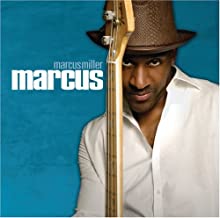
Marcus Miller, born William Henry Marcus Miller Jr. on June 14, 1959 in Brooklyn, New York and raised in a musical family. Classically trained as a clarinetist, he also plays keyboards, saxophone and guitar. He began to work regularly in New York City, eventually playing bass and writing music for jazz flutist Bobbi Humphrey and keyboardist Lonnie Liston Smith.
Spending 15 years as a session musician, he arranged and produced frequently, was a member of the Saturday Night Live band from 1979 to 1981, and co-wrote Aretha Franklin’s Jump To It along with Luther Vandross. He has played bass on over 500 recordings, appearing on over 500 albums by such artists as Herbie Hancock, The Crusaders, Wayne Shorter, McCoy Tyner, Frank Sinatra, George Benson, Michael Jackson, Beyoncé, Mariah Carey, Eric Clapton, Dr. John, Aretha Franklin, Elton John, Joe Walsh, Jean-Michel Jarre, Grover Washington Jr., Donald Fagen, Bill Withers, Bernard Wright, Kazumi Watanabe, Chaka Khan, LL Cool J, and Flavio Sala.
He won the Most Valuable Player award given by NARAS to recognize studio musicians three years in a row and was subsequently awarded Player Emeritus status and retired from eligibility. In the nineties, Miller began to write his own music and make his own records, putting a band together and touring regularly.
Between 1988 and 1990 he appeared regularly both as a musical director and as the house band bass player in the Sunday Night Band during two seasons of Sunday Night on NBC late-night television, hosted by David Sanborn.
As a composer, Miller co-wrote and produced several songs on the Miles Davis album Tutu, including its title track. He also composed Chicago Song for David Sanborn and co-wrote ‘Til My Baby Comes Home, It’s Over Now, For You To Love, and Power of Love for Luther Vandross and wrote Da Butt, which was featured in Spike Lee’s School Daze.
Miller hosts a jazz history show called Miller Time with Marcus Miller, is a film score composer, was nominated and won several Grammy Awards. Bassist Marcus Miller continues to perform, record and tour.
More Posts: bass,clarinetist,guitar,history,instrumental,jazz,keyboards,music,saxophone,vocal
Hollywood On 52nd Street
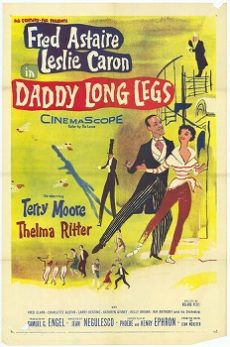
Something’s Gotta Give was composed by Johnny Mercer for his friend Fred Astaire who starred in the 1955 film Daddy Long Legs. It is the love song duet between him and Leslie Caron. The song playfully uses the irresistible force paradox – which asks what happens when an irresistible force meets an immovable object – as a metaphor for a relationship between a vivacious woman and an older, world-weary man. The man, it is implied, will give in to temptation and kiss the woman.
The film also stars Terry Moore, Thelma Ritter, Fred Clark, and Ray Anthony who appear as himself with his orchestra. Filming took place on location at 20th Century Fox Studios in Hollywood and the Andrew Carnegie Mansion in Manhattan.
The Story: On a trip to France, millionaire Jervis Pendleton III (Astaire) sees an 18-year-old girl Julie Andre (Caron) in an orphanage. Immediately enchanted with her, but mindful of the difference in their ages and what the press may report should his involvement be discovered, he anonymously sponsors her to attend a fictional college in New England. She writes him letters, which he doesn’t read. After 3 years, he goes to visit her at a dance, not telling her that he is her benefactor. They fall in love, but the usual movie-type difficulties get in the way before they can get together at the end.
