

Daily Dose Of Jazz…
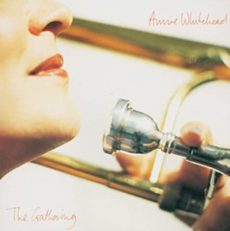
Annie Whitehead was born on July 16, 1955 in Oldham, Lancashire, England and learned the trombone in high school and participated in rock and jazz bands. At 16, she left school and became a member of a female big band led by Ivy Benson, playing with the band for two years before moving to Jersey.
Unhappy with the life of a musician, she quit music for almost six years, only to return in 1979 and start a ska band. Taking an interest in jazz again after moving to London two years later, Whitehead began performing in pubs. During the 1980s she toured with Brotherhood of Breath, a big band led by South African pianist Chris McGregor.
Over the course of her career, Annie has worked with …And the Native Hipsters, Blur, Carla Bley, Charlie Watts Orchestra, Jah Wobble, Jamiroquai, John Stevens, Penguin Cafe Orchestra, Smiley Culture, Spice Girls, and Working Week. She was a member of The Zappatistas, a Frank Zappa tribute band led by guitarist John Etheridge.
Trombonist Annie Whitehead, who has recorded five albums, her first, Mix Up in 1984 to The Gathering, her last in 2000, continues to compose and perform.

More Posts: bandleader,composer,history,instrumental,jazz,music,trombone
The Quarantined Jazz Voyager
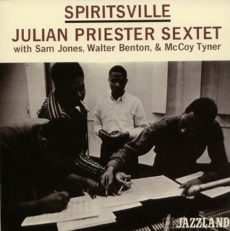
The Quarantined Jazz Voyager is choosing from the library the 1960 album coming from trombonist Julian Priester titled Spiritsville released on the Riverside subsidiary label Jazzland. It was recorded on July 12, 1960 at the Plaza Sound Studios in New York City and was produced by Orrin Keepnews.
The tracks include Chi-Chi (Charlie Parker) ~ 4:43; Blue Stride ~ 6:15; It Might As Well Be Spring (Richard Rodgers, Oscar Hammerstein II) ~ 5:47; Excursion (Walter Benton) ~ 5:42; Spiritsville ~ 7:31; My Romance (Rodgers, Lorenz Hart) ~ 5:50; and Donna’s Waltz ~ 5:32
The personnel brought in for this recording session were: Julian Priester ~ trombone, Walter Benton ~ tenor saxophone (tracks 1, 2 & 4-7), Charles Davis ~ baritone saxophone (tracks 1, 2 & 4-7), McCoy Tyner ~ piano, Sam Jones – bass, and Art Taylor ~ drums.
Remain diligent my fellow voyagers in staying healthy, continue to practice social distancing, and don’t be so anxious to rush back to the new normal. It has been said that music soothes the savage beast, so listen to great music. I share that music to give you a little insight into the choices this voyager has made over the years of collecting during this sabbatical from jet setting investigations of jazz around the globe.
More Posts: adventure,club,genius,jazz,museum,music,preserving,restaurant,travel,trombone,voyager

Daily Dose Of Jazz…
Michael Arlt was born in Bünde, Westfalen, Germany on July 1, 1960 and began playing guitar as a teenager. From the beginning, he was interested in a musical gamut, playing in rock, blues, fusion, and free bands. Going to Boston, Massachusetts in the mid-Eighties, he studied at Berklee College of Music, took private lessons from Mike Metheny, and then continued his studies in the Netherlands at the Amsterdam Academy of Arts under Wim Overgaauw.
Since that time, Michael has performed in a variety of ensembles with musicians like Maria de Fatima, Jerry Granelli, Sigi Busch, Rick Hollander, Leszek Zadlo, Wolfgang Ekholt, Joris Teepe, Paquito D’Rivera, Herbert Joos, and Luciano Biondini. He has recorded with Roman Schwaller, Houston Person and Red Holloway. He founded his own trio and the group Brassless with who he recorded. With Don Kostelnik and Duck Scott he forms the organ trio We Three who recorded several albums.
Arlt has been a part of the Lemongrass and Weathertunes music projects, which were founded by the brothers Roland and Daniel Voss. Since the late 1990s, Arlt has been playing with Rick Hollander, in the trio of Reinette van Zijtveld and in a duo with Christian Eckert. As a lecturer, he has taught jazz guitar and harmony at the University of Music in Würzburg since 1990. Guitarist Michael Arlt continues to explore and perform in the genre. of modern jazz.
More Posts: bandeader,guitar,history,instrumental,jazz,music

Daily Dose Of Jazz…
Ken Hyder was born on June 29, 1946 in Dundee, Scotland. He began playing jazz in Scotland before moving south to London, England where he played at the legendary Little Theatre Club – an avant-garde haunt run by the late John Stevens.
For over 40 years Hyder has been playing and composing music and has produced more than three dozen albums of original material. He formed the group Talisker and recorded six albums with this pioneering and proto-type Celtic jazz group. He has recorded with Elton Dean, Chris Biscoe, Tim Hodgkinson, Paul Rogers, Maggie Nicols, Don Paterson, and Frankie Armstrong.
The 1970s saw him moving away from jazz and into collaborations with musicians from different musical backgrounds including Irish, South African and South American players. Later, he became interested in exploring spiritual aspects of music with spiritual practitioners like Tibetan and Japanese Buddhist monks, and Siberian shamans.
Ken combines folk, ethnic and Celtic music with jazz. He has worked and recorded with Dick Gaughan, Vladimir Rezitsky, Phil Minton, Lindsay L. Cooper, Sainkho Namtchylak, Jo’burg Hawk, Marcio Mattos, Jim Dvorak, John Edwards, Dave Webster, John Rangecroft, Radik Tyulyush, Julian Bahula, Lucky Ranku, Larry Stabbins, Harry Beckett, Art Themen, Gary Windo, Pete McPhail, Keith Tippett, Harry Miller, Nick Evans, Raymond Macdonald, Ntshuks Bonga, Hamish Henderson, Jon Dobie, and Lello Colombo.
Fusion drummer and percussionist Ken Hyder continues with his current projects that include K-Space, with Tim Hodgkinson and Gendos Chamzyryn; Hoots and Roots with Scottish singer Maggie Nicols; RealTime with z’ev, Andy Knight and Scipio; Raz3 with Hodgkinson and Lu Edmonds; A revived Talisker, with Nicols and Raymond MacDonald and a duo with pianist Vladimir Miller.
More Posts: bandleader,drums,history,instrumental,jazz,music,percussion
Daily Dose Of Jazz…
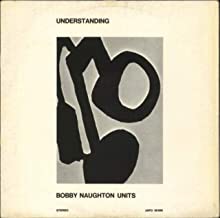
Robert Naughton was born on June 25, 1944 in Boston, Massachusetts. He studied piano from the age of seven through his teens, playing in rock bands and lounge bands.
After serving in the U.S. Army, Naughton started playing organ with a blues band. Following this period he studied painting in art school, then in the 1960s vibraphone became his instrument in the 1960s he was accompanying Sheila Jordan and Perry Robinson.
In 1969 Bobby recorded for the first time, releasing music on his label, Otic, and five more through 2002 as a leader. He composed the score for the silent film Everyday by German artist Hans Richter. In 1972 he played in the Jazz Composers Orchestra. Beginning a year later working with Wadada Leo Smith he recorded several albums through the 1980s. From 1978 to 1982 he toured and recorded with Anthony Braxton, Roscoe Mitchell, the Creative Music Orchestra, and the Creative Improvisers Orchestra.
Vibraphonist Bobby Naughton, who plays fluently with four sticks, exploits the instrument’s overtones and sometimes controls manually the instrument’s vanes continues to perform and record.
More Posts: bandleader,history,instrumental,jazz,music,organ,piano,vibraphone