


Daily Dose Of Jazz…
John Hollenbeck was born June 19, 1968 in Binghamton, New York and earned degrees in percussion and jazz composition from the Eastman School of Music. He moved to New York City in the early 1990s. He has worked with Bob Brookmeyer, Fred Hersch, Tony Malaby, the Vanguard Jazz Orchestra, Kenny Wheeler, Pablo Ziegler, and Meredith Monk.
In 1998, he composed The Shape of Spirit, a piece for wind ensemble on Mons Records. The following year he composed Processional and Desiderata for wind ensemble and orator. This composition, written for and featuring the voice and trombone of Bob Brookmeyer, was released on Challenge Records in 2001.
Hollenbeck went on to receive several commissions from the Bamberg Choir and the Windsbacher Knabenchor in Germany, Bang on a Can, the People’s Commissioning Fund, the IAJE Gil Evans Fellowship, and in addition he composed and performed the percussion score to the following Meredith Monk works: Magic Frequencies, Mercy and The Impermanence Project.
His 2000 debut release Static Still with Theo Bleckmanne began his recording as a leader and in 2001 his sophomore project No Images landed on Gary Giddins’ Village Voice Top Ten list. He has gone on to record nine more albums to date as a leader and nine albums with the Claudia Quintet.
Drummer John Hollenbeck, who was an eleven year professor of jazz drums and improvisation at the Jazz Institute Berlin and in 2015 joined the faculty of Schulich School of Music, continues to perform.

More Posts: bandleader,drums,educator,history,instrumental,jazz,music
Daily Dose Of Jazz…
Oscar Feldman was born on June 12, 1961 in Cordoba, Argentina listening to his father’s jazz collection. He attended Conservatorio Provincial de Musica and was soon part of the prominent music scene in his hometown, becoming a founding member of acclaimed band Los Musicos del Centro.
Beginning in 1979 when he was 19 Oscar accepted an invitation to join bandoneonist Hermeto Pascoal and Dino Saluzzi to join his group. Moving to Buenos Aires, Argentina his career took off and he became a sought after studio musician. He recorded more than 40 albums as a sideman and toured with Argentina’s most prominent artists. Winning the Outstanding Performance Award as the Best Soloist in Fusion in 1986, he went on to procure the Achievement Scholarship Award from Berklee College of Music and graduated cum laude in 1995 with a Major in Professional Music.
Realizing he could bridge two worlds he joined Dizzy Gillespie’s United Nations Orchestra conducted by Paquito D’ Rivera. Moving to New York City his reputation grew as a versatile musician, and worked with Al Di Meola, Eumir Deodato, Jeff Tain Watts, Avantango, Alex Acuna, Bebo Valdes and His All Star Latin Jazz Band. He toured and performed across the United States, Europe and Africa.
As a leader Feldman has led numerous tours Horacio Negro Hernandez, Alex Acuna, Dave Samuels, Otmaro Ruiz and Tom Kennedy. As an educator he is currently on the faculty at the New York Jazz Academy, has taught workshops and clinics at Berklee College of Music in Boston, Massachusetts. He leads his own music jam classes weekly in New York and has written an article for Down Beat Magazine.
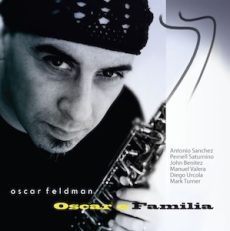
By the end of the 1990’s he recorded his debut as a leader El Angel on the Songosaurus record label. For his sophmore ten track album Oscar e Familia was released in 2009 on Sunnyside, he put together a Pan-American cast of Mexican drummer Antonio Sanchez, Cuban pianist Manuel Valera, Puerto Rican bassist John Benitez and Curacao percussion master Pernell Saturnino.
Alto saxophonist and composer Oscar Feldman. known for his splendid tonalities and melodically outstanding charts, continues to transcend his musical horizons.
More Posts: bandleader,composer,history,instrumental,jazz,music,saxophone
Requisites
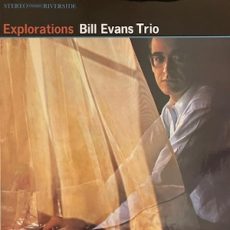
Explorations ~ Bill Evans Trio | By Eddie Carter
My admiration for Bill Evans runs very deep, and I have cherished the pianist’s music since childhood. This morning’s selection from my library holds a special place in my heart. It was one of my mom’s favorites during our Sunday family dinners. Explorations (Riverside RLP 351/RLP 9351) by the Bill Evans Trio is a 1961 release and one of four outstanding albums featuring Scott LaFaro on bass and Paul Motian on drums. Its timeless charm makes it an essential addition for any jazz piano lover. I could stop here, but I won’t leave you with just a small taste; instead, I’ll share the entire eight-course meal with you. My copy is no. 843 of the 2024 U.S. Craft Recordings stereo audiophile reissue (Riverside CR 00825).
Israel by John Carisi opens the album, setting the tone for the trio’s introduction and medium melody. Bill solos first with a cheerfully carefree groove. Scott adds his voice to a lighthearted reading that flows like a lovely stream. Bill returns to exchange notes with Paul before a marvelous conclusion. Haunted Heart is a gorgeous tune by Howard Dietz and Arthur Schwartz that begins with Evans’s brief, poignant introduction blossoming to the ensemble’s deeply touching theme. Bill takes center stage as the soloist, delivering each verse with grace and sensitivity, matched by Scott and Paul’s subtle support into a gentle climax.
Beautiful Love, by Haven Gillespie, Wayne King, Egbert Van Alstyne, and Victor Young, presents the trio with a delightful opportunity to pay homage to the 1930s classic at a toe-tapping beat during the melody. Bill’s respect for the original composition is evident in a joyful opening solo, followed by Scott’s inspired walk in the subsequent reading, leading to the closing chorus and exit. The trio treats Earl Zindars’s Elsa with endearing care, crafting an opening chorus that sparkles like a night on the town with that special someone. Bill guides each note of the first solo elegantly. Paul follows with a soothing and refined performance, preceding a tender reprise of the theme.
Side Two opens with an enchanting rendition of Nardis, one of Miles Davis’s prettiest compositions that Bill initially recorded with Cannonball Adderley. The trio’s pretty theme sets things in motion. Scott takes the lead with an elegant opening statement. Bill then shares his intimate, sincere thoughts in the second solo, leading to a gorgeous reprise and conclusion. The trio probes one of Irving Berlin’s loveliest questions next, How Deep Is The Ocean? They swing softly in a luscious melody. Again, the song’s only soloist, Bill’s interpretation is the epitome of grace and beauty, preceding a beautiful closing chorus that showcases their musical fluency and understanding of each other’s playing.
I Wish I Knew, by Mack Gordon and Harry Warren, is a beautiful ballad from the 1940s. The ensemble introduces it at a gentle, unhurried tempo, leading to the theme. Bill offers a serene and heartfelt interpretation that concludes in a tender finale by the trio. Sweet and Lovely by Gus Arnheim, Jules LeMare, and Harry Tobias is pure fun from start to finish. After the trio’s melody, Bill begins a solo that evolves from a quiet, spoken tone to a playful and spirited one. The pianist and drummer engage in a brief dialogue before Paul delivers a concise solo that ties everything together, leading back to the theme’s reprise and a delightful conclusion.
Orrin Keepnews was at the helm of Explorations, Bill Stoddard was the recording engineer, and Jack Matthews mastered the initial session. Bernie Grundman mastered the reissue from the original tapes. The record is pressed on 180-gram vinyl, using Neotech’s VR900 vinyl compound, and manufactured using a one-step lacquer process. The sound quality of this reissue is exceptional, offering an impressive soundstage that brings the musicians to your listening room with stunning fidelity. This limited-edition box set is 2,500 copies, each individually numbered and presented in a foil-stamped, linen-wrapped slipcase featuring an acrylic inset of the original artwork. The record is protected by an archival-quality, anti-static, non-scratching inner sleeve.
Explorations marked Bill Evans’s final studio collaboration with Scott LaFaro. He was a brilliant hard-bop bassist, admired and celebrated for his playing of uptempo tunes or ballads. His contributions brought an outstanding level of sophistication, maturity, and precision to the four albums he recorded with The Bill Evans Trio. Tragically, just ten days after the trio’s 1961 performance at the Village Vanguard, LaFaro’s life was cut short due to a car accident. This devastating loss deeply affected Evans, who withdrew from live performances and recording for several months. If you’re discovering his music or are already a Bill Evans fan, I urge you to listen to Explorations by the Bill Evans Trio at your earliest opportunity. It’s an outstanding showcase of jazz that I can’t recommend enough for your library!
~ Portrait In Jazz (Riverside RLP 12-315/RLP 1162), Portrait of Cannonball (Riverside RLP 12-269), Sunday at The Village Vanguard (Riverside RLP 376/RLP 9376), Waltz For Debby (RLP 399/RLP 9399) – Source: Discogs.com
~ How Deep Is The Ocean, Sweet and Lovely – Source: JazzStandards.com
~ Beautiful Love, Israel, Nardis – Source: Wikipedia.org
© 2025 by Edward Thomas Carter
More Posts: choice,classic,collectible,collector,history,instrumental,jazz,music,piano
Daily Dose Of Jazz…
Hilaria Kramer was born on June 1, 1967 in Frauenfeld, Switzerland and began playing the trumpet when she was ten years old. Beginning in 1983 she attended the vocational school department of Jazz School St. Gallen, where she studied under Benny Bailey and Art Lande.
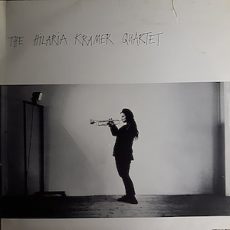
After graduating she went on to work in Italy with the Claudio Fasoli Quintet, with Gianluigi Trovesi. She performed with Steve Lacy, Enrico Rava, Joe Henderson, Bob Mover, Sal Nistico, Chet Baker and Sangoma Everett. 1988 saw her recording her debut album leading her own quartet. The album was released in the spring of the following year on Unit Records.
1991 had Hilaria performing on the TV program Ladies in Jazz with singers Nina Simone and Carmen McRae. Over the next few years, she performed with Uli Scherer in Vienna and also toured around Europe.
In 2014, Kramer was awarded the Jazz Prize of the Fondation Suisa for her services as a musician, composer and band leader as well as her work in various organizations that support Swiss jazz.
Trumpeter and composer Hilaria Kramer, who has a discography of eighteen albums as a leader and sidewoman, continues to record, perform and tour.
More Posts: bandleader,composer,history,instrumental,jazz,music,trumpet
Requisites
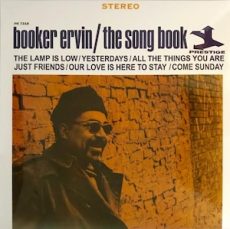
The Song Book ~ Booker Ervin | By Eddie Carter
In February 1964, tenor saxophonist Booker Ervin recorded an album of standards. The Song Book (Prestige PRLP7318/PRST 7318) is a quartet session featuring Tommy Flanagan on piano, Richard Davis on bass, and Alan Dawson on drums. My copy is the 2023 Analogue Productions stereo audiophile reissue matching the original catalog number. The album opener, The Lamp Is Low by Peter de Rose, Mitchell Parish, Maurice Ravel, and Bert Shefter, kicks off the quartet’s melody at a fast gallop. Booker wails with remarkable energy, then Tommy rips down the road next. Richard follows suit with a brisk walk, and Alan goes to work last, preceding the ending theme and fadeout.
The quartet brings a profound emotional depth to Duke Ellington’s Come Sunday. Tommy’s gentle introduction sets the mood for Ervin’s warm tone, tenderly embracing the theme. Flanagan shines as the song’s lone soloist, delivering sweet moments of beauty matched by the rhythm section’s serene accompaniment, leading up to the leader’s soft conclusion. All The Things You Are by Oscar Hammerstein II and Jerome Kern picks up the beat for the quartet’s lively melody. Booker goes right to work on the opening statement and is consistently inventive and entertaining. Tommy swings effortlessly into the spotlight next with a spirited solo before the theme’s restatement dissolves gradually.
Just Friends by John Klenner and Sam M. Lewis begins the second side on an upbeat note, with Flanagan’s introduction leading to the quartet’s opening theme. Ervin blazes the trail with a commanding performance, then Flanagan delivers the song’s second message with authority. Davis completes the proceedings with a concise comment leading to a charming conclusion. Yesterdays by Otto Harbach and Jerome Kern opens with a tender piano introduction ahead of the saxophonist’s beautiful melody. Tommy takes the first turn with an emotionally rich, heartfelt interpretation, then Booker blends nostalgia and sentiment flawlessly until the theme’s gentle reprise and serene ending.
Our Love Is Here To Stay by George and Ira Gershwin picks up the pace one final time for the foursome’s lively melody. Ervin takes hold of the first spot swiftly, then Flanagan swings effortlessly into the following reading. Davis provides the exclamation point propelled by the rhythm section’s brisk supplement, ahead of the group’s upbeat exit.
Don Schlitten produced The Song Book, and Rudy Van Gelder was the recording engineer. Kevin Gray mastered the audiophile reissue, and the album’s sound quality is mesmerizing, placing the musicians in front of the sweet spot. The record was pressed on 180 grams of audiophile vinyl and is quiet as a church mouse until the music starts.
Booker and the rhythm section bring each track to life with genuine emotion, and approach each song with heartfelt affection, showcasing a profound admiration for the melodies of these cherished standards. If you’re a fan of hard bop and haven’t acquired an earlier pressing yet, please make a note to add The Song Book by Booker Ervin to your list on your next record hunt. This Analogue Productions reissue beautifully celebrates the timeless treasures of The Great American Songbook and undoubtedly deserves a place in every jazz fan’s library!
~ All The Things You Are, Come Sunday, Just Friends, Love Is Here To Stay – Source: JazzStandards.com
~ The Lamp Is Low, Yesterdays – Source: Wikipedia.org
© 2025 by Edward Thomas Carter
More Posts: choice,classic,collectible,collector,history,instrumental,jazz,music,saxophone