

Daily Dose Of Jazz…
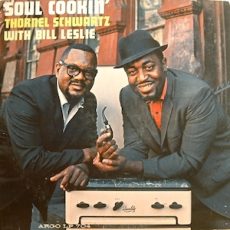
Thornel Schwartz Jr. was born on May 29, 1927 in Philadelphia, Pennsylvania. He attended the Landis Institute for piano, but became known as a jazz guitarist starting in the 1950s. He was Freddie Cole’s guitarist early in the decade, then worked with Jimmy Smith and Johnny Hammond Smith later in the decade.
The 1960s saw Schwartz recording with Larry Young, Jimmy Forrest, Charles Earland, Byrdie Green, Sylvia Syms and extensively with Jimmy McGriff. In the 1970s he recorded with Groove Holmes.
Though he is known as Thornel on recordings and standard jazz reference works, having recorded one album as a leader and twenty-six as a sideman, his name is spelled Thornal on his social security application, as is his father.
Electric guitarist Thornel Schwartz Jr., who played on the recordings of many Philadelphia jazz musicians, especially electronic organ players, died on December 30, 1977 in his hometown.

More Posts: guitar,history,instrumental,jazz,music
Daily Dose Of Jazz…
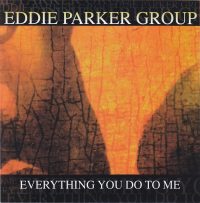
Eddie Parker May 28, 1959 in Liverpool, England. A founding member of and composer for the British jazz band Loose Tubes in the 1980s. He has toured and performed with several noted bands and performers including Bheki Mseleku, Marvin Smith and John Parricelli. He has toured with the band Mister Vertigo, of which Parricelli is also a member, and conducts jazz workshops and performances involving young musicians. He was a lecturer in jazz at Middlesex University, where his students included Led Bib.
As a leader he has recorded three albums, a half doen with Loose Tubes and as a sideman he has recorded eight with Django Bates, A Man Called Adam, Keziah Jones, Oumou Sangare, Trevor Walters, and Mseleku.
Flutist and composer Eddie Parker continues to play keyboards during workshops and live performances.
More Posts: composer,flute,history,instrumental,jazz,keyboard,music
On The Bookshelf
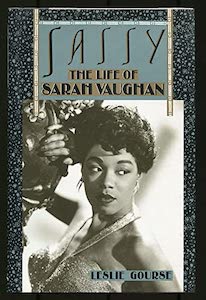
SASSY: THE LIFE OF SARAH VAUGHAN | LESLIE GOURSE
This is a vivid, intimate portrait of one of the most extraordinary voices in American music. In this definitive biography, acclaimed jazz chronicler Leslie Gourse brings to life the woman behind the legend— a vocal genius whose range, tone, and effortless improvisation changed the sound of jazz forever.
Born in Newark, New Jersey on March 27, 1924, Sarah Vaughan began her musical journey in the pews of Mount Zion Baptist Church, where she played organ and sang in the choir. By her early twenties, she was performing alongside jazz revolutionaries like Dizzy Gillespie, Charlie Parker, and Billy Eckstine—helping shape the very fabric of bebop and setting a new standard for vocal jazz.
A look behind the glamorous performances was a woman navigating a life as complex as her music: three turbulent marriages, financial upheavals, and a nightlife fueled by passion, excess, and resilience. Yet Vaughan remained grounded, driven by an unwavering dedication to her family and her art. Her voice is rich, operatic, and fearlessly expressive, defying genre boundaries, earning her acclaim in both jazz and pop and elevating her to the rare status of jazz’s only diva.
Gourse draws upon candid interviews with those who knew her best, revealing a fiercely talented, deeply human artist, unpretentious, hard-working, and ultimately triumphant.
Daily Dose Of Jazz…
Rich Lamb was born on May 27, 1954 in New York City where he learned his bass craft. By the turn of the 1980’s he co-founded the jazz fusion band, Dry Jack, and gained worldwide recognition with his brother pianist Chuck Lamb, guitarist Rod Fleeman and drummer Jon Margolis. The group was listed as part of the new wave of fusion in Rolling Stone Magazine’s History of Rock `n’ Roll.
With Dry Jack he performed with vocalist Eddie Jefferson and avant garde saxophonist Richie Cole. They opened shows for Pat Metheny, The Dixie Dreggs, Gino Vinelli, Freddie Hubbard and McCoy Tyner among many others. He played with trumpeter Dave Douglas inthe mid eighties.
Moving from New York to Colorado in 1989, Rich has been performing with Brazilian drummer Claudio Sloan and Hammond B3 Pat Bianchi. In 1992 he played in concert with saxophonist Ernie Watts and Ed Summerlin recorded at the Deer Mountain Jazz Festival in South Dakota, as well as performing there with saxophonist Hank Crawford.
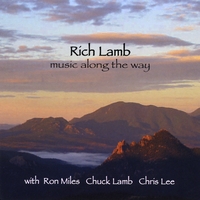
He performs with Hazel Miller, has subbed several times on the nationally syndicated radio program E Town. As a composer and first time as a leader, Lamb released his debut album, Music Along The Way. This is an improvisational collection of his music written during his performing career.
Bassist Rich Lamb currently freelances and plays his upright bass with pianists Pat Bianchi, Geoff Cleveland, Eric Moon, Dana Marsh and Bill Unrau.
Daily Dose Of Jazz…
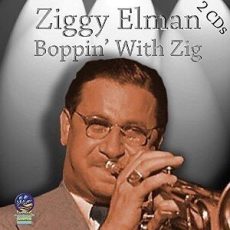
Ziggy Elman was born Harry Aaron Finkelman on May 26, 1914 in Philadelphia, Pennsylvania. but his family settled in Atlantic City, New Jersey when he was four. His father was a violinist who had hoped he would play violin and although he did learn to play violin, he preferred brass instruments. He began playing for Jewish weddings and nightclubs at age 15.
In 1932, made his first recording, playing the trombone. In 1936, he joined the Benny Goodman orchestra as a trumpeter, after playing briefly with a band led by Alex Bartha at Steel Pier in Atlantic City, where Goodman heard him. In 1938, while with Goodman, he got a contract with Bluebird, RCA’s cheaper label, to record 20 sides as Ziggy Elman and his Orchestra, although all the members were in Goodman’s band.
One original tune was Frailach in Swing, based on a 1918 recording of Der Shtiller Bulgar (The Quiet Bulgar) by Abe Schwartz. During the first half of 1939, Benny Goodman and His Orchestra was featured on the Camel Caravan radio show, with singer and songwriter Johnny Mercer as singer, writer of speciality numbers, and announcer. After leaving Goodman in 1940, Elman joined Tommy Dorsey and stayed until he was drafted in 1943. After he was discharged in 1946, he re-joined Dorsey for another year.
In 1956, he was asked to recreate a klezmer solo with the vocalist Martha Tilton for the movie, The Benny Goodman Story, but was unable to, his technique having since withered away. Elman appeared performing it in the film, but another trumpeter, Mannie Klein, played the solo on the soundtrack.
By the 1950s, the music had changed. Big bands had declined and for a time he switched to entertainment work. In this decade he appeared in films mostly as himself. In 1956 he had a heart attack, curtailing his music career. By the end of the 1950s he was financially ruined, and had to work for a car dealership. In 1961, it was revealed at an alimony hearing that he was virtually bankrupt. He later worked in a music store and gave trumpet lessons.
Trumpeter Ziggy Elman died of liver failure on June 26, 1968 at the age of 54 and was buried at Mount Sinai Memorial Park Cemetery in Los Angeles, California.
More Posts: history,instrumental,jazz,music,trumpet