

Daily Dose Of Jazz…
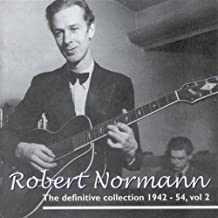
Robert Uno Normann was born on June 27, 1916 in Borge, Østfold, Norway. An autodidact performer on the banjo, accordion and tenor saxophone, he would eventually make the guitar as his main instrument. He was one of the swing era’s most sought after guitar soloists in Norway and was also a pioneer of the electric guitar.
He began his musical career as a wandering street and backyard musician at age 12 and became a professional musician in 1937. As a part of the Oslo jazz scene, he performed in several swing jazz groups, Freddy Valier, String Swing, and Gunnar Due. He simultaneously led his own quartet. During this period he played tenor saxophone with the Pete Brown Big Band from 1945 and various random jazz groups such as Frank Ottersen, and Willy Andresen. He got several career offers from international artists, including from Benny Goodman and Barney Kessel, that he turned down.
He never listened to recordings by Django Reinhardt but got his inspiration from listening to Teddy Wilson and Leon Chu Berry, and various accordionists. From 1955, he was less active in the jazz context because of significant alcohol problems. As a studio musician, Robert participated in close to 1300 productions, composed music to multiple folk texts, film, theater, and small pieces of music inspired by jazz and traditional Norwegian folk music.
Normann retired as an active musician in 1982 and devoted his time to small scale farming and inventions. Guitarist and jazz guitar pioneer Robert Normann, who made his first electric guitar in 1939 by constructing a pickup of copper wire, magnets and pitch stolen from public phones, passed away at the age of 81 on May 20, 1998 in Kvastebyen, Sarpsborg, Østfold, Norway.
More Posts: accordion,bandleader,banjo,guitar,history,instrumental,jazz,music,tenor saxophone
Daily Dose Of Jazz…
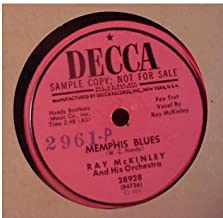
Ray Mckinney was born Raymond Patterson McKinney on June 20, 1931 in Detroit, Michigan. He was the fourth of ten children artistically gifted, and most of the children took music lessons from their mother. Starting on the Ocarina, he soon graduated to the piano, then the cello which he took to the instrument immediately. His father and English teacher encouraged him to write poetry and he became quite proficient.
During his high school years that Ray was first exposed to jazz, hearing Ella Fitzgerald with Chick Webb in 1939, also Erskine Hawkins and Jay McShann when he had Charlie Parker with him. Music in the neighborhood, there were bands made up of youngsters who played homemade instruments, such as, pails, brushes, spoons and it was where Ray learned that he only needed himself to make music.
The band director at Northwestern High School forced him to switch from cello to bass. Academically gifted, he was determined to be heard above the Northwestern band, he developed his technique. His passion for music consumed his time and he quit school in 1947 at age sixteen. He was spending time with like-minded students and other aspiring musicians from his west-side neighborhood, Maurice Wash, Claire Rockamore, Barry Harris, and Frank Foster. It was where he developed stamina, playing twelve, eighteen hours at a time. McKinney and Harris worked local jobs backing a vocal group in which Harris’ wife Christine was a member. This group recorded at least twenty titles for the New Song label in 1950.
Ray became a force to be reckoned with on the competitive Detroit scene and he worked with several Detroit piano stars. Though he liked bassists Alvin Jackson, Clarence Sherrill and Major “Mule” Holley, his major influences were Ray Brown, Oscar Pettiford, Tommy Potter and Dillon “Curly” Russell. He befriended Paul Chambers and his cousin Doug Watkins, because their playing impressed him, especially Paul’s bowing.
In 1956 he moved to New York City with harpist Dorothy Ashby’s group, however, the gig didn’t last long when Ray was fired after punching Ashby’s husband in the face during an argument. He would go on to work with Guy Warren, Barry Harris, Ben Webster, Edmund Hall, Max Roach, Walter Benton, Booker Little, Julian Priester, Coleman Hawkins, Mal Waldron, Eric Dolphy, Red Garland, Yusef Lateef, Andy Bey and spent a year with comic Nipsey Russell’s back-up band.
For a short time he experimented with heroin but by 1973 McKinney was clean and living in Oberlin, Ohio and with a new love interest before settling in San Diego, California in 1974. With not much jazz happening he took up a series of day jobs for the next four years while continuing to create poetry.
His precarious health and his lack of insurance caused his friends concern and made his last years were unsteady. He received a special Lifetime Achievement award during Baker’s Keyboard Lounge 70th anniversary celebration in 2004. It was one of his final public appearances. Bassist Ray McKinney passed away on August 3, 2004, aged 73 in San Diego.
More Posts: bandleader,bass,history,instrumental,jazz,music
Daily Dose Of Jazz…
Rudy Rutherford was born Elmer H. Rutherford on June 18, 1924 in Huachuca City, Arizona. He began performing in the early 1940s with Lionel Hampton and Count Basie. Initially taking Jack Washington’s place in Basie’s orchestra as a baritone saxophonist, once Washington returned from military service, he switched to alto saxophone.
1947 saw Rudy moving to Teddy Buckner’s band, though he continued working with Basie into the early 1950s. He worked with Wilbur De Paris late in the 1950s and appeared with Chuck Berry at the Newport Jazz Festival in 1958. He would record with Dicky Wells, Dinah Washington and Lurlean Hunter.
In the 1960s he worked with Buddy Tate and spent several years with Earl Hines in the mid-1970s. Saxophonist and clarinetist Rudy Rutherford, who worked with Illinois Jacquet in the 1980s and was active in performance until his death, passed away on March 31, 1995 in New York City.
More Posts: clarinet,history,instrumental,jazz,music,saxophone
Daily Dose Of Jazz…
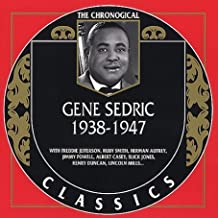
Gene Sedric, born Eugene Hall Cedric on June 17, 1907 in St. Louis, Missouri into a family where his father played ragtime piano. He played with Charlie Creath in his hometown and then with Fate Marable, Dewey Jackson, Ed Allen, and Julian Arthur.
Joining Sam Wooding’s Orchestra in 1925 he toured Europe with him until 1931 when the unit dissolved. During his time in Europe he recorded with Alex Hyde. When he returned to New York City he played with Fletcher Henderson and Alex Hill, before joining Fats Waller’s Rhythm in 1934, where he remained to 1942. When Waller went on solo tours Sedric found work gigging alongside Mezz Mezzrow in 1937 and Don Redman from 1938 to 1939).
Sedric put together his own group in 1943, prior to playing with Phil Moore in 1944 and Hazel Scott in 1945. He put together another ensemble from 1946–51, playing in New York City. His later associations through the late 1940s into the early 60s include time with Pat Flowers, Bobby Hackett, Jimmy McPartland, Mezzrow again, Conrad Janis, and Dick Wellstood. He recorded sparingly as a leader in 1938, 1946, and with Mezzrow in 1953.
Clarinetist and tenor saxophonist Gene Sedric, who acquired the nickname “Honey Bear” in the 1930s because of his large camel hair coat, passed away on April 3, 1963 in New York City.
More Posts: bandleader,clarinet,history,instrumental,jazz,music,saxophone
Daily Dose Of Jazz…
John Joseph Harold Holmes, better known in the music world as Johnny was born in Montreal, Canada on June 8, 1916. He began playing cornet at 10 and studied briefly with C. Van Camp. After playing trumpet for a year in 1940 in a co-operative band, the Esquires, he took over its leadership from 1941 to 19.50.
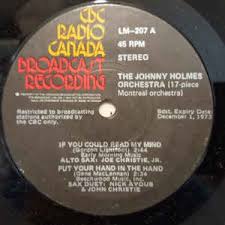
After establishing the Johnny Holmes Orchestra they played Saturday nights at Victoria Hall in Montreal that was broadcast on CBC radio. They occasionally toured in Quebec and Ontario. One of Montreal’s leading dance bands of the day, it boasted a healthy jazz quotient and benefited from Holmes’ ability to identify talented younger musicians. At various times his sidemen included Nick Ayoub, Al Baculis, Percy and Maynard Ferguson, pianist Bud Hayward, Art Morrow, and Oscar Peterson. Lorraine McAllister and Sheila Graham, in turn, sang with the band.
Holmes retired from music from 1951 to 1959 but was heard 1959 to 1969 on several CBC radio shows including The Johnny Holmes Show, Broadway Holiday, among others. His orchestras made several broadcast recordings between 1966 and 1973 for the CBC’s LM series and continued to perform periodically until his retirement from music in 1978. One edition without saxophones took the name Brass Therapy.
He wrote numerous arrangements for his orchestra and his radio shows, more than 40 songs, and such extended works as The Fair City, a jazz suite dedicated to Expo 67. Trumpeter, bandleader, arranger, and composer Johnny Holmes, who has no known recording on line, passed away on June 11, 1989 in Montreal.
More Posts: arranger,bandleader,composer,history,instrumental,jazz,music,trumpet