


Daily Dose Of Jazz…
Peter Herbolzheimer was born on December 31, 1935 in Bucharest, Romania and migrated from communist Romania to West Germany in 1951.Two years later he moved to the United States, settling in Michigan and enrolled in Highland Park High School in the graduating class of 1954. There, he was a staple in the musical choral groups and orchestra, and accompanied several groups on guitar who often performed for various organisations and corporate functions around the Detroit area.
Returning to Germany in 1957 he took up the valve trombone, playing in numerous jazz cellar open mic groups. Peter attempted to return to Michigan, but his visa was denied, so for one year he studied at the Nuremberg Conservatory. In the Sixties he played with the Nuremberg radio dance orchestra and with Bert Kämpfert’s orchestra. He went on to play in the pit orchestra of Hamburg theater, then formed his Rhythm Combination and Brass for which he wrote most of the arrangements.
This big band had an international lineup of eight brass with saxophonist Herb Geller, Allan Botschinsky, Art Farmer, Dusko Goykovich, Palle Mikkelborg, Ack van Rooyen and Jiggs Whigham. The rhythm section had Dieter Reith, Philip Catherine, Niels-Henning Ørsted Pedersen, Bo Stief, Alex Riel, Grady Tate, and Nippy Noya. In the late 1970s the band toured successfully with a “jazz gala” program featuring guest stars such as Esther Phillips, Stan Getz, Nat Adderley, Gerry Mulligan, Toots Thielemans, Clark Terry, Albert Mangelsdorff, Dianne Reeves and Chaka Khan.
The Seventies and Eighties had Herbolzheimer writing music for the opening of the 1972 Olympic Games in Munich, won the International Jazz Composers Competition 1974 in Monaco and was the arranger and conductor and led his orchestra for virtually every major German television network and accompanied visiting American musicians such as Ella Fitzgerald, Benny Goodman, Sammy Davis, Jr., Dizzy Gillespie and Al Jarreau.
Between 1987 and 2006 he was the musical director of Germany’s national youth jazz orchestra, the Bundes Jazz Orchester, conducted regular workshops and clinics for big band jazz and was chosen as the music director, arranger and conductor of the European Jazz Band, which toured throughout Europe until 2009. Trombonist and bandleader Peter Herbolzheimer passed away at age 74 in Cologne, Germany on March 27, 2010.

More Posts: trombone
Daily Dose Of Jazz…
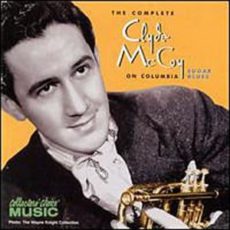
Clyde Lee McCoy was born on December 29, 1903 in Louisville, Kentucky into one of the families in the Hatfield-McCoy feud. He begun mastering the trumpet when he was without formal instruction, after the family moved to Portsmouth, Ohio in 1912. This would lead to performing regularly at church, school affairs and on the Cincinnati riverboats five years later, becoming one of the youngest musicians on the river at age 14.
In 1920 he auditioned with an untried band for a gig at the Whittle Hotel and Spa in Knoxville, Kentucky. Approved by the owner and the patrons the two week job lasted two months and the Clyde McCoy Orchestra was officially launched. In Chicago, Illinois he performed his song Sugar Blues at the Drake Hotel in 1930 and his solo rendition of the song would garner him national radio exposure for the band and a recording contract with Columbia Records, selling in excess of fourteen million copies internationally by the time of Clyde’s retirement in 1985.
The Clyde McCoy Orchestra would have a long and successful run at various hotels, sign a five-year recording contract with Decca Records, recorded frequently for Associated Transcriptions during the Depression and the sessions were used for delayed radio broadcasts. Following the ASCAP recording ban in 1941 that halted recording of all songs composed by its members, Clyde recorded for LangWorth Transcriptions in New York as well as Mercury, Capitol, and Vocalion Records.
Trumpeter Clyde McCoy, who developed the signature “wah-wah” sound in the late 1920s by fluttering a Harmon mute in the bell of his trumpet and has a star on the Hollywood Walk of Fame at 6426 Hollywood Boulevard, passed away from complications of Alzheimer disease on June 11, 1990 at the age of 86 in Memphis, Tennessee.

More Posts: trumpet
Daily Dose Of Jazz…
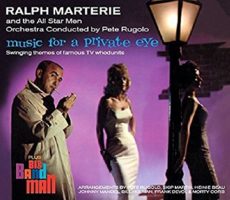
Ralph Marterie was born on December 24, 1914 in Acerra, near Naples, Italy and first played professionally at age 14 in Chicago, Illinois. In the 1940s, he played trumpet for various bands. His first job as a bandleader was courtesy of the US Navy during World War II, after which he was hired by the ABC Radio network. With his reputation built from these broadcasts, he secured a recording contract with Mercury Records.
In 1953 his big band recorded a version of Bill Haley’s Crazy, Man, Crazy, which reached #13 on the Billboard jockey chart and #11 on Cashbox in June, 1953. His recordings of Pretend and Caravan also made the Top 10 with the latter selling over a million copies and was awarded a gold disc. His biggest success on the U.S. charts was a cover of Skokiaan in 1954. In 1957, he had success with Tricky and Shish-Kebab.
Big band leader Ralph Marterie, who composed Dancing Trumpet, Dry Marterie, and Carla, passed away on October 10, 1978, in Dayton, Ohio.
More Posts: trumpet
Daily Dose Of Jazz…
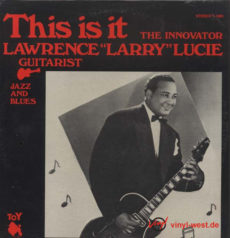
Lawrence Lucie was born in Emporia, Virginia on December 18, 1907 and when he was eight years old began learning mandolin, violin, and banjo. He moved to New York City in 1927, attended the Brooklyn Conservatory of Music to study banjo and studied guitar at Paramount Music Studios, making the later his primary instrument.
Lucie started his professional career as a temporary substitute for Fred Guy in the Duke Ellington Orchestra in 1931. He spent the next two years playing guitar for Benny Carter, followed by Fletcher Henderson, the Mills Blue Rhythm Band, Lucky Millinder, Coleman Hawkins in 1940, and Louis Armstrong until 1944, recording with all of them except Ellington. He would go on to record with Red Allen, Putney Dandridge, Billie Holiday, Spike Hughes, Jelly Roll Morton, Bobby Watson, Roy Eldridge, Sidney Bechet, Big Joe Turner, and Teddy Wilson.
After serving in the Army, he became a member of small groups in contrast to his big band years, and worked often as a studio musician. Throughout his career he was a rhythm guitarist, seldom taking solos until the 1970s, when he founded Toy Records to issue music performed by him and his wife, Nora Lee King. In the 1980s and 1990s he played in concerts with Panama Francis.
As an educator he taught for thirty years at the Borough of Manhattan Community College until 2004. He played solo guitar in clubs until he was 99-years-old. Guitarist Lawrence Lucie, who had a seventy-five year career in jazz and was the last musician to record with Jelly Roll Morton, passed away on August 14, 2009 at the age of 101.

More Posts: guitar
Daily Dose Of Jazz…
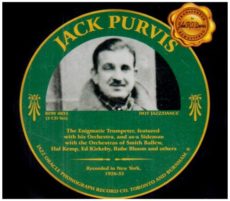
Jack Purvis was born John Purvis on December 11, 1906 in Kokomo, Indiana to Sanford B. Purvis, a real estate agent and Nettie Purvis. His behavior became uncontrollable after his mother’s death in 1912 and as a result of many acts of petty larceny, he was sent to a reform school. While there, he discovered that he had an uncanny musical ability, and soon became proficient enough to play both the trombone and trumpet professionally. This also enabled him to leave the reformatory and continue his high school education, while he was playing paying gigs on the side.
After high school he worked in his home state for a time then went to Lexington, Kentucky where he played with the Original Kentucky Night Hawks. In 1926 he was with Bud Rice touring New England, then with Whitey Kaufman’s Original Pennsylvanians. For a short time he played trumpet with Arnold Johnson’s orchestra, and by July 1928 he traveled to France with George Carhart’s band. In 1929 he joined Hal Kemp’s band and recorded with Kemp, Smith Ballew, Ted Wallace, Rube Bloom, the California Ramblers, and Roy Wilson’s Georgia Crackers. In 1929 Purvis led his own recording groups using Hal Kemp’s rhythm section to produce Copyin’ Louis, and Mental Strain at Dawn.
By 1930, Purvis leading a couple of racially mixed recording sessions including the likes of J.C. Higginbotham, and Adrian Rollini. One of these sessions was organized by Adrian Rollini and OKeh A & R man, Bob Stephens. He went on to work with the Dorsey Brothers and played fourth trumpet with Fletcher Henderson in a rehearsal capacity.
The early Thirties saw him played with a few radio orchestras and worked with Fred Waring, toured the South with Charlie Barnet, worked with the New Orleans Symphony Orchestra, moved to Los Angeles, California and was successful with radio broadcasting work. He worked for the George Stoll Orchestra, Warner Bros. Studios arranging, and composed Legends of Haiti for a one hundred and ten piece orchestra.
Living a checkered life he was in and out of jail, worked outside the musical environment working as a chef, a busker, an aviator in Florida, a carpenter, a radio repairman, a smuggler and a mercenary in South America. Trumpeter and trombonist Jack Purvis gassed himself to death in San Francisco, California on March 30, 1962.