


Daily Dose Of Jazz…
Masabumi Kikuchi was born on October 19, 1939 in Tokyo, Japan and lived his early life in World War II and post-war country. He studied piano and music at the Tokyo Art College High School. After graduating, he joined Lionel Hampton’s Japanese touring band.
Known for his eclectic music that ranges from vanguard classical to fusion and digital music. Not only working with Hampton, but he also performed with Sonny Rollins, Woody Herman, Mal Waldron, Joe Henderson, McCoy Tyner, Gil Evans, Elvin Jones, Miles Davis, Gary Peacock, Paul Motian, Billy Harper, and Hannibal Peterson.
As a leader and co~leader, he recorded twenty-five albums, and as a sideman or member of other groups, he recorded twenty~eight albums. Pianist and composer Masabumi Kikuchi passed away from a subdural hematoma on July 6, 2015 at a hospital in Manhasset, New York.

More Posts: bandleader,composer,history,instrumental,jazz,music,piano
Daily Dose Of Jazz…
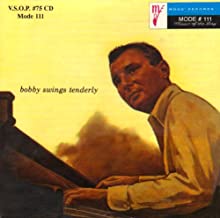
Robert William Troup Jr. was born on October 18, 1918 in Harrisburg, Pennsylvania. Graduating from The Hill School in 1937, he went on to graduate Phi Beta Kappa from the Wharton School at the University of Pennsylvania with a degree in economics. His earliest musical success came in 1941 with the song Daddy and Sammy Kaye and His Orchestra recorded it sending it to #1 for eight weeks on the Billboard chart and #5 record of 1941.
After graduating from college in 1941, he enlisted in the United States Marine Corps, completed officer training, and was assigned to recruit the first Black Marines at Montford Point. While there, he organized the first Negro band of U.S. Marines. During this time he composed Take Me Away From Jacksonville, which became an anthem of sorts for the Marines at Montford Point and other areas of Camp Lejeune. In 1942, his song Snootie Little Cutie was recorded by Frank Sinatra and Connie Haines with the Tommy Dorsey Orchestra and the Pied Pipers.
In 1946, Nat King Cole had a hit with Troup’s most popular song, Route 66. Troup’s fifteen albums in the 1950s and 1960s were not commercially successful, recording for Liberty and Capitol. He composed the music for the instrumental version of his song The Meaning of the Blues that appeared on the Miles Davis album Miles Ahead.
While relying on songwriting royalties, Bobby worked as an actor, appearing in Bop Girl Goes Calypso, The High Cost of Loving, The Five Pennies, and playing musician Tommy Dorsey in the film The Gene Krupa Story. He also appeared on several television shows in the Sixties. It was during this time that he met Julie London, encouraged her to pursue her singing career, and in 1955 produced her million-selling hit record Cry Me a River. Four years later, London married Troup. On February 7, 1999, pianist, singer, songwriter and actor Bobby Troup passed away of a heart attack in the Los Angeles, California neighborhood of Sherman Oaks.
More Posts: actor,history,instrumental,jazz,music,piano,songwriter,vocal
Daily Dose Of Jazz…
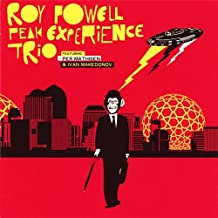
Roy Powell was born on October 2, 1965 in Langham, Rutland, England. His mother was a historian, his father a scientist who moved the family to Canada. His father had given him piano lessons and had been playing the piano for five years. Returning to England when he was ten, he attended New Mills Grammar School at the same time as Lloyd Cole.
In the 1970s, Powell was listening to Duke Ellington and Miles Davis and buying albums through the mail from America. He attended the Royal Northern College of Music, studying piano and classical composition during the day and playing in Manchester jazz clubs at night. After departing school, he started a jazz fusion band and choreographed a ballet. In 1992 he was a member of the Creative Jazz Orchestra. Three years later he moved to Norway to teach.
Powell has been a member of the group InterStatic with Jacob Young, and Jarle Vespestad, and the group Naked Truth with Lorenzo Feliciati, Pat Mastelotto, and Graham Haynes. He recorded the album Mumpbeak with Feliciati, Mastelotto, Bill Laswell, Tony Levin, and Shanir Ezra Blumenkranz. Pianist, organist, composer, and educator Roy Powell has recorded fifteen albums as a leader and continues to perform and record.
More Posts: bandleader,composer,educator,history,instrumental,jazz,music,piano
Daily Dose Of Jazz…
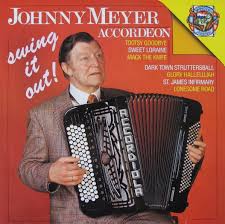
Johnny Meyer or Johnny Meijer was born Jan Cornelis Meijer on October 1, 1912 in Amsterdam, Netherlands. He began playing accordion as a child and before World War II was playing in Dutch big bands. The post-war years were fertile for him and the liberating sound of his swing accordion, opened opportunities for him to record many swing standards from 1952 to 1957.
He toured Europe but mainly performed in the Netherlands and for a time was known as a virtuoso jazz accordionist. Besides the popular songs, Meyer also played fast swing numbers, Romanian music and classical pieces. In 1974 he recorded the Dutch Swing College Band Johnny Goes Dixie LP, which went gold.
Typically seen during performances with a cigar in his mouth, his accordion showed several burn marks as a result of this. In the last years of his life, Johnny Meyer was rarely invited to play large performances, mainly in connection with his short temper and his drinking, and thus the King of the Accordion saw out his final days mostly in silence, reduced to occasionally playing weddings and parties.
Accordionist Johnny Meyer, who played jazz, swing, classical, folk and was the subject of a film, passed away on January 8, 1992 in Amsterdam.
More Posts: accordion,history,instrumental,jazz,music
Daily Dose Of Jazz…
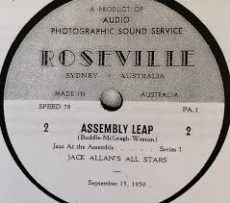
Jack Allan was born on September 28, 1929 in Sydney, Australia. As a child, he began playing accordion before switching to the piano in his teens. While working in Sydney cabarets and clubs, he was heavily influenced by swing-era pianists, especially Teddy Wilson. He became one of the few Australian musicians to play the early post-war modern jazz styles.
In 1949 Allan’s recording debut was as a member of the Rex Stewart And His Sydney Six. The following year he made his first recordings as a leader with his group the Katzenjammers. During the early 50s they performed and recorded frequently with a variety of personnel, including Ken Silver, Don Burrows, Errol Buddle, John Bamford and Edwin Duff. The mid-50s had him beginning an acting career and with his generous bulk was often cast as a villain, an amiable bar patron, or playing a musician. His film credits include On The Beach, Ned Kelly, They’re A Weird Mob, and Caddie, as well as numerous television appearances.
Maintaining his musical prowess, Jack’s performances however became spasmodic. In 1983 he recorded with percussionist John Sangster and in the following year made a tasteful, swinging solo album for the Anteater label. Moving north to the Sunshine Coast, he lived in semi-retirement with occasional acting and musical activity.
Pianist Jack Allan, a reliable studio musician with the ABC and a writer/director for musical revues, passed away on February 7, 1995 on the Sunshine Coast, Queensland, Australia.

More Posts: bandleader,history,instrumental,jazz,music,piano