

Daily Dose Of Jazz…
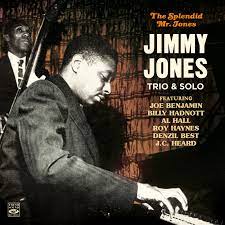
Joseph Rupert Benjamin was born on November 4, 1919 in Atlantic City, New Jersey. He played with many jazz musicians in a variety of idioms. Early in his career he played in the big bands of Artie Shaw, Fletcher Henderson, Sy Oliver, and Duke Ellington.
He went on to work with Hank Garland, Marian McPartland, Louis Armstrong, Jo Jones, Gary Burton, Roy Haynes, Art Taylor, and Brother Jack McDuff.
Never leading a recording session, Joe recorded three dozen albums as a sideman with Bob Brookmeyer, Kenny Burrell, Dave Brubeck, Harry Edison, Duke Ellington, Dizzy Gillespie, Barry Harris, Roy Haynes, Johnny Hodges, Budd Johnson, Roland Kirk, Gary McFarland, Carmen McRae, Gerry Mulligan, Jerome Richardson, Al Sears, Joya Sherrill, Rex Stewart, Sonny Stitt, Buddy Tate, Clark Terry, The Three Playmates, Sarah Vaughan, Mal Waldron and Kai Winding.
Double bassist Joe Benjamin transitioned on January 26, 1974.

More Posts: bass,history,instrumental,jazz,music
Daily Dose Of Jazz…
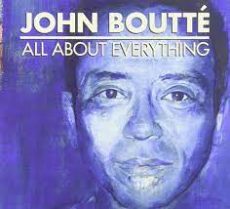
John Boutté was born November 3, 1958 in New Orleans, Louisiana into a 7th Ward Creole-Catholic family. Exposed to the local culture such as Mardi Gras parades and jazz funerals since childhood, he also grew up listening to the music of Stevie Wonder, Marvin Gaye and the like. He played trumpet and cornet in marching bands in his junior high and high school days. During this time, he also formed an a cappella group and sang on the streets.
Studying business at Xavier University of Louisiana, Boutté was in ROTC and after graduation was commissioned in the U.S. Army, serving for four years. Returning home he worked at a credit union until he met Stevie Wonder, then decided to seriously become a professional singer. He soon joined his sister Lillian on her tour to Europe, and his professional career started.
In 1993 John released his debut album titled Through the Eyes of a Child. The following year he was featured on his sister’s live album, Gospel United, released in 1994. He was the featured guest vocalist on Cuban group Cubanismo!’s Mardi Gras Mambo, recorded in New Orleans.
In recent years, Boutté has been working with ex-Cowboy Mouth guitarist and singer Paul Sanchez which led to a collaborative effort Stew Called New Orleans released in 2009. He was also featured on John Scofield’s 2009 album, Piety Street, singing the lead on three tracks.
His Treme Song on his Jambalaya album is the theme song of HBO’s series, Treme. He appears in several episodes of the show’s Seasons 1, 2, and 3.
Vocalist John Boutté, who is known for his diverse music style that goes beyond jazz to R&B, gospel, Latin, and blues, continues to perform.
More Posts: bandleader,history,instrumental,jazz,music,vocal
Daily Dose Of Jazz…
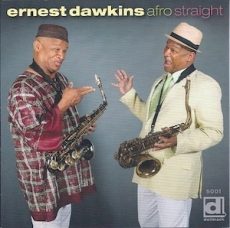
Ernest Dawkins was born November 2, 1953 in Chicago, Illinois. As a child he was a neighbor of Anthony Braxton as a child. He played bass and drums early in life before switching to saxophone in 1973.
During that decade he began studying with Joseph Jarman and Chico Freeman, members of the Association for the Advancement of Creative Musicians. He also studied at Vandercook College of Music.
He worked with Ed Wilkerson and the Ethnic Heritage Ensemble and Douglas Ewart before founding his own New Horizons Ensemble. The ensemble played regularly in Chicago into the new century, as well as at jazz festivals and on tour in Europe.
As a leader he recorded sixteen albums, three as an unofficial leader/co-leader of The (AACM) Great Black Music Ensemble and as a guest with the Ethnic Heritage Ensemble.
Saxophonist Ernest Dawkins, who is principally active in free jazz and post-bop, continues to perform, record and tour.
More Posts: bandleader,history,instrumental,jazz,music,saxophone
Daily Dose Of Jazz…
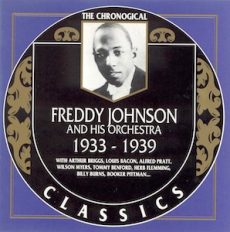
Louis Bacon was born on November 1, 1904 in Louisville, Kentucky. His family moved to Chicago, Illinois when he was a young child. After a short stint playing with Zinky Cohn in Michigan, he relocated to New York City in 1928. There he worked through 1938 with musicians Louis Armstrong, Benny Carter, Duke Ellington, Bingie Madison, Bessie Smith, and Chick Webb among others.
Contracting tuberculosis in 1938, resulting in a performance hiatus, but by early 1939 he was playing with Benny Carter once more. Later that same year, he embarked on a tour of Europe with Willie Lewis and remained there for two years. He recorded under his own name as well as with Lewis and Freddy Johnson.
After his return to the United States he worked with Garvin Bushell, Cootie Williams, and Jesse Stone. Shortly after the end of World War II, he stopped playing once again due to persistent health problems. He did play trumpet again briefly in 1959–60, working in New York, and late in his career taught voice and sang with Wilbur De Paris.
Trumpeter and vocalist Louis Bacon transitioned on December 8, 1967.
Daily Dose Of Jazz…
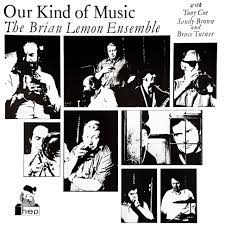
Raymond Crane was born on October 31, 1930, Skegness, Lincolnshire, England. Refusing to become discouraged with a music instructor who regarded his tooth unsuitable for his designed profession, he started playing trumpet around his city. After being employed in the East Midlands for several years, playing in groupings like the Mercia Jazz Music group, in 1963 he became a member of Bruce Turner’s Leap Music group. This brought him to the attention of the much wider market through concerts and information, such as Heading Places.
Afterwards he played in groups led by Brian Lemon, with whom he previously proved helpful while they had been still in the Midlands, and Stan Greig. Crane frequently accompanied American jazzmen, including Henry “Crimson” Allen, Ray Nance and Costs Coleman.
He occasionally performed as a pianist, which proved helpful to his being a musical pedagogue, teaching and leading a youth jazz band which graduated Martin Taylor and Guy Barker.
Trumpeter Ray Crane, who was a fiery, swing-era-rooted player, transitioned on June 29, 1994 at the age of 63.

More Posts: history,instrumental,jazz,music,trumpet