

Daily Dose Of Jazz…
Barbara Montgomery ws born in San Francisco, California on June 30, 1948 and during her teen years lived in Vietnam in the early to mid Sixties because her father’s work as an electrical engineer took them there. In the late 1960s she moved to her adopted home of Philadelphia, Pennsylvania and during this period is when she started singing.
In the early to mid-’70s, Montgomery’s day gig was The Mike Douglas Show, for which she performed a variety of duties including makeup artist, camera person, and stage manager. When the popular television program moved from Philadelphia to Los Angeles, California she chose to stay and ultimately went on tour with pop/folk singer Harry Chapin later in the decade, helping with lighting and doing some background vocals. Becoming a full time mother in 1979, she took a break from music for several years.
Since 1986, she has served as musical director for fitness expert Richard Simmons. Between the demands of working for Simmons and raising a child, Barbara had little time for jazz singing in the 1980s. But she returned to club gigs in 1992 and acquired a small following playing the Philadelphia jazz circuit, where she has been joined by such notables as guitarist Jimmy Bruno and pianists Sid Simmons, Barry Sames, and Dennis Fortune.
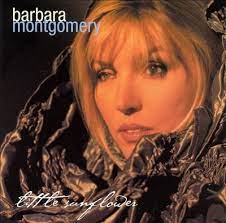
Montgomery recruited former Chick Corea drummer Dave Weckl and co-producer/guitarist Michael Sembello for her self-titled debut album in 1996. Two years later she released her sophomore LP, Ask Me Now and her third Dakini Land followed after three more years, in tribute to the work of Chick Corea. This release won her much praise and put her on the scene as a vocalist to follow. That reputation was helped by Little Sunflower, the following year’s record of standards.
Vocalist Barbara Montgomery, who was influenced by Chris Connor, Julie London, and June Christy, continues to perform and record.

More Posts: bandleader,history,instrumental,jazz,music,vocal
Daily Dose Of Jazz…
Ken Hyder was born June 29, 1946 in Dundee, Scotland. He began playing jazz in his native Scotland before moving south to London, England where he studied under John Stevens and played at the Little Theatre Club at Garrick Yard, an avant garde haunt, run by Stevens.
Over the course of a 40 year career Hyder has worked with and recorded with Elton Dean, Chris Biscoe, Tim Hodgkinson, Paul Rogers, Maggie Nicols, Don Paterson and Frankie Armstrong, just to name a few in a long list.
He composes music and has produced more than three dozen albums of original material. In 1970, Hyder formed Talisker and during the decade began moving away from jazz and into collaborations with musicians from different musical backgrounds, including Irish, South African and South American players. This led him to explore spiritual aspects of music with spiritual practitioners like Tibetan and Japanese Buddhist monks, and Siberian shamans.
As an author he has published three e-books based on shamanism in Siberia, cyber crime and cyber terrorism, and a memoir. Jazz fusion drummer and percussionist Ken Hyder, best known for combining folk, ethnic and Celtic music with jazz, continues to perform and record.
More Posts: bandleader,drums,history,instrumental,jazz,music,percussion
Daily Dose Of Jazz…
John Lee was born June 28, 1952, in Boston, Massachusetts. He is the son of a minister and a social worker. Growing up in Greenwich, Connecticut, Amityville, New York, and Philadelphia, Pennsylvania he began string bass lessons at 10 with Carolyn Lush. At Philadelphia’s Overbrook High School he met drummer Gerry Brown, who together studied at the Philadelphia Musical Academy for two years.
In 1971 Lee began performing with Carlos Garnett and Joe Henderson, and toured with Max Roach thru the spring of 1972 while still a student in Philadelphia. The same year he and Brown relocated to Europe with Den Haag, Holland as their base. Together they toured Europe and recorded in bands led by Chris Hinze, Charlie Mariano, Philip Catherine, Joachim Kühn, and Jasper Van’t Hof.
Moving to New York City in 1974, John played with Joe Henderson, Lonnie Liston Smith, and Norman Connors before joining The Eleventh House with Larry Coryell. The following year he and Gerry Brown signed a recording contract with Blue Note Records and formed a working band. In 1977 they moved over to Columbia Records and began producing records the same year.
From 1982 to 1984, Lee worked with McCoy Tyner, then became Dizzy Gillespie’s bassist, touring and recording with Dizzy’s Quintet, his Big Band, his Grammy winning United Nation Orchestra and the Back to the Future Band that Dizzy co-lead with Miriam Makeba until 1993 when Makeba died.
Lee has performed in over 100 countries around the world and has toured in the bands of Sonny Rollins, James Moody, Jimmy Heath, Pharoah Sanders, Jackie McLean, Gary Bartz, Hank Jones, Walter Davis Jr., Wolfgang Lackerschmid, Alphonse Mouzon, Claudio Roditi, Jon Faddis, Slide Hampton, Roy Hargrove, and Roberta Gambarini, as well as Aretha Franklin and Gregory Hines.
He is a founding member of The Fantasy Band with Chuck Loeb, Marion Meadows, and Dave Samuels. In 1996, at the bequest of Dizzy’s wife Lorraine Gillespie and the Dizzy Gillespie Estate, he became the director and bassist of the Dizzy Gillespie Alumni All-Stars as well as the Dizzy Gillespie All-Star Big Band, and the Dizzy Gillespie Afro-Cuban Experience. They have recorded five albums and toured extensively around the world.
In 2009 he co-founded the jazz recording label JLP (Jazz Legacy Productions), with partner Lisa Broderick. As a producer he has produced over 60 albums and CDs, and as a recording engineer he has recorded and mixed over 100 albums and CDs.
Bassist John Lee, who is a Grammy winning record producer and audio engineer, continues to explore the boundaries of music.
More Posts: audio engineer,bandleader,bass,history,instrumental,jazz,music,record producer
Daily Dose Of Jazz…
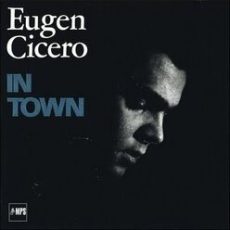
Eugen Cicero was born Eugen Ciceu on June 27, 1940 in Vad, Romania, to Teodor and Livia Ciceu, an Orthodox priest and professional singer respectively. He began to play the piano at the age of four and by age six performed a Mozart piano concerto with the symphony orchestra of Cluj. Although he graduated from the National Conservatory in Bucharest, Romania he abandoned a career as a conventional concert pianist. He established his style merging classical and jazz piano, introducing swing harmonies into baroque, classical and romantic compositions, often as spontaneous improvisations.
In 1962, while touring East Berlin, Germany he fled to West Berlin. This allowed him to spend the next two years in Switzerland where he joined the Kindli orchestra of Joe Schmid. After returning to Germany, Cicero produced more than 70 recordings, some of them with the Berlin and Munich Philharmonic orchestras. He appeared on German TV several times and enjoyed much success while touring Japan.
In 1976 he was awarded the Deutscher Schallplattenpreis for his interpretations of Franz Schubert. Returning to Switzerland in 1982, pianist Eugen Cicero, nicknamed Mister Golden Hands, transitioned in Zürich on December 5, 1997 from a cerebral apoplexy at the age of 57.
Daily Dose Of Jazz…
Kenneth John Moule was born on June 26, 1925 in Barking, Essex, England and was the only child of Frederick and Ethal Moule. Surviving an early childhood illness, left him with a cadaverous look which went well with his ridiculous sense of humor.
In the Forties Moule played piano with the Johnny Dankworth Quartet before leaving to join Oscar Rabin in 1945. He would go on to perform with Remo Cavalotti for a summer season and Joe Daniels before working on the Queen Mary in Bobby Kevin’s Band, with Ronnie Scott and Johnny Dankworth. He closed out the decade working with several bands including Jiver Hutchinson, Bert Ambrose, Frank Weir and Ken Mackintosh.
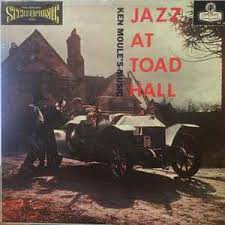
During the early 1950s Ken worked with Raymonde’s Orchestra, again with Ambrose and then with Frank Weir on several occasions. 1954 saw him form under his own name a septet, which was comprised of two-tenor, baritone, trumpet and three rhythm group. He resigned from the septet in 1955 and from 1956–1959 he arranged for Ted Heath’s orchestra. During this time he composed the suite Jazz at Toad Hall, and was released on Decca Records in 1958. He worked in Sweden and toured Europe with Kurt Weill’s Band until 1960.
The 1960s saw his return to England and worked freelance as an arranger, especially with Lionel Bart. He was the musical director for the shows Fings Ain’t Wot They Used T’Be and Twang!!. From 1962 he broadcast regularly with his 15 piece orchestra, and later broadcasted and recorded with a larger band called The Full Score. His Adam’s Rib Suite was recorded by the London Jazz Chamber Group in 1970 with Kenny Wheeler on the recording issued on Ember Records.
He scored Cole Porter songs for the musical Cole! performed at the Mermaid Theatre in 1974, and worked with Dankworth again around that time with his London Symphony Orchestra collaborations. He worked out of Germany for part of the 1970s before ill health caused him to move to the warmer climate of Spain.
Pianist, composer and arranger Ken Moule transitioned in Marbella in January 27, 1986, aged 60.

More Posts: arranger,bandleader,composer,history,instrumental,jazz,music,piano