

Daily Dose Of Jazz…
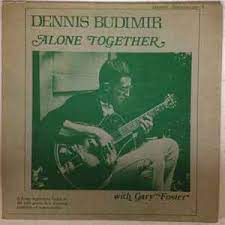
Dennis Matthew Budimir was born on June 20, 1938 in Los Angeles, California. He learned to play piano and guitar in his youth and first played professionally when he was fourteen years old. In mid Fifties Los Angeles he played in a quartet with La Monte Young, Billy Higgins, and Don Cherry and by the late 1950s he was working in the bands of Ken Hanna, Keith Williams, Harry James, and Chico Hamilton.
From 1960–1961 he worked with Bud Shank and accompanied Peggy Lee prior to entering military service. After his discharge in 1963 he toured Japan with Bobby Troup and returned to the Los Angeles area, where he came off the road and became a studio musician for the next several decades. He recorded in this capacity with Lalo Schifrin, Marty Paich, Don Ellis, Gil Melle, Ella Fitzgerald, Milt Jackson, Stan Getz, Julie London, Jimmy Smith, Ray Brown, Johnny Mandel and the Capp-Pierce Juggernaut.
This opportunity also led him to record with Joni Mitchell, The Carpenters, Brian Wilson, Barbra Streisand, Ravi Shankar, Frank Zappa, Linda Ronstadt, Dusty Springfield, Dave Grusin, Quincy Jones, David Axelrod, Tom Waits, Harry Nilsson, George Harrison, Ringo Starr, Johnny Mathis, Cher, and Doris Day. He recorded more than 900 movie soundtracks from the early 1960s until the 2000s.
Guitarist Dennis Budimir, considered to be a member of The Wrecking Crew, transitioned on January 10, 2023 at the age of 84.

More Posts: guitar,history,instrumental,jazz,music
Daily Dose Of Jazz…
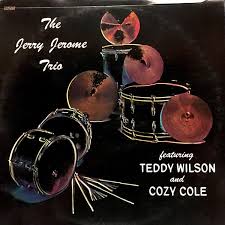
Jerry “Buck” Jerome was born on June 19, 1912 in Brooklyn, New York and he didn’t begin playing the saxophone until he was in high school in Plainfield, New Jersey.
Jerome became part of a national tour in 1936 with bandleader Harry Reser and his Clicquot Club Eskimos. He joined Glenn Miller’s original orchestra in 1937 and was a member until it broke up in 1938. He played and soloed on the Glenn Miller recording Doin’ the Jive. He then joined the Red Norvo band which was followed by his joining the Benny Goodman orchestra in 1938.
When Goodman broke up his band in 1940, he joined the Artie Shaw Orchestra. While with Shaw he appeared the same year he joind the band in the film Second Chorus, starring Fred Astaire and Burgess Meredith. By the end of the 1940s, Jerry became involved in broadcasting, working various positions as a conductor, composer, arranger and musical director.
Tenor saxophonist Jerry Jerome, who composed the Winston tastes good like a cigarette should jingle for the tobacco company, transitioned on November 17, 2001 at the age of 89.
More Posts: history,instrumental,jazz,music,saxophone
Daily Dose Of Jazz…
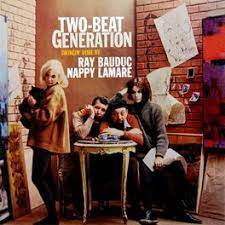
Ray Bauduc was born June 18, 1906 in New Orleans, Louisiana and was the son of cornetist Jules Bauduc, his older brother was a banjoist and bandleader, and his sister was a pianist. His youthful work in New Orleans included performing in the band of Johnny Bayersdorffer, and on radio broadcasts. His New Orleans origin instilled in him a love for two-beat drumming, which he retained when he played with Bob Crosby’s swing-era big band.
Moving to New York City in 1926 he joined Joe Venuti’s band. During the 1920s he recorded with the Original Memphis Five and the Scranton Sirens, which included Tommy and Jimmy Dorsey. His time with the Bob Crosby Orchestra brought him national fame and Bauduc and bassist Bob Haggart composed two hits for the orchestra, South Rampart Street Parade and Big Noise from Winnetka, which has become a jazz standard.
After his discharge from the Army in 1944, he and former Crosby group leader Gil Rodin formed a short-lived big band. He toured with a septet in 1946 and also worked in Tommy Dorsey’s orchestra for a couple of months that year. By 1947, he joined Bob Crosby’s new group, then left to play with Jimmy Dorsey where he stayed for the next two years. He freelanced on the West Coast for a couple of years before joining Jack Teagarden in 1952. In 1955, he formed a band with Nappy Lamare which found considerable success, touring nationally and recording several albums.
From 1960 Ray went into semi-retirement and relocatred to Bellaire, Texas but visited New Orleans in 1983. He appeared occasionally at Crosby Orchestra reunions, worked with Pud Brown on several recordings, and played with the Market Square Jazz Band headed by James Weiler in the early 1980s in Houston.
A trend setter in traditional jazz circles, his precise, disciplined, yet fiery patterns and syncopated fills, helped New Orleans drummers make the transition into swing from the rigid, clipped progressions that had defined the previous era. His use of woodblocks, cowbells, China cymbals, and tom-toms distinguished him from most drummers of the swing era, and made him one of the few white drummers to be influenced by Warren ‘Baby’ Dodds. Drummer Ray Bauduc, who authored two books on drumming, transitioned in Houston, Texas, on January 8, 1988.
More Posts: bandleader,drums,history,instrumental,jazz,music

Daily Dose Of Jazz…
Jaimie Breezy Branch was born June 17, 1983 in Huntington, New York and started playing trumpet at age nine. At 14 she moved to Wilmette, Illinois, a suburb of Chicago. She attended the New England Conservatory of Music and after graduating moved back to Chicago and began working as a musician, organizer, and sound engineer on the local music scene. She performed in Chicago and New York with her trio Princess Princess, with bassist Toby Summerfield and drummer Frank Rosaly, and in other trios before founding the band Block and Tackle with Jason Stein, Jeb Bishop, and Jason Roebke.
By 2012 Branch had moved to Baltimore, Maryland where she worked toward a master’s degree in Jazz performance from Towson University. At this time she also founded the record label Pionic Records, which released the music of her group Bomb Shelter. After two years, she dropped out of Towson, and six months later she moved to New York to seek treatment for heroin addiction.
In 2015 Jaimie moved to Brooklyn, New York where she began working with Fred Lonberg-Holm, Mike Pride, Luke Stewart, Jason Nazary, Tcheser Holmes, and many more. In addition, she performed on albums with independent rock groups. In 2017 she released her debut solo album, Fly or Die, with Tomeka Reid, Jason Ajemian, Chad Taylor, Matt Schneider, Ben LaMar Gay, and Josh Berman. Fly or Die was chosen as one of NPR Music’s Top 50 Albums of 2017.
Citing Don Cherry, Axel Dörner, Booker Little, Miles Davis, and Evan Parker among her musical influences. Jaimie Branch transitioned at home in the Red Hook section of Brooklyn on August 22, 2022, at the age of 39.
More Posts: bandleader,history,instrumental,jazz,music,trumpet

Daily Dose Of Jazz…
Lou Gare was born Leslie Arthur Gare on June 16, 1939 in Rugby, Warwickshire, England. He is best known for his works with the improvised music ensemble AMM and recorded six albums with the group and another two as a soloist.
Eventually settling in the West Country, he still played in relative obscurity. Then Lou joined a big band that became The Uncommon Orchestra. He remained with them until health problems limited his participation.
Throughout his career he played with musicians such as Eddie Prévost, Mike Westbrook, Cornelius Cardew, Keith Rowe and Sam Richards
Free-jazz tenor saxophonist Lou Gare transitioned on October 6, 2017.
More Posts: history,instrumental,jazz,music,saxophone