

Daily Dose Of Jazz…
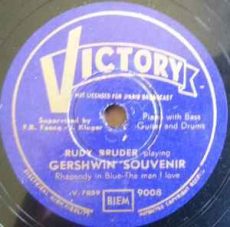
René “Rudy” Bruder was born on June 15, 1914 in Brussels, Belgium. His father was a bandleader and Rudy played in his father’s group in the mid-1930s. He then joined Jean Omer’s group, accompanying visiting American musicians such as Benny Carter, Bill Coleman, Coleman Hawkins, and Bobby Martin.
He worked with Omer through the early 1940s. He also recorded several times with Jean Robert and Gus Deloof. He led his own band, which recorded in the early 1940s and again in 1946.
Pianist Rudy Bruder retired from music and according to sources is 108 yers old.

More Posts: bandleader,history,instrumental,jazz,music,piano
Daily Dose Of Jazz…
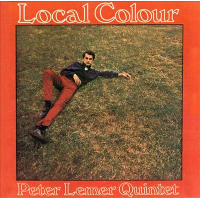
Peter Naphtali Lemer was born June 14, 1942 in London, England and studied piano and composition at the Royal Academy of Music with Sven Weber and John Gardner, privately with Thomas Rajna, and then at workshops in London run by Jack Goldzweig. He then went to New York to study double bass with David Walter, attended workshops run by Bill Dixon, and studied piano with Jaki Byard and Paul Bley.
In 1965, Lemer formed a trio with John Stevens and Jeff Clyne, which opened the Little Theatre Club. In 1966, he formed the Peter Lemer Quintet, with drummer Jon Hiseman, tenor saxophonist George Khan, baritone saxophonist John Surman and bassist Tony Reeves. They successfully played a season at Ronnie Scott’s that helped to pave the way for the British free jazz movement of the late 1960s and early 1970s.
In 1969 Peter delved into experimental jazz with the group Spontaneous Music Ensemble,then joined Barbara Thompson that developed into Thompson forming Paraphernalia with husband Jon Hiseman. Paraphernalia became the most frequently performing jazz-oriented group in Europe. By 1974 he joined Gilgamesh, then became an in-demand session player and became a member of rock band Ken Elliot’s Seventh Wave.
The following year he joined Ginger Baker, Mr Snips, and The Gurvitz brothers in the Baker Gurvitz Army. His next move was with Jan Dukes de Grey briefly and then on to Mike Oldfield’s fifty-piece touring band as one of two keyboard players. Most recently Lemer has worked with the band In Cahoots, recording with them as well as with Paraphernalia.
Pianist and keyboardist Peter Lemer currently plays with the Spanish Harlow Orchestra and coaches piano, improvisation, and music technology. He is active in lobbying to end global hunger and poverty.
More Posts: bandleader,history,instrumental,jazz,keyboard,music,piano
Daily Dose Of Jazz…
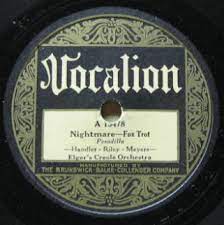
Charles Anthony Elgar was born on June 13, 1879 in New Orleans, Louisiana on June 13, 1879. From age 5 he played violin and also played trumpet. He studied music in Wisconsin and Illinois.
Elgar played in Chicago, Illinois from 1903 with the Bloom Theater Philharmonic Orchestra, but returned to his hometown late in the decade of the 1900s. He remained there until about 1913 when he returned to Chicago, putting together a band the same year. His band played at the Navy Pier Ballroom, Hattie Harmon’s Dreamland Ballroom from 1917 until 1922 and opened the old Savoy Ballroom in 1928.
With his band Charles toured in the revue Plantation Days and traveled to London, England though he did not accompany it on this trip. However, he did play with Will Marion Cook’s Orchestra in Europe. He went on to lead bands in Milwaukee, Wisconsin from 1925 to 1928, making several recordings with Elgars Creole Orchestra that he led at the Wisconsin Roof Gardens in Milwaukee and again in Chicago, 1926-30.
His sidemen included Manuel Perez, Lorenzo Tio, Louis Cottrell, Jr, Barney Bigard, Darnell Howard, and Omer Simeon. He made four recordings as leader of the Creole Orchestra. He concentrated on teaching in the 1930s, and worked as a union official later in his life. He was a founder and charter member of the local branch of the American Federation of Musicians, AFL-CIO, Local 2018.
Violinist, teacher and jazz bandleader Charles Elgar transitioned in August 1973 in Chicago.
More Posts: bandleader,educator,history,instrumental,jazz,music,violin
Daily Dose Of Jazz…
Don Barrigo was born on June 12, 1906 in London, England. A competent tenor saxophonist, he was active in his hometown and New York City, New York in the 1920s and 30s.
Among the artists with whom Don played and sometimes recorded were Joe Venuti and Eddie Lang. In the UK he played with Nat Gonella, Harry and Sid Roy, Billy Mayerl, Al Bowlly, Percival Mackey, Bert Bowen, Howard Jacobs and the Freddy Schweitzer Band. In the States he played with Don Parker and Louis Armstrong, and in France with Serge Glykson.
By 1940 he was a member of Maurice Winnick’s dance band alongside fellow sideman Ted Heath. Tenor saxophonist Don Barrigo transitioned on May 4, 1977.
More Posts: history,instrumental,jazz,music,saxophone
Daily Dose Of Jazz…
Joseph “Kaiser” Marshall was born on June 11, 1902 in Savannah, Georgia and was raised in Boston, Massachusetts. There he studied under George L. Stone, and played with Charlie Dixon before moving to New York City, New York in the early 1920s. After playing with violinist Shrimp Jones, he joined Fletcher Henderson’s band at the Club Alabam, remaining in Henderson’s retinue from 1922 until 1929.
He played with many noted jazz artists in the 1930s and 1940s, including Duke Ellington, Cab Calloway, Art Hodes, Wild Bill Davison, Sidney Bechet, Bunk Johnson, and Mezz Mezzrow. He also recorded with Louis Armstrong in the late 1920s, being the drummer on Armstrong’s 1929 recording of Knockin’ a Jug.
Between 1928-1930, he recorded with Benny Carter, Fats Waller and Coleman Hawkins in McKinney’s Cotton Pickers. Shortly after Kaiser recorded with the Four Bales of Hay, featuring Wingy Manone, Dickie Wells, Artie Shaw, Bud Freeman, Frank Victor, John Kirby and either Teddy Wilson or Jelly Roll Morton.
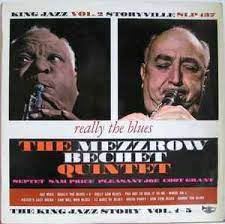
He went on to record as a member of the Mezzrow-Bechet Quintet featuring Sidney Bechet, Mezzrow, Fitz Weston, and Pops Foster. Drummer Kaiser Marshall transitioned on January 2, 1948 in New York City, New York.
More Posts: drums,history,instrumental,jazz,music