

Daily Dose Of Jazz…
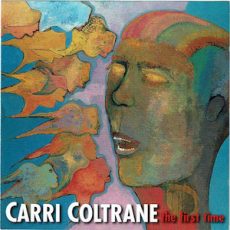
Carri Coltrane was born Carrie Thompson in Phoenix, Arizona on March 14, 1953. Singing professionally since childhood, she was only nine when she joined Wallace & Ladmo, a children’s program that was founded by her father. The program aired in the Phoenix Area from 1954 to 1989 and she remained with the show until she reached adolescence and outgrew her role as a little girl singer.
She moved to Seattle, Washington in 1979 and went on to sing with various rock and pop bands as an adult, and did quite a few jingles for commercials along the way. While living in Seattle she met Eugene McDaniels who really encouraged her to explore straight-ahead jazz. Carri eventually became friends and partners with McDaniels and formed Numoon Publishing with him. They have put out several allbums on the Numoon label that included jazz, contemporary pop and Christmas music.
Carri released her self-titled debut album in 1980 under her birth name. It wasn’t until 1986 that she started going by Carri Coltrane as an homage to the tenor saxophonist. She moved to New England in 1987.
Vocalist Carri Coltrane, whose subtle waifish introspection continues to perform, record and publish her music.

More Posts: bandleader,history,instrumental,jazz,music,publisher,vocal
Daily Dose Of Jazz…
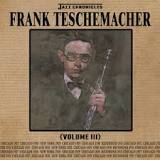
Frank Teschemacher was born on March 13, 1906 in Kansas City, Missouri. A was a member of the Austin High School Gang, a group of young, white musicians from the Chicago, Illinois West Side, they all attended Austin High School during the early 1920s. They rose to prominence as pioneers of the Chicago Style in the 1920s, which was modeled on a faster version of New Orleans jazz.
Strongly influenced by cornetist Bix Beiderbecke, he was mainly self-taught on his instruments, clarinet and saxophone. Early on he also doubled on violin and banjo. He started playing the clarinet professionally in 1925. He began recording under his own name in 1928 and made what are believed to be his final recordings two years later, although there is now reason to believe (via sine wave recording research, aka Smith/Westbrook Method) that he appeared on unidentified recordings as late as 1932.
He first recorded with Red McKenzie and Eddie Condon’s Chicagoans in 1927 for Okeh Records. Two sessions produced Sugar, China Boy, Nobody’s Sweetheart and Liza. The players included Jimmy McPartland, Bud Freeman, and Jim Lanigan, as well as Chicagoans Eddie Condon, Gene Krupa and Joe Sullivan, led by Red McKenzie.
1928 saw him recording with two other Red McKenzie and Eddie Condon groups, the Chicago Rhythm Kings and the Jungle Kings. The same year he made his debut as a leader recording for Brunswick Records. The group recorded under the name Frank Teschmacher’s Chicagoans. Frank’s solo work laid the groundwork for a rich sound and creative approach that is credited with influencing a young Benny Goodman and a style of which Pee Wee Russell. He also made recordings on the saxophone and would later return to the violin during the Great Depression. Although well known in the world of jazz, he did not live to enjoy popular success in the swing era.
Clarinet and alto saxophonist Frank Teschemacher, who was killed in an automobile accident while being driven by Wild Bill Davison, transitioned on March 1, 1932 at the age of 25.
More Posts: clarinet,history,instrumental,jazz,music,saxophone,violin
Daily Dose Of Jazz…
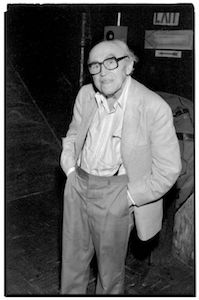
Max Gordon was born on March 12, 1903 in Svir, Russian Empire, now Belarus. His family emigrated to the United States in 1908 at age five and settled in Portland, Oregon, where he later attended Reed College. As a young man, he was interested in Russian and French novels and saw himself as a romantic type. Pursuing his parents’ wish that he become a lawyer, he moved to New York in 1926 to attend Columbia Law School, but began working in nightclubs and dropped out, choosing to get his education where he could find it.
In 1932 Gordon opened his first venue, Village Fair, in the tradition of Viennese coffee houses as a place for artists and writers. He relocated the venue once in 1934 and opened the Village Vanguard in 1935. The Vanguard initially offered poetry and was frequented by poets Maxwell Bodenheim and Harry Kemp. Over time, the club segued into cabaret acts, comedy, folk music and jazz before going exclusively jazz in 1957. That year Sonny Rollins was the first jazz musician to record in the venue.
The club subsequently hosted a who’s who of jazz greats from the 1940s to the 1980s including John Coltrane, Sidney Bechet, Dinah Washington, Albert Ayler, Miles Davis, Wynton Marsalis, Henry Threadgill and Thelonious Monk, who at the time an unknown, discovered by Gordon’s wife Lorraine. The club’s artistic direction was in part guided by Lorraine who had a keen interest in jazz. Over time the club became a popular recording spot and over 100 jazz albums have been recorded there.
Max sought new talent and gave younger performers a platform to showcase their work. In doing so he played a role in helping launch the careers of Judy Holliday, Betty Comden, Adolph Green, Barbra Streisand, Pearl Bailey, Woody Allen, Dick Gregory, Lenny Bruce, Irwin Corey, Woody Guthrie, and Lead Belly. He had a reputation for fairness and honesty among the performers.
In addition to the Vanguard, in 1943 Gordon opened the Blue Angel Supper Club in midtown Manhattan and was involved in its operation for fourteen years. He actively managed the Vanguard club well into his 80s. In 1982 he authored a memoir titled Live at the Village Vanguard which chronicles the history of the club.
Jazz promoter and founder of the Village Vanguard, Max Gordon, whose wife Lorraine continued the work and took an active role in managing the Vanguard club until her passing in 2018, transitioned at 86 on May 11, 1989.
Daily Dose Of Jazz…
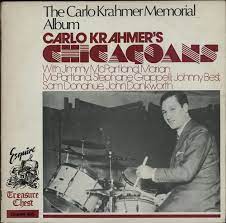
Carlo Krahmer was born William Max Geserick on March 11, 1914, Shoreditch, London, England. He was partially sighted at birth. He made his first record in 1939 and in the early Forties recorded with Johnny Claes’s band. He later joined Claude Bampton’s Blind Orchestra, a body sponsored by the National Institute for the Blind (now the RNIB), of which George Shearing was also a member. He worked in various bands, sometimes as leader, taking his own group to the Paris Jazz Festival in 1949.
In 1947, Krahmer co-founded Esquire Records with Peter Newbrook, a label which recorded bebop and licensed recordings from American blues and jazz labels. By 1950, Krahmer had retired from active performance, but had begun to teach aspiring drummers such as Victor Feldman.
Drummer and record producer Carlo Krahmer, whose label has continued to release music under the guidance of his wife Greta, transitioned on April 20, 1976 in London.
More Posts: drums,history,instrumental,jazz,music,record producer
Daily Dose Of Jazz…
Pete Clark was born on March 10, 1911 in Birmingham, Alabama. His brothers Richard and Arthur “Babe” were trumpeter and saxophonist respectively. Like his brothers he studied music at the Fess Whatley School. He would learn to play both alto and baritone saxophone as well as clarinet.
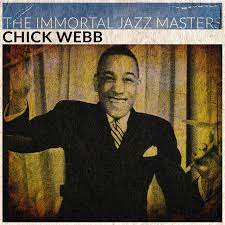
He began his career playing with Montgomery’s Collegiate Ramblers, followed by a stint with Wayman Carver. He would go on to find membership in the orchestras of Chick Webb, Duke Ellington, Ella Fitzgerald, Louis Armstrong, Teddy Wilson, Rex Stewart, Don Redman, John Kirby, Happy Caldwell, Jimmy Jones, Teddy Wilson and others.
Alto and baritone saxophonist and clarinetist Pete Clark, also known as Pete Clarke, transitioned in New York City on March 27, 1975.
More Posts: clarinet,history,instrumental,jazz,music,saxophone