

Daily Dose Of Jazz…
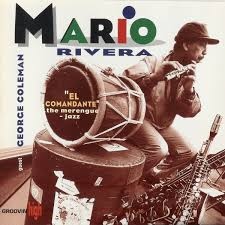
Mario Rivera was born on July 22, 1939 in Santo Domingo, Dominican Republic and learned to play during his childhood. Moving to New York City in 1961 at 22 he started working with singer Joe Valle as his accompanist. He spent two years with bandleader Tito Rodríguez. During his career he worked with Mongo Santamaria, Eddie Palmieri, and Machito.
From the 1970s to the 1990s he worked with Tito Puente. Both appeared in the films Calle 54 and The Mambo Kings. In 1988 he became a member of the United Nations Orchestra led by Dizzy Gillespie. He was also a member of the Afro-Cuban Jazz Band led by Chico O’Farrill. His only solo album, El Commandante, was released in 1996.
He recorded seventy-six albums as a sideman with Willie Colon, Cheo Feliciano, Dizzy Gillespie, Kip Hanrahan, Conrad Herwig, Giovanni Hidalgo, Chico O’Farrill, Eddie Palmieri, Tito Puente, Tito Rodriguez, Típica 73, Africando, Alfredo “Chocolate” Armenteros, Soledad Bravo, George Coleman, Junior Cook, Rafael Cortijo, Tito Gomez, Jerry Gonzalez, Juan Luis Guerra, La Lupe, Machito, Arturo O’Farrill, Pat Patrick, Bobby Paunetto, Daniel Ponce, Louie Ramirez, Paquito D’Rivera, Alfredo Rodriguez, Mongo Santamaria, Laba Sosseh, Juan Pablo Torres, Stanley Turrentine, Dave Valentin, Fernando Villalona, and Pete Yellin.
Saxophonist Mario Rivera, who also played trumpet, flute, piano, vibraphone, congas, and drums, died from cancer on August 10, 2007 in New York City.

More Posts: bandleader,congas,drums,flute,history,instrumental,jazz,music,piano,saxophone,trumpet,vibraphone
Daily Dose Of Jazz…
Pierre Cullaz was born July 21, 1935 in Paris, France and was the son of jazz writer Maurice Cullaz. He learned piano and cello in 1949, then moved to guitar as his main instrument.
In 1955 he started his professional career with Dexter Gordon, Johnny Griffin, and Hal Singer. Two years later he worked with Michel Hausser, Sarah Vaughan, Claude Bolling and Stéphane Grappelli.
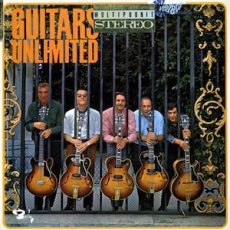
After serving in the military Pierre became a studio musician and worked with Martial Solal and Eddy Louiss. In 1965 he formed Guitars Unlimited with Victor Apicella, Raymond Gimenez, Francis Lemaguer, and Tony Rallo. The band recorded for Barclay.
Over the course of his career he collaborated with Elvin Jones, Andre Hodeir, Ivan Jullien, and Guy Lafitte, accompanied singer Claude Nougaro and was an arranger for Michel Legrand.
Besides being a musician, he taught guitar at the CIM in Paris and wrote the textbook Methode de Guitare. Guitarist and cellist Pierre Cullaz died on January 1, 2014.
More Posts: guitar,history,instrumental,jazz,music
Daily Dose Of Jazz…
Matthew Mitchell was born July 19, 1975 and grew up in Exton, Pennsylvania. He first played the piano aged six, and composed from the age of 10. He had lessons in jazz and theory at a university from the age of twelve and at this stage he was influenced by pianists Keith Jarrett and Herbie Hancock.
He attended Indiana University for three years and then completed a master’s degree at the Eastman School of Music in the late Nineties before settlling in New York City. After holding down several jobs in the city Matt decided to move to Philadelphia, Pennsylvania where he worked in a library at The University of the Arts for nine years before leaving when he had too many gigs to fit in.
2011 saw him leading the sextet Central Chain, the following year he introduced a new trio with bassist Chris Tordini and Dan Weiss on drums. During this decade Mitchell was also part of Berne’s Snakeoil band, and John Hollenbeck’s Large Ensemble and Claudia Quintet. He joined and recorded with saxophonist Rudresh Mahanthappa’s band.
Mitchell was awarded a Pew Fellowships in the Arts in 2012. He has released fifteen albums as a leader or co-leader and recorded as a sideman on thirty albums.
Pianist and composer Matt Mitchell, who is a faculty member at New York’s Center for Improvisational Music, continues to expand his jazz catalogue through performance, composition and recordings.
More Posts: composer,educator,history,instrumental,jazz,music,piano
Daily Dose Of Jazz…
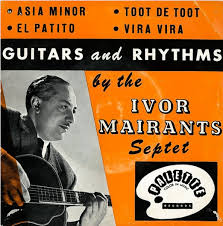
Ivor Mairants was born in Rypin, Poland on July 18, 1908 and moved with his family to the United Kingdom in 1913 where he attended Raine’s Foundation School in Bethnal Green. He began learning the banjo at the age of 17 and became a professional musician three years later.
In the 1930s he was a banjoist and guitarist for British dance bands led by Bert Firman, Ambrose, Roy Fox, Lew Stone, Geraldo, and Ted Heath. In 1950 Mairants established the Central School of Dance Music in London, England which he ran for 10 years. All instruments were taught at this establishment, but emphasis was given to guitar. Among the teaching staff at the school were Johnny Dankworth, Jack Brymer, Kenny Baker, Bert Weedon and Ike Isaacs, and Eric Gilder. In 1960 Mairants handed the school over to Gilder, who renamed it as the Eric Gilder School of Music.
In the Sixties and Seventies his guitar playing was often heard on television, radio, film soundtracks, and many recordings with the Mantovani orchestra and with Manuel and his Music of the Mountains. His 1976 recording of the Adagio from Joaquin Rodrigo’s Concierto de Aranjuez with Manuel sold over one million copies.
He wrote many occasional pieces for jazz bands, was a columnist for Melody Maker, BMG, and Classical Guitar, and was a member of the Worshipful Society of Musicians, a British guild, and a Freeman of the City of London. In 1997 the Worshipful Society inaugurated an annual competition for the Ivor Mairants Guitar Award.
Guitarist, composer and teacher Ivor Mairants, who with his wife Lily in 1958 he created the Ivor Mairants Musicentre, a specialist guitar store in London, died on February 20, 1998.
More Posts: composer,educator,guitar,history,instrumental,jazz,music
Daily Dose Of Jazz…
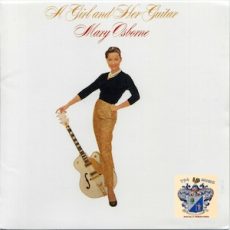
Mary Osborne was born in Minot, North Dakota on July 17, 1921 into a musical family. As early as age three she showed an interest in music with her earliest instruments including piano, ukulele, violin, and banjo. At nine, she picked up the guitar. At ten, she started playing banjo in her father’s ragtime band. She was featured on her own radio program, performing twice weekly until she was fifteen. At twelve she started her own trio of girls to perform country music in Bismarck, North Dakota.
By the time she turned fifteen, Osborne joined a trio led by pianist Winifred McDonnell, for which she played guitar, double bass, and sang. After hearing Charlie Christian play electric guitar she immediately bought her own electric guitar and had a friend build an amplifier. She sat in with Christian to learn his style of guitar. Her husband and trumpeter Ralph Scaffidi encouraged her musical career.
The early 1940s saw Mary sitting in on jam sessions on 52nd Street, on the road with jazz violinist Joe Venuti and working freelance in Chicago, Illinois when she made a recording with Stuff Smith. In 1945, Osborne headlined a performance with Dizzy Gillespie, Art Tatum, Coleman Hawkins, and Thelonious Monk in Philadelphia, Pennsylvania to reviews and audiences that praised her specifically. She, Tatum, and Hawkins went on to record a concert in New Orleans.
Returning to New York City she recorded with Mary Lou Williams in 1945, Coleman Hawkins, Mercer Ellington, and Beryl Booker in 1946, and led her own swing trio. For three years her trio played 52nd street clubs, had a year-long engagement at Kelly’s Stables, and made several recordings. Throughout the 1950s, she played with Elliot Lawrence’s Quartet on The Jack Sterling Show, and appeared on the television show Arthur Godfrey’s Talent Scouts.
By the Sixties her focus changed to learning Spanish classical guitar under Alberto Valdez-Blaine and incorporated pick-less playing into her jazz playing. Osborne moved to Bakersfield, California, where she lived the rest of her life, and founded the Osborne Guitar Company with her husband. Mary taught music and continued to play jazz locally and in Los Angeles, California as well as several jazz festivals over the next two decades.
Guitarist Mary Osborne died on March 4, 1992 at the age of 70, the result of chronic leukemia.
More Posts: bandleader,guitar,history,instrumental,jazz,music