

Daily Dose Of Jazz…
Adam Nussbaum was born in New York City on November 29, 1955 and grew up in Norwalk, Connecticut. He first played the drums at the age of four, however, it wasn’t until after five years of piano study that he got his first drum set when he was around twelve. He went on to study music at the City College of New York, during which time he also played in local clubs.
1978 saw Adam joining Dave Liebman’s quintet and did his first European tour with John Scofield. He played with saxophonist Stan Getz for a year in 1982. The following year he became a member of the Gil Evans Orchestra, and toured Europe and Japan two years later.
Joining the Eliane Elias/Randy Brecker Quartet, Gary Burton, and Toots Thielemans, by 1987 he began touring with Michael Brecker’s band. He was a member of Brecker’s Grammy award-winning album. Don’t Try This At Home. In 1991 John Abercrombie hired Nussbaum to complete his organ trio and during 1992 Nussbaum was part of the Carla Bley Big Band.
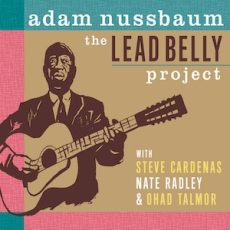
He has kept active in a wide variety of groups and as a freelancer. His quartet recording debut as leader in 2018 was The Lead Belly Project, released on Sunnyside Records.
Drummer Adam Nussbaum continues to perform and record.

More Posts: bandleader,drums,history,instrumental,jazz,music
Daily Dose Of Jazz…
Jon De Lucia was born on November 26, 1980 in Quincy, Massachusetts. He is predominantly a student of jazz, but also has a deep interest in the folkloric music and instruments of Cuba, Japan, Ireland and Italy. He has performed on a variety of ethnic flutes, drums and stringed instruments.
Having led his groups and played as a sideman in Boston, Massachusetts, New York City and all over Japan, he has worked with Tommy Crane, David Tronzo, Bob Moses, Bob Gullotti, John Lockwood and Thomas Morgan among others.
He leads the Jon De Lucia Group, and the baroque improvising Luce Trio. Saxophonist and composer Jon De Lucia, now based in Brooklyn, New York, continues to compose, perform and teach full time at BMCC in Tribeca, New York.

More Posts: bandleader,composer,history,instrumental,jazz,music,saxophone
Daily Dose Of Jazz…
Adam Cordero was born on November 18, 1999 and grew up in Roslyn Heights, New York. He became captivated by the sounds of nature which he has incorporated in his compositions. Attending the New School for Jazz and Contemporary Music he graduated with a Bachelor of Fine Arts
Adam holds a BFA degree with high honors from The New School for Jazz and Contemporary Music. He is also an adjunct professor at the New School and teaches privately.
Cordero teaches his own studio of students privately and is an adjunct faculty member at The New School for Jazz & Contemporary Music. He has played the established jazz venues in New York City, and has toured internationally to Switzerland and South Korea.
His quintet, Arcadia, strives to unite people in the common cause of protecting the environment. Cordero is a leading founder of the music venue Julian’s NYC and the music label, Tidebloom Records.
Saxophonist, composer, educator, and multi-instrumentalist Adam Cordero, who also plays clarinet, bass clarinet, and flute, continues to perform, tour and record.
More Posts: bandleader,bassoon,clarinet,flute,saxophone
Daily Dose Of Jazz…
Wayne Andre was born on November 17, 1931 in Manchester, Connecticut. His father was a saxophonist, and he took private music lessons from age 15. In the early 1950s he played with Charlie Spivak before spending some time in the U.S. Air Force. 1955 saw him joining the Sauter-Finegan Orchestra, and the next year played with Woody Herman.
From 1956 to 1958 Wayne played with Kai Winding and enrolled at the Manhattan School of Music. He composed his Nutcracker and arranged The Preacher for the Kai Winding Septet while performing with the septet. In the 1960s, he performed with Gerry Mulligan’s first Concert Jazz Band, the Thad Jones/Mel Lewis Orchestra, and Clark Terry’s Big Band.
He joined the Mission to Russia with Benny Goodman in 1962. He also played with Urbie Green, Art Farmer, Roy Ayres, and Carl Fontana. After settling in New York City, Andre became a sought-after studio sideman and soloist. He has recorded with Liza Minnelli, Bruce Springsteen, and Alice Cooper.
During the Eighties he played with Lynn Welshman’s Tentet, The Mingus Big Band, The Epitaph Band, Jaco Pastorius and many others. He performed with his own quintet, which included Marvin Stamm, Pat Rebillot, Ronnie Zito, Jay Leonhart; and his septet which included Matt Finders, Keith O’Quinn, and Jim Pugh. Andre performed with his own big band, the Illinois Jacquet Band and Mike Longo’s New York State of the Art Jazz Ensemble.
Wayne Andre, who recorded one hundred and sixty-seven albums as a studio musician, continued to write music for symphony orchestras and big bands throughout his life, died on August 26, 2003..
More Posts: history,instrumental,jazz,music,trombone
Daily Dose Of Jazz…
Joe Alterman was born November 16, 1988 in Atlanta, Georgia and graduated from New York University with both a Bachelor’s and Master’s in Jazz Piano Performance.
He has performed at iconic venues including the Kennedy Center, Lincoln Center, Birdland, and Blue Note, sharing stages with jazz greats like Houston Person, Les McCann, and Ramsey Lewis. He also had the privilege of opening for Dick Gregory at the Kennedy Center.
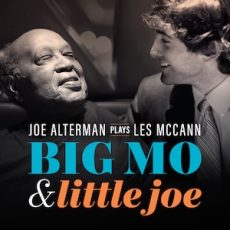
He leads his trio or performs solo with a deep groove, bluesy touch, and an exuberance that’s hard to resist, his playing is both deeply rooted and refreshingly modern. He has recorded eight critically acclaimed albums to his name, including the 2023 release Joe Alterman Plays Les McCann: Big Mo & Little Joe, Alterman continues to evolve as a recording artist while honoring jazz’s deep traditions.
His creativity extends to his cultural leadership and writing. As the Executive Director of Neranenah, an Atlanta-based Concert & Culture series, he celebrates Jewish contributions to music and the arts. His writing has also garnered acclaim, he has penned liner notes for three Wynton Marsalis and Jazz at Lincoln Center Orchestra albums. Alterman was the subject of Nat Hentoff’s final piece on music and in 2025, he was featured on President Jimmy Carter’s Grammy-winning album, Last Sundays In Plains: A Centennial Celebration.
Pianist, composer, writer, and cultural curator Joe Alterman continues to record and swing with style all over the world.
More Posts: bandleader,composer,history,instrumental,jazz,music,piano,writer