

Requisites
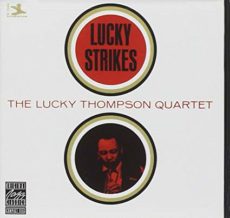
Lucky Strikes is an album led by saxophonist Lucky Thompson recorded on September 15, 1964 at the Van Gelder Studio in Englewood Cliffs, New Jersey. The session was produced by Don Schlitten as well as the cover design and photograph. The album was originally released in 1965 on the Prestige label.
Eight songs made up the 39 minutes and 25 seconds playing time with all compositions by Lucky Thompson except In a Sentimental Mood (Ellington & Mills), Fly With the Wind, Mid-Nite Oil, Reminiscent, Mumba Neua, I Forgot to Remember, Prey-Loot and Invitation (Bronisław Kaper)
The quartet was comprised of Lucky Thompson – tenor and soprano saxophone, Hank Jones/piano, Richard Davis/bass, and Connie Kay/drums.

More Posts: choice,classic,collectible,collector,history,instrumental,jazz,music
Requisites
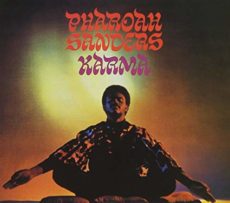
On February 14 and 19, 1969 at RCA Studios in New York City, tenor saxophonist Pharoah Sanders brought ten musicians together to record his seminal free jazz album Karma. During this time of social and political upheavals of the Sixties, Sanders was just one of the musicians who was a major factor in the emergence of a new stylistic trend in jazz, variously called “free jazz”, “the new thing”, or “energy music”. It was recorded and released for the Impulse! label.
This was the third album by Sanders as a leader and just one of the spiritually-themed albums of the period. The cover design was by Barbara and Robert Flynn and the cover photograph was taken by Charles “Chuck” Stewart. The album had only two compositions by composers Sanders and Thomas: The Creator Has A Master Plan (32:46) and Colors (5:37).
The personnel was Pharoah Sanders, percussionist and vocalist Leon Thomas, Julius Watkins on French horn, James Spaulding on flute, pianist Lonnie Liston Smith, bassist Reggie Workman, Richard Davis and Ron Carter, drummers Billy Hart and Freddie Waits and Nathaniel Bettis on percussion.
More Posts: choice,classic,collectible,collector,history,instrumental,jazz,music
Requisites
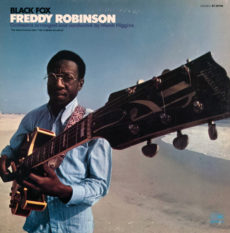
Black Fox is a 1970 album released by Freddy Robinson of the World Pacific record label. The photography and art design were both provided by Ron Wolin. The producers for this date were Dee Ervin and Monk Higgins, the latter also arranged and conducted. Liner Notes were written by Bob Hatchett. The album was alternately titled The Coming Atlantis.
The tracklist on this soul jazz and modern electric blues album include four tunes on Side A – Before Six, The Coming Atlantis, (I’m A) Fool For You and Freddy’s Sermon. Side B rendered the title track Black Fox, The Oggum Boogum Song, Rita and Monkin’ Around.
Crediting the performers are Backing Vocals – Adrienne Williams, Alexandra Brown, Difosco Ervin, Mamie Galore, Patricia Dunn; Fender & Upright Bass – Bob West; Bass Clarinet & Baritone Saxophone – Ernest Williams; Bongos & Congas – King Errison; Drums – Paul Humphrey; Piano – Joe Sample; Flute – Allen Butler; Guitar – Fred L. Robinson; Organ – Monk Higgins; Percussion – Dee Ervin, Strings – Sid Sharp; Tenor Saxophone – Plas Johnson; Trumpet – Allen Brisbois and Vibraphone – Alan C. Estes.
More Posts: choice,classic,collectible,collector,guitar,history,instrumental,jazz,music
Requisites
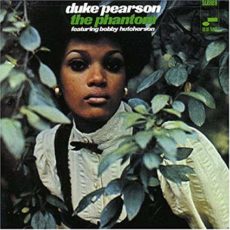
The Phantom is the twelfth album by American pianist and arranger Duke Pearson featuring performances recorded in 1968 and released on the Blue Note label.
Two separate sessions recorded the six tunes for a little over a half hour of music totalling thirty-eight minutes and thirty-six seconds, considered your average length in those days. The compositions are The Phantom, Blues for Alvina, Bunda Amerela (Little Yellow Streetcar), Los Ojos Alegres (The Happy Eyes), Say You’re Mine and The Moana Surf.
All compositions were composed by Pearson except #2 by Willie Wilson and #6 by Jerry Dodgion. Track #3 was recorded on June 24, 1968 and on September 11, 1968 they laid down the other five tunes.
Along with Pearson on the sessions were Jerry Dodgion – flute, alto flute, Bobby Hutcherson – vibes, Sam Brown and Al Gafa – guitar, Bob Cranshaw – bass, Mickey Roker – drums, Victor Pantoja – congas and Carlos ‘Patato’ Valdés – conga, güiro.
The recording session was produced by Francis Wolff at the Van Gelder Studios in Englewood Cliffs, New Jersey. Wolff is credited for the cover photography as well and the design was by Florenza Venosa Associates.
More Posts: choice,classic,collectible,collector,history,instrumental,jazz,music,piano
Requisites
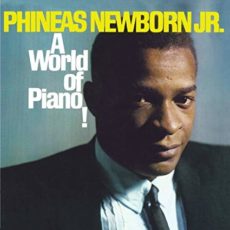
Pianist Phineas Newborn Jr. gathered an elite group of players in 1961 to comprise two distinct trios rendering two distinct sounds for two recording sessions. Bassist Paul Chambers and drummer Philly Joe Jones came into the Contemporary studio and recorded tracks 1–4 on October 16th, while on November 21st bassist Sam Jones and drummer Louis Hayes laid down tracks 5–8.
The album, A World of Piano! was released in 1962 by Contemporary Records and had a total of eight compositions for a total playing time of 39:34. Featured on Side 1 was Cheryl, Manteca, Lush Life and Daahoud and on Side 2 – Oleo, Juicy Lucy, For Carl and Cabu.
The cover was designed by George Kershawn and Robert Guidi who utilized bold, luminously colored fonts to create a distinctive style to the jazz covers of the Los Angeles based label. What Tri-Arts succeeded in doing time and time again as to create a distinguishable yet highly complimentary design to an often lush photograph, in this case provided by the inimitable William Claxton. Below is the complete album with separate Side 1 & 2 for your listening pleasure.
More Posts: choice,classic,collectible,collector,history,instrumental,jazz,music,piano