

Daily Dose Of Jazz…
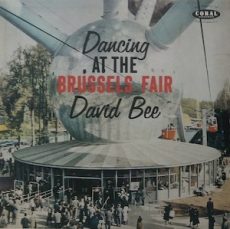
David Bee was born on October 17, 1903 in Brussels, Belgium. He was a multi-instrumentalist adept on clarinet, harp, piano, and alto and tenor saxophone. For a year in 1924 he played with the group Bistrouille ADO before co-founding an ensemble with Peter Packay called Red Beans. The group toured widely throughout western Europe.
After returning to Belgium, David joined Robert De Kers’s band, and also played in Paris, France at Chez Florencewith Benny Carter and Willie Lewis. He recorded with Gus Deloof in the early Forties and after World War II he played with Robert Bosmans and Chas Dolne later in the decade. He led his own bands and groups at various times in the 1950s and continued recording late into the decade and the 60s.
As a composer, Bee pennedr the tunes High Tension recorded by Luis Russell) and Obsession recorded by Ted Heath and Reg Owen.
Clarinetist, harpist, pianist, alto and tenor saxophonist, arranger and composer David Bee, also known as Ernest Craps, Ernie Sparks, and Manuel Travo, transitioned in 1992.

More Posts: arranger,clarinet,composer,harp,history,instrumental,jazz,music,saxophone
Daily Dose Of Jazz…
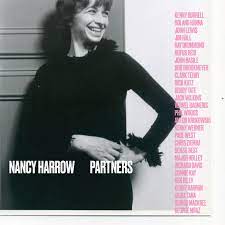
Nancy Harrow was born October 3, 1930 in New York City, New York and studied classical piano beginning at age seven, then decided to pursue careers in dancing and singing.
In 1961 Nancy released her debut album Wild Women Don’t Have The Blues for Candid Records. It featured Kenny Burrell, Buck Clayton, Dickie Wells, and Milt Hinton. Her sophpomore album for Atlantic Records two years later titled You Never Know featured John Lewis, Dick Katz, Phil Woods, Jim Hall, Richard Davis, and Connie Kay. She then left music to raise a family.
Since her return in 1975 she has worked with Katz and Woods, Clark Terry, Roland Hanna, and Bob Brookmeyer. She recorded albums based on The Lost Lady by Willa Cather, The Marble Faun by Nathaniel Hawthorne and Winter Dreams, based on the life of F. Scott Fitzgerald.
Two of Harrow’s songs have been adapted, one to a puppet show and one to The Cat Who Went to Heaven, based on a story by Elizabeth Coatsworth. The latter had short New York City runs at the Mercer Street Theater, the Asia Society, the Harlem School of the Arts, the Kennedy Center and the Brooklyn Academy of Music.
Singer and songwriter Nancy Harrow, who has recorded eighteen albums as a leader on a collaboration with John Lewis, continues to perform and record.
More Posts: composer,history,instrumental,jazz,music,piano,producer,vocal
Daily Dose Of Jazz…
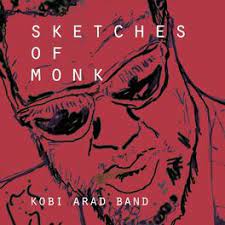
Kobi Yakob Arad was born on October 2, 1981 and raised in Haifa, Israel. He earned his bachelor’s degree at Tel Aviv University and became the first musician to earn a doctorate in contemporary improvisation and third stream from the New England Conservatory of Music.
While living in Israel, Kobi participated as a keyboardist in a trio with Asaf Sirkis and Gabriel Mayer in the 1990s. He collaborated with Stevie Wonder and his manager Stephanie Andrews at the Berklee Performance Center in 2005.
Between 2009 and 2015 Arad released Sparks of Understanding, The Experience Project, Webern Re-Visioned, and Superflow which is a collaboration with Roy Ayers, featuring bassist Jonathan Levy.
He went on to record a tribute album Ellington Upside Down with the Kobi Arad Band. The album’s mashup of “Take The ‘A’ Train” and “It Ain’t Mean a Thing” was nominated for Best Jazz Instrumental at the 17th Independent Music Awards in 2019. His album Segments went on to win Best Jazz Instrumental in the album category at the same event.
In 2021 he won the Independent Music Artist award in Best Jazz for his performance of Thelonious Monk’s Bemsha Swing at the Hollywood Music in Media Awards. Pianist, vocalist, composer, and music producer Kobi Arad, who has collaborated with Stevie Wonder, Cindy and Carlos Santana, and Jack DeJohnette, continues to perform and record.

More Posts: composer,history,instrumental,jazz,music,piano,producer,vocal
Daily Dose Of Jazz…
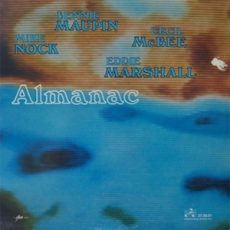
Michael Anthony Nock was born September 27, 1940 in Christchurch, New Zealand. He began studying piano at 11 and attended Nelson College for one term in 1955. By the age of 18, he was performing in Australia and in Sydney he played in The Three Out trio with Freddy Logan and Chris Karan. They toured England in 1961 before he left to attend Berklee College of Music.
Nock was a member of Yusef Lateef’s group from 1963 to 1965. Three years later he became involved with fusion, leading the Fourth Way band for two years. For a decade beginning in 1975 he was a studio musician in New York City, then returned to Australia.
His 1987 album Open Door with drummer Frank Gibson, Jr. was named that year’s Best Jazz Album in the New Zealand Music Awards. The 2003 New Year Honours saw Mike appointed an Officer of the New Zealand Order of Merit, for services to jazz.
Currently residing in New South Wales, pianist, composer and arranger Mike Nock, who taught at the Sydney Conservatorium of Music until 2018, continues to perform with his trio, big band, and various one-off ensembles.

More Posts: arranger,bandleader,composer,educator,history,instrumental,jazz,music,piano

Daily Dose Of Jazz…
Tiny Bradshaw was born Myron Carlton Bradshaw on September 23, 1907 in Youngstown, Ohio. Graduating from high school he went on to matriculate through Wilberforce University with a degree in psychology, then turned to music for a living.
In Ohio, he sang and played drums with Horace Henderson’s campus oriented Collegians. Relocating to New York City in 1932 he drummed for Marion Hardy’s Alabamians, the Charleston Bearcats, and the Mills Blue Rhythm Band, and sang for Luis Russell. Two years later Bradshaw formed his own swing orchestra, which recorded eight sides in two separate sessions for Decca Records that year in New York City. The band would go on to record in 1944 for Manor Records with the music leaning more towards rhythm and blues than jazz or swing. In 1947 he recorded for Savoy Records.
The band recorded extensively for the rhythm and blues market with King Records between late 1949 and early 1955. His influence as a composer is evidenced in the rock world with his 1951 song The Train Kept A-Rollin’ that has been recorded by Johnny Burnette & The Rock and Roll Trio, The Yardbirds with Jeff Beck, Aerosmith, Motörhead and performed by Jimmy Page as the first song played, at the very first rehearsal of the band that would become Led Zeppelin.
Returning to R&B with Soft and Heavy Juice, he brought along with him on both of these 1953 hits, Red Prysock on tenor saxophone. Tiny’s later career was hampered by severe health problems, including two strokes, the first in 1954, that left him partially paralyzed. However he made a return to touring in 1958.
As a bandleader, he was an invaluable mentor to important musicians and arrangers including Sil Austin, Happy Caldwell, Shad Collins, Wild Bill Davis, Talib Dawud, Gil Fuller, Gigi Gryce, Big Nick Nicholas, Russell Procope, Red Prysock, Curley Russell, Calvin “Eagle Eye” Shields, Sonny Stitt, Noble “Thin Man” Watts, and Shadow Wilson.
Weakened by the successive strokes as well as the rigors of his profession, bandleader, singer, composer, pianist, and drummer Tiny Bradshaw, who was important to the development of rock and roll, transitioned from a final stroke on November 26, 1958 in Cincinnati, Ohio at 51 years of age.
More Posts: bandleader,composer,drums,history,instrumental,jazz,music,piano,vocal